

Annual Fire Extinguisher Inspection Tags: Spot a Fake Before FDNY Does
July 23, 2026
FDNY Fire Extinguisher Tags: 3 Compliance Layers Most Owners Miss
July 30, 2026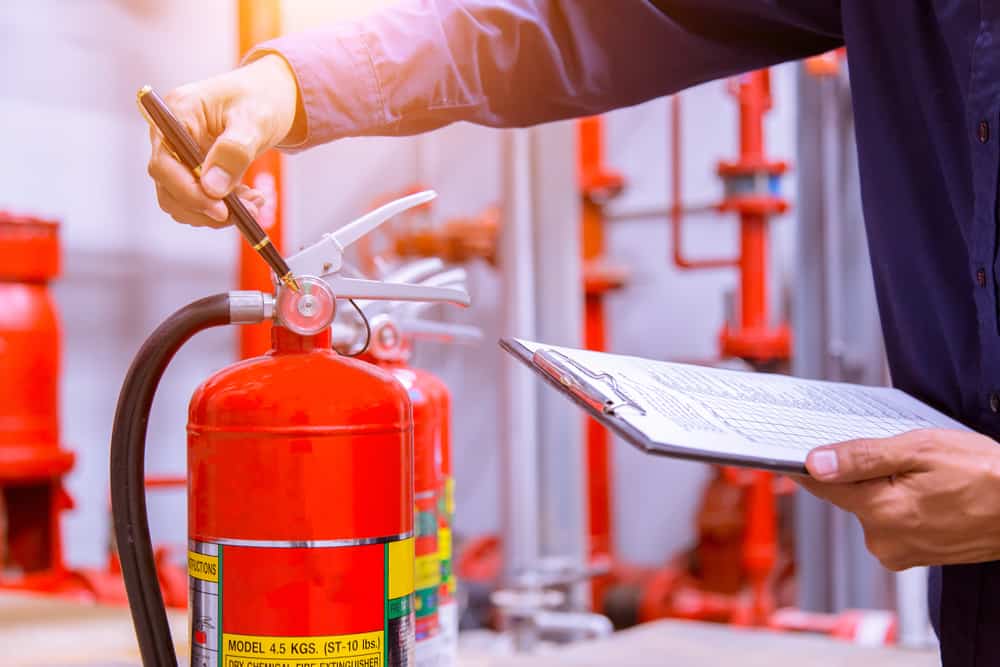
Summary:
You’re trying to figure out what fire extinguisher service actually costs in Nassau County. Not the vague “call for pricing” runaround—real numbers that help you budget without getting blindsided.
The truth is, pricing depends on factors most businesses don’t think about until they’re already on the hook. How many units you have, what type they are, when they were last serviced, and whether you’re calling for routine maintenance or scrambling to fix a violation before the Fire Marshal shuts you down.
Here’s what you’re actually looking at in 2026, what drives those costs, and how to keep your fire safety budget predictable instead of painful.
What Fire Extinguisher Inspection Costs in Nassau County
Annual professional inspections are the baseline. Every business in Nassau County needs them. Period.
For a standard commercial facility with around 10 to 25 extinguishers, you’re looking at somewhere between $200 and $600 for the year. That’s assuming your equipment is in decent shape and you’re scheduling this as routine maintenance, not emergency service.
Single-unit inspections run higher per extinguisher because you’re still paying for the service call. One extinguisher might cost you $80 to $120 just to get a technician on-site. Ten extinguishers? The per-unit cost drops to around $20 to $30 each because the trip charge gets spread across more work. Scheduling an annual fire extinguisher inspection can help businesses keep routine service on schedule while managing overall maintenance costs.
What's Included in Annual Fire Extinguisher Inspection
When a certified technician shows up for your annual inspection, they’re not just slapping a tag on your extinguisher and calling it done. They’re checking pressure gauges to make sure readings are in the operable range. They’re inspecting hoses, nozzles, safety pins, and operating instructions to verify everything’s intact and readable.
They’re looking for physical damage—dents, corrosion, leaks, anything that would prevent the extinguisher from working when you need it. And they’re documenting every single unit with location, serial number, and service recommendations.
That documentation isn’t just paperwork. It’s your proof of compliance when the Fire Marshal shows up or when your insurance company asks for records. Without it, you’re exposed to fines that start at $300 per extinguisher and can hit $1,000 if violations pile up.
The inspection also includes removing expired tags and affixing new ones that show the inspection date, the technician’s certification number, and when the next service is due. This creates an unbroken compliance chain that protects you during audits.
If the technician finds issues—low pressure, damaged components, missing seals—they’ll flag those units for maintenance or recharge. That’s when costs go beyond the basic inspection fee, but catching problems early beats facing a violation or, worse, discovering your extinguisher doesn’t work during an actual fire.
Factors That Affect Fire Extinguisher Inspection Pricing
The biggest factor is how many extinguishers you have. More units mean better per-unit pricing because the service call gets spread across more work. A facility with 25 ABC dry chemical extinguishers might pay $1,000 to $1,500 for annual inspections. That same facility with only five extinguishers? You’re looking at closer to $400 to $500 because the trip charge hits harder.
Extinguisher type matters too. ABC dry chemical units are the most cost-effective to inspect. They’re straightforward, with standardized components that technicians can service quickly. Specialized extinguishers—wet chemical systems for commercial kitchens, Halotron units for sensitive equipment, CO2 extinguishers—cost more because they require specific expertise and more detailed examination.
Timing plays a role you might not expect. Schedule your inspection as routine maintenance, and you pay standard rates. Call because you got a violation notice or the Fire Marshal is coming tomorrow? Emergency or next-day service typically adds a 25% to 50% premium on top of regular pricing.
Your extinguishers’ condition affects cost too. Well-maintained units that pass inspection quickly cost less overall. Neglected equipment often needs cleaning, repairs, or replacement parts, which drives up the total bill. If you’ve been skipping annual service, expect the first inspection to cost more as technicians catch up on deferred maintenance.
Location within Nassau County can influence pricing slightly, but because the county uses a centralized fire safety approach, you get more predictable pricing than in areas where every fire district sets its own rules. That uniformity means fewer surprise costs based on which town your business happens to be in.
Bundling services helps. If you coordinate fire extinguisher inspections with sprinkler testing, fire alarm checks, or kitchen suppression maintenance during the same visit, we can reduce administrative overhead and service call minimums. You’re looking at potential savings of 10% to 20% compared to scheduling everything separately.
Fire Extinguisher Service Cost: Maintenance and Recharge Pricing
Service costs go beyond the annual inspection. You’ve got maintenance, recharging, and testing requirements that kick in at different intervals depending on your extinguisher type and age.
Understanding what each service actually involves—and when you need it—keeps you from getting caught off guard by costs you didn’t budget for. It also helps you spot when a company is recommending services you don’t actually need yet. Here’s what commercial fire extinguisher maintenance and recharge services actually run in Nassau County.

Fire Extinguisher Maintenance Cost and 6-Year Service Requirements
Maintenance is more involved than inspection. This is where technicians disassemble components, examine internal mechanisms, replace worn parts, and verify that everything meets NFPA 10 standards.
You’re required to have 6-year maintenance performed on stored pressure extinguishers like ABC dry chemical units. This involves emptying the extinguisher, inspecting the interior, replacing any degraded components, refilling with fresh agent, repressurizing, and recertifying the unit.
For a standard 5 to 10-pound ABC extinguisher, 6-year maintenance typically runs $35 to $80 per unit, depending on what needs replacing. That’s still cheaper than buying new extinguishers, which cost $50 to $150 each depending on size and type.
If your extinguishers were manufactured before October 1984, they need to be removed from service at the next 6-year maintenance interval. This came from safety testing that revealed significant issues with older units. If you’ve got vintage equipment, budget for replacements rather than maintenance.
Twelve-year hydrostatic testing is another maintenance requirement. This pressure test verifies the cylinder’s structural integrity and costs $15 to $50 per extinguisher for most ABC and BC types. CO2 extinguishers need hydrostatic testing every 5 years, and those tests run higher—around $35 to $70—because of the specialized handling required.
The alternative to proper maintenance is replacement. Small 2.5-pound extinguishers often aren’t cost-effective to maintain and should just be replaced every 6 years. Larger commercial units, though, are designed for multiple maintenance cycles over a 12-year service life, making maintenance the smarter investment.
Keep your service records. If you can’t prove when an extinguisher was last serviced, companies assume it hasn’t been maintained and may require full 6-year service instead of a simple annual inspection. That turns a $20 inspection into a $40 to $80 service charge because you didn’t keep paperwork.
How Much Does Fire Extinguisher Recharge Cost
Recharge costs kick in after an extinguisher gets used—even partially—or when inspection reveals low pressure. This service involves refilling the extinguishing agent and repressurizing the unit to manufacturer specifications.
For standard ABC dry chemical extinguishers, recharge costs run $25 to $50 depending on size. A 5-pound unit sits at the lower end of that range, while a 20-pound extinguisher costs more because it requires more agent and labor.
Type of extinguishing agent affects pricing significantly. Basic dry chemical recharges are the most affordable. CO2 extinguishers cost more to recharge because of specialized handling and refilling equipment. Clean agent extinguishers used around sensitive electronics or data centers are the most expensive, requiring precision recharging with approved agents. Class K wet chemical extinguishers for commercial kitchens also run higher due to their unique solution and compliance requirements.
Recharge service includes more than just refilling. Technicians replace discharge hoses, valve components, O-rings, and seals as needed to ensure the extinguisher is safe and functional. These parts aren’t always included in base recharge pricing but are essential for long-term performance.
You’ll also get a new compliance tag documenting the date, technician, and company that performed the work. This recordkeeping is mandatory for inspections and adds a small but necessary cost to the process.
We may charge separately for pickup and delivery if you have many extinguishers that need to be transported to a shop for recharging. Rush service—when you need an extinguisher back immediately—can increase costs by 25% to 50%.
The big question businesses ask: is recharging cheaper than replacing? For larger extinguishers in good condition, recharging is almost always more cost-effective. A recharged 10-pound ABC extinguisher provides the same protection as a new unit at a fraction of the cost. Commercial-grade extinguishers are designed for multiple recharges over their service life.
But if an extinguisher has physical damage—corrosion, dents, a failed pressure gauge—recharging won’t restore full reliability. At that point, replacement is the safer choice. Same goes for small 2.5-pound units, where replacement often costs less than professional recharge service.
Planning Your Fire Safety Budget for Nassau County
Fire extinguisher costs in Nassau County are predictable when you know what you’re paying for. Annual inspections for a typical commercial facility run $200 to $600. Add occasional recharges at $25 to $50 per unit and 6-year maintenance at $35 to $80 per extinguisher, and you can budget accurately instead of getting hit with surprise expenses.
The real cost isn’t the service itself—it’s what happens when you skip it. Violations start at $300 per extinguisher and can reach $1,000. Business closures cost you revenue every day you’re shut down. Insurance lapses leave you exposed if something goes wrong.
We’ve been helping Nassau County businesses stay compliant and protected for over 35 years, with transparent pricing, same-day service when you need it, and 24-hour availability for emergencies. When you’re ready to handle your fire safety the right way, you know who to call.
Related posts