Emergency Lighting Compliance Costs for Nassau County Buildings
October 23, 2026
Summary:
You open the mail, and there it is — a violation notice with a code you don’t recognize, a deadline that feels uncomfortably close, and no clear explanation of what you’re supposed to do about it. That’s a stressful moment for any business owner, and it happens more often than you’d think. FDNY issued over 22,000 violations across New York City in 2024 alone, and fire extinguisher violations are among the most common. If you’re running a business in Nassau County, NY and you’re holding one of those notices right now, here’s what you need to know before anything else: the clock is already running.
What an FDNY Fire Extinguisher Violation Notice Actually Means
The notice itself can look bureaucratic and confusing, but the core message is simple: something about your fire extinguisher setup doesn’t meet code, and you need to fix it and prove that you fixed it — in writing, with documentation, within 35 calendar days of the date on the summons.
The violation code you’ll most commonly see for fire extinguisher issues is VC7, which covers defective or missing units. But violations can also stem from improper placement, missing or unauthorized inspection tags, or a lapse in your annual maintenance records. The specific code matters because it tells you exactly what needs to be corrected — and what kind of proof FDNY will expect when you file your response.
Receiving a violation doesn’t mean you’re in serious legal trouble yet. It means you have a defined window to make it right. What turns a manageable situation into a serious one is ignoring it.
Fire Extinguisher Inspection Certification: Why the Tag on Your Extinguisher Matters More Than You Think
Here’s where a lot of business owners get tripped up. They call their regular service company, get the extinguisher recharged or replaced, and assume the violation is resolved. But FDNY doesn’t just want the physical problem fixed — they want documentation that proves it was fixed by a certified, FDNY-approved company using official, numbered FDNY-issued tags.
Since November 2018, under NYC Fire Code 3 RCNY Section 115-02, every serviced fire extinguisher in New York City must carry an official FDNY-issued tag with a unique number. Only licensed companies are authorized to purchase and affix these tags. If your extinguisher gets serviced by a company that uses generic or unauthorized tags — even if the work itself is done correctly — you now have a new violation on top of the original one.
This is why fire extinguisher inspection certification isn’t just a credential to ask about when you’re shopping around. It’s the difference between documentation that FDNY will accept and documentation that will get your Certificate of Correction rejected. A rejected COC is treated the same as no response at all, which means the violation stays open and the hearing process moves forward without you.
When you’re selecting a service provider to resolve a violation, the first question to ask is whether their technicians hold valid FDNY Certificates of Fitness and whether the company is on FDNY’s approved list. That’s not being overly cautious — that’s protecting yourself from having to start the process over again from scratch, with fewer days left on the clock.
For Nassau County, NY businesses that also operate in the five boroughs, or that have historically used NYC-licensed service companies, this matters directly. A company licensed in New York City is not automatically licensed to work in Nassau County, and the reverse is also true. If your situation involves both jurisdictions — which is more common than you’d expect along the Nassau-Queens border — you need a provider who holds credentials in both.
What the Certificate of Correction Process Actually Requires
The Certificate of Correction is the formal mechanism for telling FDNY that you’ve addressed the violation. It’s not complicated, but it is specific — and the details matter.
You have 35 calendar days from the date printed on the summons to correct the underlying problem and submit a notarized COC to FDNY’s Administrative Enforcement Unit. The submission needs to include the completed COC form, proof that the violation was corrected, and supporting documentation — typically service reports, receipts, and inspection records showing FDNY-compliant, numbered tags. If any of that is missing or incomplete, the COC gets rejected.
If you miss the 35-day window entirely, the violation is automatically referred to an OATH hearing. At that point, you’re not just dealing with a correction — you’re dealing with a legal proceeding, potential default judgment, and fines that can range from $800 to well over $1,000 depending on the violation type and your history. Only about 12% of contested FDNY fire code violations are dismissed. The math strongly favors correcting quickly and documenting it properly.
The service company you hire to resolve the violation needs to do more than show up with a fire extinguisher. They need to generate the right paperwork — the kind that FDNY will actually accept. Service reports, itemized receipts, and properly tagged inspection records aren’t optional add-ons. They’re the core deliverable.
FDNY Fire Code vs. Nassau County Fire Code: Know Which Rules Apply to Your Business
This is where Nassau County, NY adds a layer of complexity that trips up a lot of business owners. FDNY is New York City’s fire department. Its jurisdiction ends at the city line. In Nassau County, fire code enforcement falls under the Nassau County Fire Marshal’s Office, operating under the Nassau County Fire Prevention Ordinance and the New York State Uniform Fire Prevention and Building Code.
That means if your violation came from a Nassau County inspection — not from a NYC summons — the process, the enforcement authority, and the applicable rules are different. Violations under the Nassau County Fire Prevention Ordinance can reach up to $5,000 per offense, which in some cases is higher than the per-extinguisher FDNY fine range.
Nassau County vs. NYC Fire Code: What's the Difference for Business Owners?
The practical difference between Nassau County, NY fire code and FDNY fire code isn’t as dramatic as it might sound — both are built on NFPA 10, the national standard for portable fire extinguishers — but the enforcement structure is completely separate, and that matters when you’re trying to resolve a violation.
In New York City, FDNY handles inspections, issues summonses, and receives Certificates of Correction. In Nassau County, NY, the Fire Marshal’s Office handles that role. The forms are different, the submission process is different, and the credentials your service provider needs are jurisdiction-specific. A technician who is FDNY-certified to work in Brooklyn or Queens is not automatically authorized to service extinguishers in Hempstead, Garden City, or Long Beach under Nassau County rules.
For businesses operating along the Nassau-Queens border — or businesses with locations in both Nassau County, NY and the five boroughs — this dual-jurisdiction reality creates real compliance risk. You might be fully current on your NYC requirements and completely out of compliance in Nassau County, or vice versa, simply because the two systems don’t talk to each other and the rules don’t automatically transfer.
The commercial corridors along Hempstead Turnpike, Sunrise Highway, and Jericho Turnpike are dense with exactly the kinds of businesses — restaurants, retail shops, mixed-use properties, and multi-family buildings — that face the most frequent fire code inspections and the highest violation risk. If you’re operating in any of those areas and you’re not certain which jurisdiction issued your notice or which rules apply to your property, that confusion itself is worth resolving before you take any other action.
How to Avoid Future Fire Extinguisher Violations in Nassau County, NY
The fastest way to avoid going through this process again is understanding what triggered the violation in the first place. Most fire extinguisher violations aren’t the result of negligence — they’re the result of timing gaps, documentation failures, or working with a service provider who doesn’t generate the right paperwork.
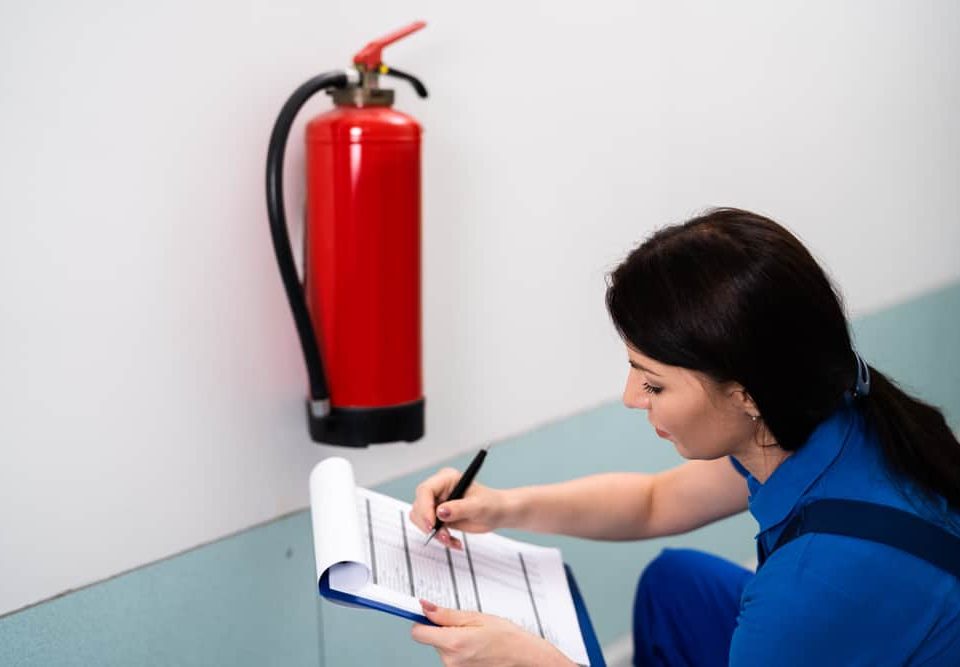
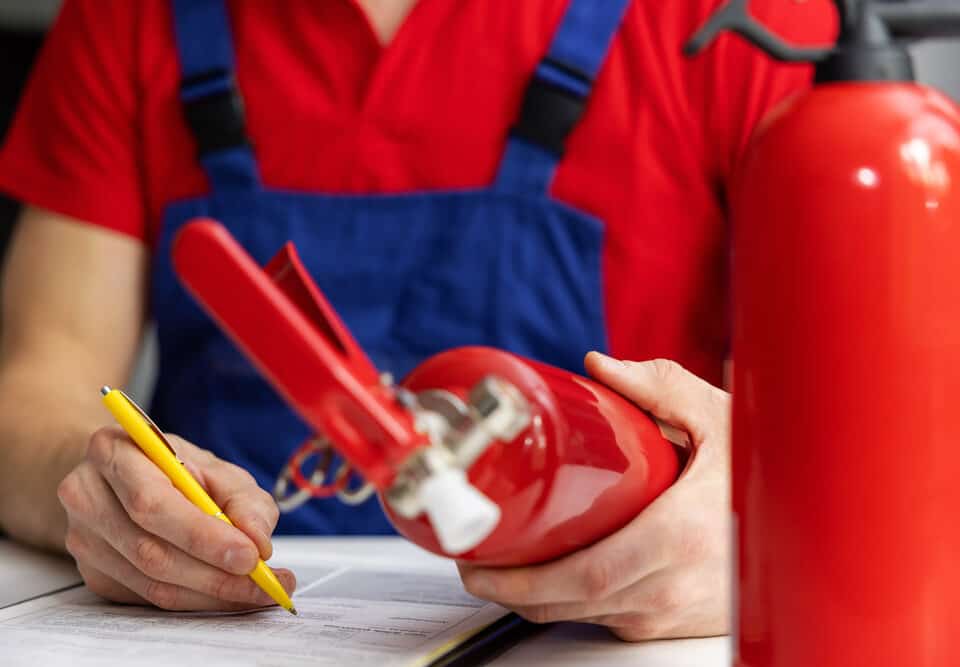
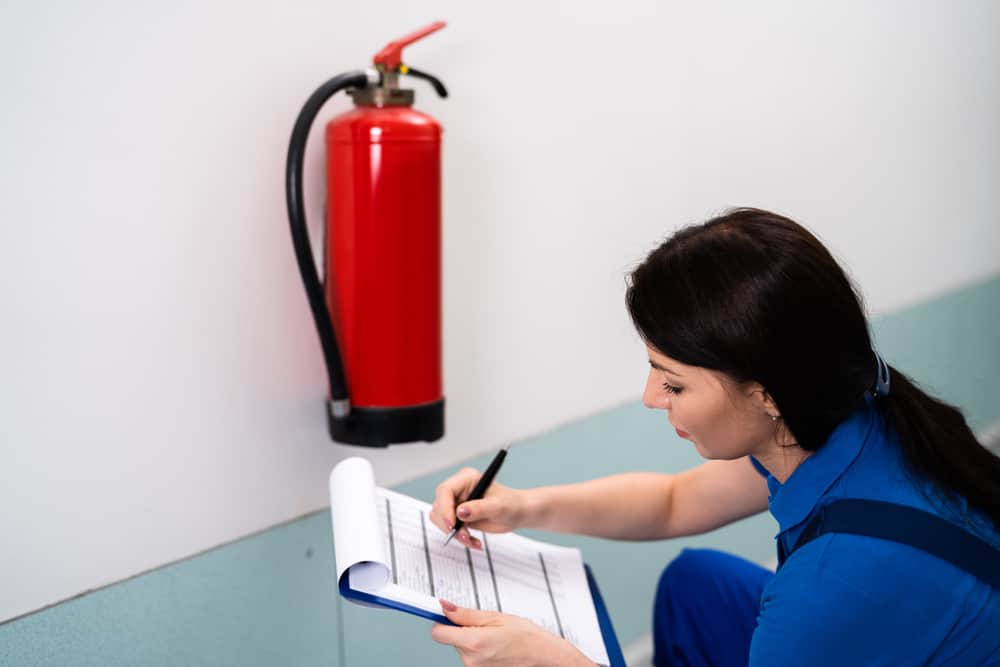
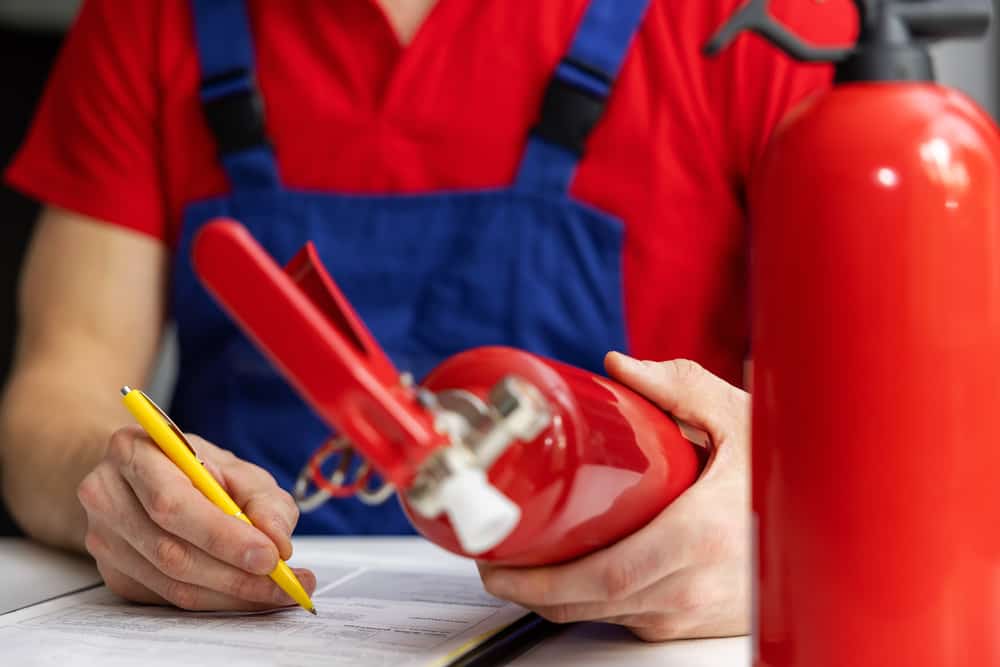
NFPA 10 requires three levels of inspection: a monthly visual check (which building staff can perform), an annual maintenance inspection by a certified technician, and periodic hydrostatic testing at the 6-year and 12-year marks. The annual inspection is where most violations originate, either because it wasn’t done at all, because it was done by an uncertified technician, or because the resulting documentation didn’t meet FDNY’s or the Nassau County, NY Fire Marshal’s standards.
For restaurants — and there are a lot of them along Nassau County’s commercial strips — the requirements go further. FDNY Fire Code Section 906 requires fire extinguishers to be positioned within 30 feet of commercial cooking equipment, and kitchen suppression systems typically require semi-annual inspections on top of the standard annual fire extinguisher service. Missing either of those creates a compliance gap that shows up fast during an inspection.
You’re also required to keep inspection records for at least three years. If FDNY or the Nassau County Fire Marshal asks for documentation during an inspection and you can’t produce it, that absence can itself become a violation — even if the actual inspections were performed. A good service company doesn’t just do the work; they give you the records you need to prove it was done. That paper trail is what protects you when an inspector shows up unannounced, and it’s what your insurance carrier will ask for if you ever need to file a claim.
The simplest version of this: annual inspections by a certified, FDNY-approved technician, proper tags on every unit, documented records kept on file, and a service company that understands both NYC and Nassau County requirements. That combination covers most of what triggers violations in the first place.
Resolving an FDNY Fire Extinguisher Violation the Right Way
If you’re holding a violation notice right now, the most important thing you can do is move quickly and work with a provider who knows exactly what FDNY — or the Nassau County Fire Marshal — needs to see. The fix itself is usually straightforward. What takes expertise is generating the documentation that actually closes the violation and gets your Certificate of Correction accepted.
Don’t assume your current service company has done this before. Ask directly whether their technicians are FDNY-certified, whether they use official FDNY-issued numbered tags, and whether they can produce the service records and receipts you’ll need to file your COC. If the answer to any of those is unclear, that’s worth knowing before you’re a week into a 35-day window.
We at M&M Fire Extinguishers Sales & Services, Inc. have been handling exactly this kind of situation for over 35 years, serving businesses across Nassau County, NY and all five NYC boroughs. We offer same-day service and are available around the clock. If you’ve received a violation and need to move fast, call us today.
Related posts