
Fire Protection Service Resources Every Nassau County Business Needs
September 25, 2026
Fire Suppression System Cost in Nassau County, NY: 2026 Restaurant Pricing
October 2, 2026
Summary:
Getting a fire code violation notice is one of those moments where everything stops. You’re not sure who issued it, what it means, or how bad the fine is going to be. And if you’re a business owner in Nassau County, there’s an extra layer of confusion — because Nassau County doesn’t operate under FDNY rules at all.
This guide cuts through that confusion. We’ll show you exactly what violation fines look like, what a compliant annual inspection actually costs, and why the math makes proactive compliance an obvious choice. If you’re already dealing with a violation, we’ll walk you through what happens next.
Fire Safety Inspection: What It Costs and Why It Matters in Nassau County
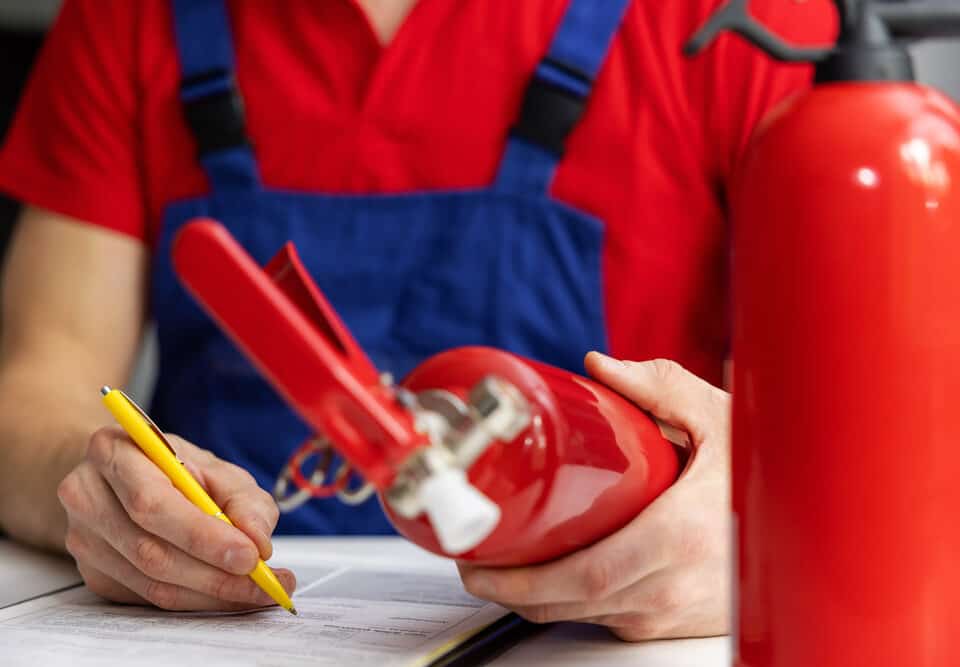
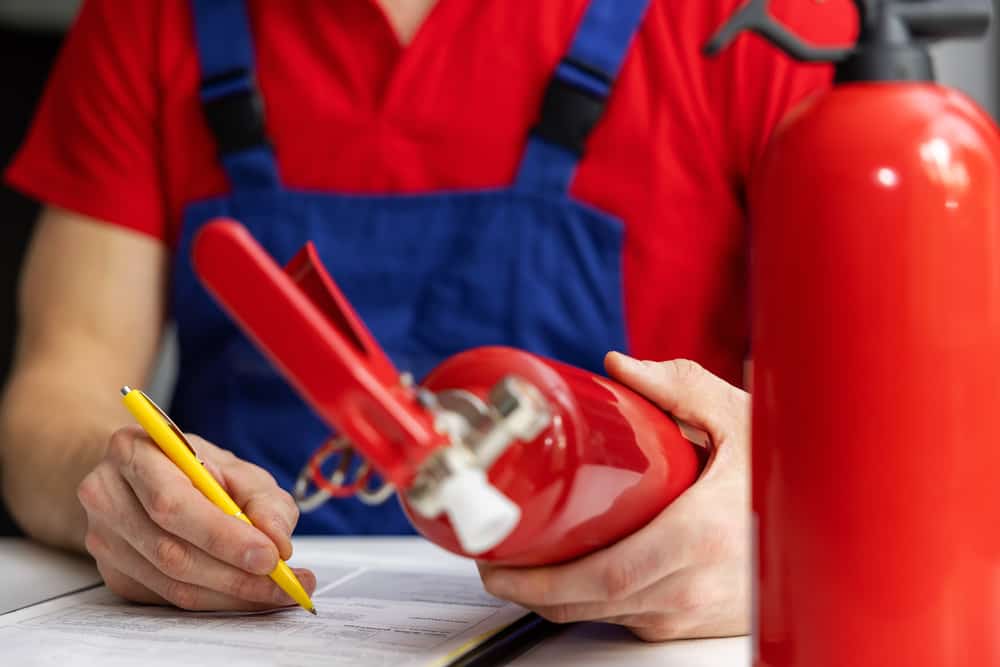
A fire safety inspection for portable extinguishers isn’t just someone glancing at the gauge. A certified technician checks the pressure, the physical condition of the unit, the pull pin, the tamper seal, the label, and the service history tag. For most businesses in Nassau County, this happens annually — and it’s required under both NFPA 10 and the Nassau County Fire Prevention Ordinance.
The cost is more manageable than most business owners expect. For a standard commercial space with multiple units, you’re typically looking at $15 to $30 per extinguisher when you have several units serviced at once. A small office or retail space with five to ten extinguishers might pay $300 to $600 for the full year. Specialized units — like wet chemical extinguishers used in restaurant kitchens — can run higher, up to $300 per unit to inspect. But for the average Nassau County business, the annual bill is modest.
Fire Extinguisher Inspection Certification: Why the Tag on Your Unit Actually Matters
Here’s something that catches a lot of Nassau County business owners off guard: having a tag on your extinguisher doesn’t automatically mean you’re compliant. The tag has to come from a certified technician whose work is recognized by the authority having jurisdiction — in Nassau County, that’s the Nassau County Fire Commission enforcing the New York State Fire Code.
This distinction matters more than it might seem. There’s a documented pattern in the greater New York area of unlicensed providers offering cut-rate inspections and leaving behind tags that don’t hold up when a fire marshal walks through. You paid for an inspection. You got a tag. And you still got a violation — because the person who did the work wasn’t properly certified and the documentation wasn’t valid.
When we send a technician to your location, the certification they carry is legitimate and recognized by Nassau County authorities. That’s not a marketing line — it’s the difference between a tag that protects you and one that gives you a false sense of security right up until your next inspection visit from the fire marshal.
NFPA 10, the national standard governing portable fire extinguishers, lays out a clear service schedule that goes beyond the annual inspection most people know about. Monthly visual checks are required — these can be done by a designated staff member and don’t require a certified technician. But the annual maintenance inspection does require certification. Beyond that, stored-pressure extinguishers need an internal examination every six years and a hydrostatic pressure test every twelve years. Many Nassau County businesses are unaware of these intervals and get caught when a fire marshal finds an overdue unit during a routine sweep.
Understanding the full service timeline helps you stay ahead of it. We track these intervals for you and flag what’s coming up — so you’re not discovering a twelve-year hydrostatic test is overdue at the worst possible moment.
Fire Extinguisher Pricing: What You're Actually Paying For
When you’re comparing quotes from different providers, the price spread can be confusing. One company quotes $20 per unit. Another has a minimum service call fee before they even count the extinguishers. A third wants a monthly contract. It’s hard to evaluate what’s included when the line items look completely different.
Here’s a straightforward breakdown of what fire extinguisher service typically covers and what it costs in Nassau County. The annual inspection itself — the certified maintenance visit — runs $25 to $50 per extinguisher for most standard units. If a unit needs to be recharged after use or after a pressure loss, recharge costs are separate and vary by type and size. A standard dry chemical extinguisher recharge is generally in the $15 to $30 range per unit, though larger or specialized units cost more.
What you want to avoid is a pricing model that looks cheap upfront but hides recurring charges. We’ve seen competitors structure their service as a monthly subscription — one model charges $85 per month, which adds up to more than $1,000 a year for what should be a straightforward annual service. Our model is different: a one-time cost for the work that actually needs to be done, not a rolling contract designed to keep billing you whether or not anything has changed with your equipment.
For a medium-sized facility in Nassau County — say, a restaurant in Garden City or a warehouse in Hicksville with fifteen to twenty-five extinguishers — annual inspection costs typically land between $800 and $1,200. That’s the real number. And when you stack that against what a single violation fine costs, the comparison becomes very clear very quickly.
Fire Extinguisher Violation Fines in Nassau County: What the Numbers Look Like
This is where the math gets uncomfortable for anyone who’s been putting off their annual inspection. Nassau County fire code violation fines — and FDNY violations for NYC properties — aren’t a slap on the wrist. They’re structured to hurt, and they escalate fast if you don’t act quickly.
For Nassau County businesses, violation fines can reach $5,000 per offense under the Nassau County Fire Prevention Ordinance. Fire extinguisher-specific violations typically run $300 to $1,000 per extinguisher — meaning a facility with ten non-compliant units isn’t looking at one fine. It’s looking at ten. And if the violation isn’t corrected within the required timeframe, the situation compounds.

How FDNY Violation Fines Are Structured — and Why They Escalate So Fast
For businesses that operate in New York City — or that own property in the five boroughs in addition to their Nassau County locations — FDNY violations run through the Environmental Control Board, or ECB. In 2024, FDNY issued over 22,000 violations for fire code infractions across the city, generating tens of millions in fines. The fine schedule at the ECB level starts at $800 and runs to $5,000 for standard fire code violations. First-time violations for less severe infractions might come in at $250 to $1,000. But repeat violations within an 18-month window jump to $1,000 to $5,000 or more. Severe hazards — situations where there’s an active, documented risk — can reach $5,000 to $25,000 per violation.
What makes this worse is the compounding effect. A single inspection visit that uncovers multiple non-compliant extinguishers, a blocked egress, and an expired suppression system tag doesn’t produce one fine. It produces several. Properties where violations are ignored entirely — where the owner doesn’t respond to the ECB summons — receive a default judgment at the maximum fine amount for each violation category. After 60 days of non-payment, those fines convert to a property lien.
The dismissal rate for fire code violations at OATH hearings, where you’d go to contest the fine, is approximately 12%. That means fighting a violation rather than correcting it almost never works. The practical path — and the faster, cheaper one — is to fix the problem, document the correction, and file the Certificate of Correction with FDNY’s Administrative Enforcement Unit before the hearing date. Businesses that do this before the hearing can sometimes avoid the ECB summons entirely.
This is exactly the kind of situation where having a provider who handles the full correction cycle matters. It’s not just about getting the extinguishers serviced — it’s about making sure the paperwork gets filed correctly and on time.
Nassau County vs. NYC Fire Code: Why the Difference Matters for Your Business
One of the most common misconceptions we encounter with Nassau County business owners is the assumption that FDNY rules govern their properties. They don’t. Nassau County falls under the Nassau County Fire Prevention Ordinance, enforced by the Nassau County Fire Commission. The inspection requirements, the documentation standards, and the enforcement process are all distinct from what FDNY administers in the five boroughs.
This matters practically. In New York City, FDNY has implemented smart tag requirements — inspection tags with QR codes that fire marshals scan to verify validity on the spot. That specific requirement applies within the five boroughs. Nassau County businesses follow New York State Fire Code for inspection documentation, which has its own requirements. A business owner who assumes their NYC-compliant documentation automatically satisfies Nassau County’s fire marshal is taking a risk they may not realize they’re taking.
The confusion runs in both directions. Nassau County businesses that also operate locations in Queens or Brooklyn need to maintain compliance with both systems simultaneously — two different regulatory authorities, two different inspection documentation standards, two different enforcement processes. That’s a real administrative burden, and it’s one of the reasons we hear from Nassau County business owners who are genuinely surprised when they receive a violation at a location they thought was covered.
We’ve been serving both Nassau County and all five NYC boroughs for over 35 years, operating out of Deer Park, NY. That dual-jurisdiction experience isn’t something every fire extinguisher service provider can offer. When a business in Mineola or Rockville Centre also has a Manhattan location, they shouldn’t need two separate vendors to stay compliant. We handle both sides of that equation, and we understand the differences well enough to make sure nothing falls through the gap between them.
The 30-day correction window is real, and it starts the day the violation is issued — not the day you get around to opening the notice. Same-day service is available for exactly this reason.
What to Do After Getting a Fire Code Violation in Nassau County
The comparison is straightforward. A certified annual inspection for a typical Nassau County business runs a few hundred dollars a year. A single fire extinguisher violation fine runs $300 to $1,000 per unit — and that’s before any escalation for repeat offenses, missed deadlines, or compounding violations from a single inspection visit. The inspection costs less. Every time.
If you’ve already received a violation, the clock is running. Corrections need to be made and documented within the required window, and the paperwork has to be filed correctly to actually close the violation out. Getting the extinguishers serviced without handling the certification and correction documentation doesn’t finish the job.
M&M Fire Extinguishers Sales & Services, Inc. has been handling both sides of this — the physical service work and the violation correction process — for over 35 years across Nassau County and New York City. If you’re dealing with a violation right now, or you want to make sure you never have to, give us a call. Same-day service is available, and we offer free on-site estimates.
Related posts