Hydrostatic Testing for Fire Extinguishers: When NY Law Requires It
August 27, 2026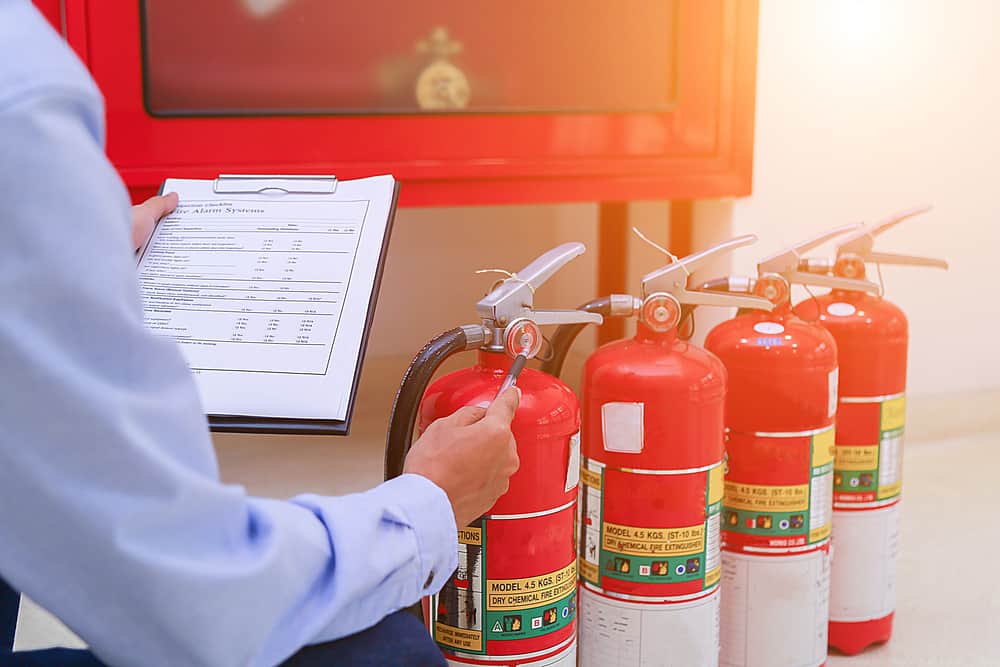
Annual Fire Inspection Rules: OSHA vs. NFPA 10 Unpacked for Nassau County
August 28, 2026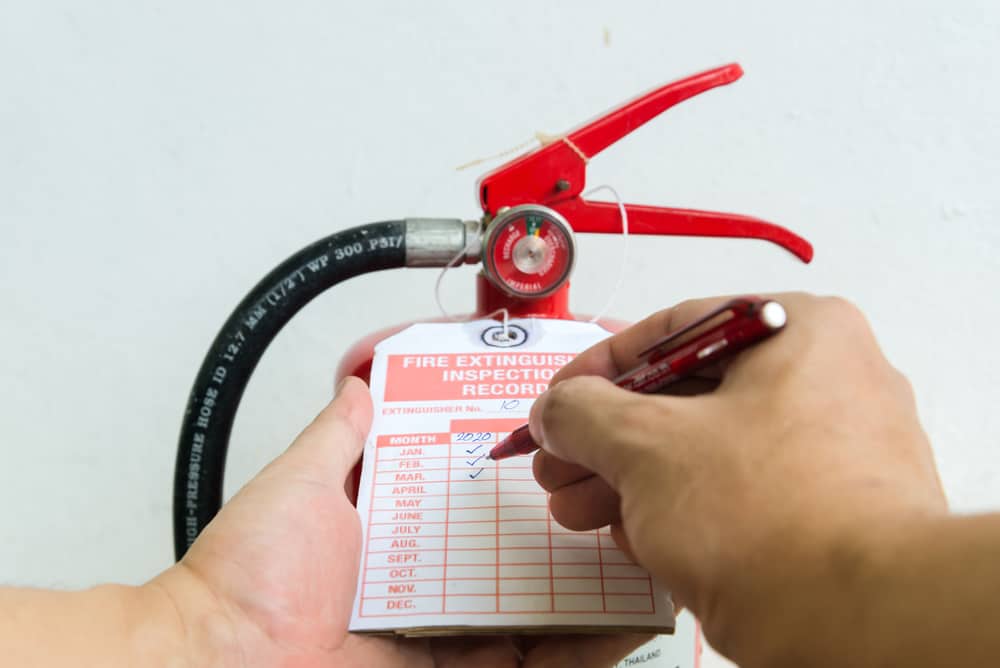
Summary:
If you’ve ever searched “fire extinguisher testing” and weren’t sure whether that’s the same thing as an inspection — you’re not alone. Most business owners use the terms interchangeably. The problem is, they’re not the same thing, and confusing them is one of the most common reasons Nassau County businesses end up with a compliance gap they didn’t see coming.
This page is going to clear that up. You’ll walk away knowing exactly what each service involves, when each one is required, and what the documentation should look like when it’s done right. No jargon, no upsell — just a straight answer to a question that’s caused a lot of unnecessary headaches.
What Fire Extinguisher Inspection Actually Means
When most people say “inspection,” they mean the annual visit from a certified technician — someone who checks each unit, confirms it’s in working order, and puts a new tag on it. That’s accurate, but it’s only part of what the word covers under NFPA 10, the national standard that New York State Fire Code adopts.
NFPA 10 actually defines inspection as something that happens monthly, not just once a year. The annual event is technically called “maintenance” — a more thorough hands-on check performed by a licensed professional. The monthly inspection is a quick visual review that your own staff can do: is the extinguisher in its designated spot, is the gauge in the green, is the tamper seal intact, is the nozzle unobstructed? No technician required, but the results need to be logged and documented.
Understanding that distinction matters because Nassau County Fire Marshal inspections don’t just look at the extinguisher itself — they look at your records. A Fire Marshal visit in Nassau County will focus heavily on documentation completeness, not just equipment condition. Keeping up with fire extinguisher maintenance and maintaining accurate inspection records helps demonstrate that required servicing is being handled properly.
Fire Extinguisher Monthly Inspection Tags: What They Need to Show
The monthly inspection tag hanging from your extinguisher isn’t just a formality. It’s a running log that documents who checked the unit, when, and what they found. During a Nassau County Fire Marshal visit, that tag is one of the first things an inspector looks at — and missing entries, blank months, or an illegible tag can trigger a citation even if the extinguisher itself is in perfect condition.
Each monthly entry should show the date of the inspection, the initials of the person who performed it, and confirmation that the unit passed the visual check. The person completing the monthly inspection doesn’t need to be a certified technician — it can be a manager, a maintenance staff member, or the owner — but they do need to be trained on what to look for, and the log needs to be kept current.
Here’s where businesses run into trouble: the monthly tag and the annual service tag are two different documents. The annual tag, applied by your certified service provider after the professional maintenance visit, shows the date of service, the technician’s credentials, and the company name. The monthly log is separate and ongoing. If your technician comes out once a year and you assume that covers your documentation for the next twelve months, you’re leaving eleven months of required entries blank — and that’s a compliance gap.
For Nassau County businesses in particular, the centralized enforcement model means Fire Marshal inspections happen regularly and uniformly across all municipalities — whether you’re operating in Hempstead, Oyster Bay, North Hempstead, Glen Cove, Long Beach, or any other town in the county. The documentation standard is the same everywhere. The monthly tag isn’t optional, and incomplete records are treated as a violation regardless of the physical condition of your equipment.
The practical fix is straightforward: designate someone on your team to do the monthly walk-through, show them what to check, and make sure the log stays current between annual service visits. It takes about five minutes per unit. The cost of skipping it is significantly higher.
What Fire Extinguisher Testing Means — and Why It's Not the Same as an Inspection
This is where the terminology gets genuinely confusing. “Testing” in the context of fire extinguisher compliance refers specifically to two more intensive service events that occur on longer intervals: the six-year internal examination and the twelve-year hydrostatic test. Neither of these is covered by your annual inspection, and neither of them is optional.
The six-year internal examination — sometimes called the six-year teardown or six-year maintenance — is required for stored-pressure extinguishers that are also subject to a twelve-year hydrostatic test. At the six-year mark, the unit is fully discharged, disassembled, and inspected from the inside. The technician checks for internal corrosion, agent degradation, and worn components, replaces anything that’s compromised, then refills and re-pressurizes the unit to manufacturer specifications.
It costs more than an annual inspection because it involves significantly more labor and materials — typically $40 to $80 per unit on top of the standard service call. When it’s done, the technician applies a separate metallic label (minimum 2″ x 3.5″) showing the month and year of service, their initials, and the company name. That label is distinct from the annual inspection tag and is its own required documentation.
The twelve-year hydrostatic test goes further still. The extinguisher’s pressure vessel is subjected to a controlled water pressure test — well above its working pressure — to verify that the cylinder can safely contain the pressure it’s designed to hold. This is a DOT requirement for low-pressure cylinders, and it’s the test that determines whether an extinguisher can continue in service or needs to be removed.
Dry chemical extinguishers require hydrostatic testing every twelve years. Wet chemical and water/foam extinguishers are on a five-year cycle. CO2 units vary. The cost typically runs $40 to $70 per unit.
The reason this matters for Nassau County businesses is straightforward: if your extinguishers are six or more years old and you’ve only been scheduling annual inspections, there’s a real possibility that a required testing milestone has passed without being addressed. Your tags may be current. Your monthly logs may be complete. But if the six-year label is missing or the hydrostatic test is overdue, you’re out of compliance — and a Fire Marshal visit will find it.
Fire Extinguisher Recertification: What It Is and When It Applies
“Recertification” is another term that gets used loosely, and it’s worth being precise about what it actually means. Recertification isn’t a separate service event you schedule on its own — it’s the documentation output of a completed inspection or testing cycle. When a licensed technician performs an annual maintenance visit, a six-year internal examination, or a hydrostatic test, the result is a certified service record and a properly tagged extinguisher. That combination — the completed service plus the documentation — is what constitutes recertification.
What it means practically is that an extinguisher is only as “certified” as its most recent documented service. If the annual inspection tag is current but the six-year maintenance label is missing, the unit is not fully recertified under NFPA 10, regardless of what the annual tag says. Documentation gaps are compliance gaps.
How Nassau County's Licensing Requirements Affect Your Compliance
Here’s something that doesn’t get enough attention: not every fire extinguisher service company is legally authorized to work in Nassau County, NY. Licensing is jurisdiction-specific in New York, and a company licensed to operate in New York City — including under FDNY requirements — is not automatically licensed to service businesses in Nassau County. The reverse is also true.
This matters more than most business owners realize. If your current provider isn’t properly licensed for Nassau County, the inspection tags they’ve been applying may be legally invalid — even if the physical work was done correctly. During a Fire Marshal inspection, an invalid tag from an unlicensed provider is treated the same as no tag at all. You paid for the service, you have something on the wall, and you’re still in violation.
Nassau County operates under the Nassau County Fire Prevention Ordinance, enforced by the Nassau County Fire Commission and the Fire Marshal’s Office. The Fire Marshal conducts regular commercial inspections across all municipalities. The enforcement is consistent and centralized, which means compliance standards don’t vary based on which town you’re in. Violations carry fines up to $5,000 per offense.
It’s also worth noting that Nassau County falls under New York State Fire Code, which adopts NFPA 10 — not NYC Fire Code. This means the FDNY hologram tag requirement that applies to NYC businesses does not apply to Nassau County properties. If a provider has been telling you otherwise, that’s a sign they may be more familiar with the five boroughs than with Long Island. The compliance standards are similar in substance but different in their specific documentation requirements, and a provider who works both markets needs to know which rules apply where.
We hold credentials for both Nassau County and NYC, which is why we’re able to serve businesses that operate across both markets without putting them at risk of a jurisdiction mismatch. If you’re not sure whether your current provider is properly licensed for Nassau County, it’s worth asking directly — and worth verifying before your next Fire Marshal inspection, not after.
One of the questions we hear regularly from Nassau County business owners is some version of: “My technician said I need a repair — what does that actually mean, and do I really need it?” It’s a fair question, especially when you’ve been told by a previous provider that everything looked fine.
Fire extinguisher repair covers a range of corrective work that goes beyond a standard annual inspection or recharge. Common repairs include valve replacement, hose replacement, O-ring replacement, handle repair, and siphon tube replacement. These aren’t cosmetic issues — a faulty valve or a cracked hose can prevent an extinguisher from discharging properly when it’s actually needed. The annual inspection process is designed to catch these problems before they become failures.
Repairs can also come up during a six-year internal examination when the unit is fully disassembled. The question of repair versus replacement comes up most often with older units. Extinguishers generally have a service life of six to twelve years, and once a unit gets past the ten-year mark, the cost of repair and continued maintenance can approach or exceed the cost of a new unit. A good technician will tell you honestly which way the math works — and should be able to explain the reasoning, not just hand you a quote for new equipment.
Recharging is a related but distinct service. Any time an extinguisher is discharged — even partially — it needs to be recharged before it can be returned to service. The same applies when a technician identifies pressure loss during an inspection, when a tamper seal has been broken, or following certain maintenance procedures. Recharging involves refilling the extinguishing agent and re-pressurizing the cylinder to manufacturer specifications. The cost to recharge a fire extinguisher typically runs $15 to $50 per unit depending on size and type.
One thing worth knowing: recharging is also required after the six-year internal examination, since the unit is fully discharged as part of that process. If your provider performs the six-year teardown but doesn’t include a recharge in the service, the extinguisher can’t go back on the wall in working condition. A full-service provider handles both in the same visit — no second call, no gap in coverage while you wait for the unit to be returned.
Fire Extinguisher Compliance in Nassau County: What You Actually Need to Stay Current
The short version: inspection and testing are not the same thing, recertification is the documentation that proves the work was done, and staying compliant in Nassau County means keeping up with all four service tiers — monthly visual checks, annual professional maintenance, six-year internal examination, and twelve-year hydrostatic testing — not just the one that comes with an annual reminder.
The longer version is that most compliance problems we see aren’t the result of business owners ignoring their fire extinguishers. They’re the result of business owners who thought their annual inspection covered everything, or who didn’t know their six-year milestone had passed, or who were using a provider that wasn’t properly licensed for Nassau County.
These are fixable problems — but they’re much easier to fix before a Fire Marshal visit than after. If you’re not sure where your extinguishers stand — whether the service history is complete, whether the documentation is accurate, or whether your current provider is properly licensed for Nassau County — we offer free on-site estimates and same-day service availability. We’ve been doing this work on Long Island and across the five boroughs for over 35 years. Reach out and we’ll tell you exactly where you stand.
Related posts