Restaurant Fire Suppression System Compliance Calendar for New York
September 24, 2026
Fire Protection Service Resources Every Nassau County Business Needs
September 25, 2026
Summary:
October comes fast. And if you’re running a restaurant, catering hall, or commercial kitchen anywhere in Nassau County, the last thing you want is a fire marshal citation — or worse, a system failure — during your highest-revenue weeks of the year. The good news is that fall is exactly when you’re supposed to get your suppression system serviced. The bad news is that most restaurant owners don’t realize the rules around who can legally do that work changed in 2023. Here’s what you need to know before you schedule your next inspection.
Kitchen Suppression System Inspections: What NFPA 96 Actually Requires
Under NFPA 96 — the national standard that governs commercial cooking ventilation and fire protection — your kitchen suppression system must be inspected by a licensed, certified technician every six months. Not once a year. Twice. Every year, without exception.
That means there are only two windows annually to get this done. If you’re a Nassau County restaurant owner reading this in late summer or early fall, you’re right in the middle of the second one. Miss it, and you’re operating through the holiday season out of compliance — which is not a position you want to be in when the Nassau County Fire Marshal’s Office comes knocking.
The inspection isn’t just about putting a new tag on the system. A proper semiannual service visit covers the condition of the suppression nozzles, the status of tamper indicators and seals, the accessibility of the manual pull station, whether the agent cylinder is still charged, and whether the system will actually shut off the gas supply when it activates. That last part matters more than most people think.
What Happens During a Kitchen Hood Fire Suppression System Inspection
A thorough inspection of your commercial kitchen hood fire suppression systems goes well beyond a visual check. When a certified technician comes out, they’re verifying that every component of the system will do its job in an actual fire — not just that it looks intact from across the kitchen.
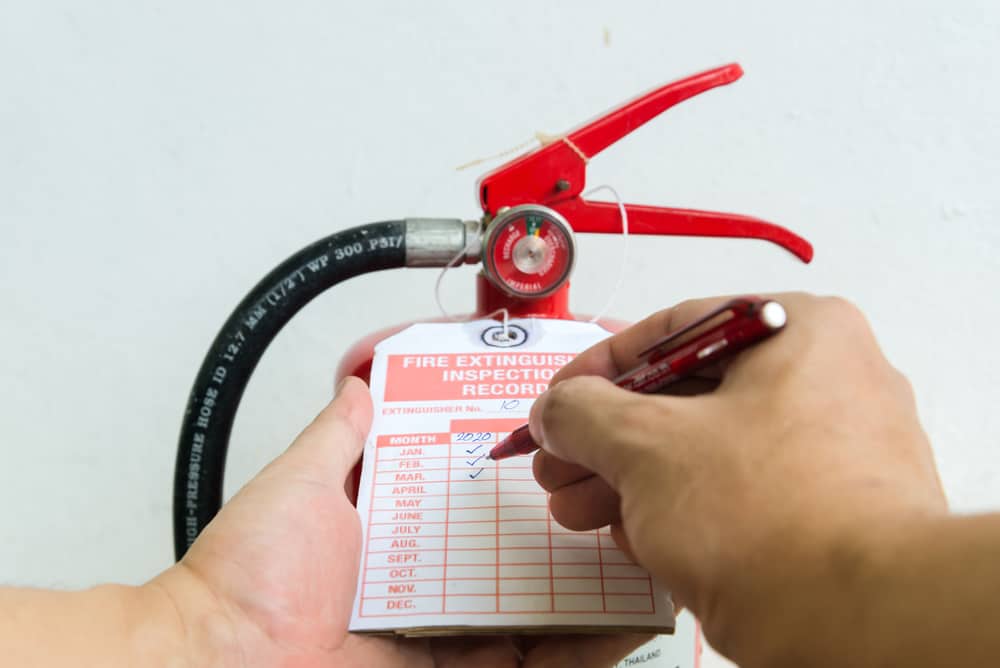
That means checking the nozzle aims and protective caps to confirm they haven’t been bumped or blocked by new equipment. It means verifying the fusible links, which are the heat-sensitive triggers that activate the system, haven’t degraded from constant heat exposure. It means confirming the maintenance tag is current, visible, and reflects the correct service date. And it means testing the microswitch function that simultaneously cuts fuel to your cooking line when the system discharges — because a suppression system that douses a grease fire while the gas stays on isn’t doing its job.
Here’s something that catches a lot of restaurant owners off guard: if you’ve changed your cooking equipment since the last inspection — added a fryer, moved a grill, reconfigured your hood — that can affect whether your current suppression system design still covers your cooking line properly. A new piece of equipment in the wrong spot can create an unprotected zone, and that’s a compliance issue even if the system itself is in perfect working order. Any time your kitchen layout changes, your suppression service provider needs to know.
Grease buildup is the other piece that doesn’t get enough attention. NFPA 96 identifies a grease layer just 1/8 inch deep — roughly the thickness of a dime — as a critical fire hazard. That kind of buildup accumulates in nozzles and ducts faster than most people expect, especially during high-volume periods. The fall inspection window exists in part because summer cooking volume accelerates that accumulation, and you want it addressed before you head into the busiest stretch of the year.
One more thing worth clarifying: hood cleaning and suppression system inspection are not the same service. Hood cleaning removes grease from the exhaust system. Suppression inspection tests whether the suppression system will actually function in a fire. They require different certifications and are performed by different technicians. If your hood cleaning company is also signing off on your suppression system, that’s worth a closer look.
The S-17 Certification Rule That Most Nassau County Restaurant Owners Don't Know About
As of July 2023, New York changed the rules around who can legally service a commercial kitchen fire suppression system. Technicians are now required to hold the S-17 Certificate of Fitness for the specific brand of equipment they’re servicing. That means a technician who is generally licensed for fire protection work may not be legally authorized to service your Ansul, Kidde, Pyrochem, or Range Guard system unless they hold the S-17 for that particular brand.
This matters more than it might seem. If a technician services your system without the proper brand-specific S-17 certification, the inspection tag on your system doesn’t make you compliant — it just looks like you are. And if your system ever fails to activate during an actual fire, that distinction becomes very consequential, both for your insurance claim and for any liability that follows.
The honest reality is that a lot of restaurant owners across Nassau County had their systems serviced last year by providers who may not have updated their certifications under the new requirement. They have a tag. They think they’re covered. But if the technician wasn’t S-17 certified for their specific brand, the inspection doesn’t hold up.
Before you schedule your fall service visit, it’s worth asking any provider you’re considering whether their technicians hold the S-17 Certificate of Fitness for your equipment brand. A legitimate provider will answer that question without hesitation. If they can’t confirm it clearly, that’s your answer.
At M&M Fire Extinguishers Sales & Services, Inc., our technicians are certified to service the specific brands we work on. That’s not a marketing claim — it’s a legal requirement we take seriously, and it’s something we can document.
Commercial Kitchen Hood Fire Suppression Systems and the Cost of Getting It Wrong
Sixty-one percent of restaurant fires in the United States are caused by cooking equipment. Grease buildup in hoods and ducts accounts for roughly 20 to 25 percent of those incidents. The average cost of an uncontained restaurant fire — property damage, lost inventory, business interruption — runs around $60,000, according to the National Fire Data Center.
That number doesn’t include what it costs to lose two weeks of holiday revenue in Nassau County’s catering market. It doesn’t include the insurance complications that follow a fire in a kitchen where the suppression system wasn’t properly maintained. And it doesn’t include the reputational damage that comes with a forced closure during the busiest season of the year.
A semiannual inspection is a fraction of that exposure. The math isn’t complicated.

Hood Fire Suppression System Price: What Does Inspection Actually Cost?
Pricing for kitchen suppression inspections varies based on the size and complexity of your system. For smaller commercial systems, routine inspections and testing typically run in the range of $350 to $650 per year — covering both semiannual visits. Larger or more complex installations can run higher. These are industry-standard figures.
What we offer is a free on-site estimate. That means a certified technician comes to your kitchen, looks at your actual system, and gives you a clear number before any work is done. No guessing, no surprise add-ons after the fact.
It’s also worth knowing that properly maintained fire suppression systems can qualify you for meaningful reductions on your commercial insurance premiums — reductions that can range from 10 to 60 percent depending on your carrier and coverage type. That’s not a guarantee, and every policy is different, but it’s a conversation worth having with your insurance provider after your next inspection.
The other thing to consider is timing. If you’re running a restaurant in Garden City, NY, Hicksville, NY, Mineola, NY, or anywhere along the Hempstead Turnpike or Jericho Turnpike corridor, your fall inspection window is closing. Scheduling now means you’re covered before the holiday rush. Scheduling in December means you’re hoping nothing goes wrong in the meantime — and if it does, you’re dealing with it at the worst possible moment.
We’ve been doing this work in Nassau County for over 35 years. We know what the Nassau County Fire Marshal’s Office expects to see, we know what a proper inspection looks like versus a cursory one, and we know what it means to a restaurant owner when a system failure happens during their busiest week. Same-day service and 24-hour availability aren’t just selling points — they’re the reason clients call us when something goes wrong at 11 p.m. the night before a big event.
Frequently Asked Questions About Kitchen Suppression System Inspections in Nassau County
Restaurant owners ask us a lot of the same questions. Here are the ones that come up most often, answered plainly.
**How often does my kitchen suppression system need to be inspected?** Every six months, under NFPA 96. Annual inspection is not sufficient and does not meet code requirements. Two visits per year, every year.
**What’s the difference between hood cleaning and suppression system inspection?** Hood cleaning removes grease from your exhaust ductwork. Suppression system inspection tests whether the system will actually activate and function correctly in a fire. These are separate services with different certification requirements. Your hood cleaning company is not automatically qualified to sign off on your suppression system.
**Does Nassau County have its own requirements beyond NFPA 96?** Nassau County enforces NFPA 96 standards through the Nassau County Fire Marshal’s Office, and businesses operating here must meet both state and county-level requirements. If you’ve received a violation notice from the fire marshal in Nassau County, that’s a separate process from your regular inspection — and it requires someone who knows how to navigate it. We handle fire marshal violation removal as part of our services, which is something not every fire protection company can say.
**Can I do my own monthly inspections?** You can and should perform monthly visual checks — and we walk our clients through exactly what to look for during those walkthroughs. But the semiannual professional inspection by a certified technician is a legal requirement, not something a self-inspection replaces.
**What if my technician isn’t S-17 certified for my brand?** Then your inspection tag doesn’t make you compliant, even if it looks like it does. Ask any provider you’re considering whether their technicians hold the S-17 Certificate of Fitness for your specific equipment brand before you schedule.
Ready to Schedule Your Fall Kitchen Suppression Inspection in Nassau County?
The fall inspection window is the right time to get this done — before the holidays, before the fire marshal’s sweep, and before your kitchen is running at full capacity with a system that hasn’t been touched in six months. Most restaurant owners already know they need to do this. The question is whether they’re doing it with a certified technician who actually knows their equipment.
If you’re in Nassau County and you want a straight answer about where your system stands, reach out to M&M Fire Extinguishers Sales & Services, Inc. We’ll send a certified technician to your kitchen, assess your system, and give you a clear picture of what’s needed — no pressure, no guesswork. We’ve been doing this work on Long Island for over 35 years, and we’re available same day, around the clock, because compliance issues don’t always happen on a convenient schedule.
Related posts