
Winter Fire Safety: Protecting Your Suppression System from Freezing Pipes
February 9, 2026
How Long Do Fire Extinguishers Last? A Guide to Expiration Dates
February 23, 2026
Summary:
Understanding Fire Extinguisher Placement Requirements for Commercial Buildings
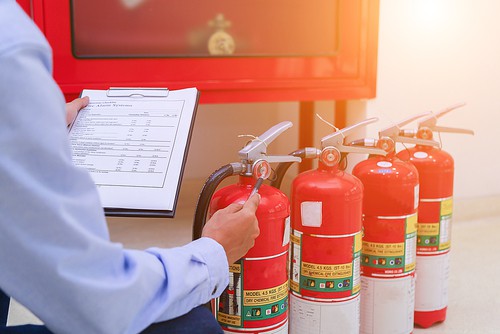
Fire extinguisher placement isn’t random—every location serves a purpose. That purpose? Getting the right tool to the right person fast enough to matter when fire strikes your building.
NFPA 10 standards form the backbone of New York’s requirements. These aren’t polite suggestions from safety experts. They’re enforceable rules with real consequences when your local fire marshal shows up for inspection.
The basic rule sounds deceptively simple: no point in your building should sit more than 75 feet from a Class A extinguisher. But that’s just your starting point for placement that actually works during emergencies.
NFPA 10 Travel Distance Requirements Every Business Owner Should Know
Travel distance determines whether your placement strategy passes inspection or fails spectacularly. This measurement isn’t about drawing straight lines on blueprints—it’s about the actual path someone takes during an emergency when clear thinking becomes a luxury.
Class A fires need extinguishers within 75 feet of travel distance. Class B hazards require 30 to 50 feet, depending on your extinguisher rating and hazard level. Class C fires follow Class A or B rules since electrical fires involve the same underlying materials.
Here’s what trips up most business owners: travel distance means the actual walking route, not a straight line through walls or equipment. Someone navigating around machinery, through doorways, or up stairs covers real ground that counts toward your limit. Your seemingly compliant 60-foot straight-line measurement becomes a code-violating 90-foot journey when reality kicks in.
Fire marshals walk these paths during inspections. They identify bottlenecks, blocked routes, and panic-inducing obstacles that slow emergency response. Smart placement anticipates these real-world conditions instead of just satisfying minimum measurements on paper.
Height requirements matter just as much as distance. Extinguishers weighing 40 pounds or less need tops positioned no higher than 5 feet from the floor. Heavier units max out at 3.5 feet. Every extinguisher bottom must clear the ground by at least 4 inches to prevent damage and maintain visibility.
Strategic Locations That Actually Make Sense During Emergencies
The best fire extinguisher locations aren’t just code-compliant—they’re intuitive when stress levels spike and seconds matter more than perfect measurements.
Exit routes deserve first priority for placement. People instinctively move toward exits during emergencies, making these paths natural locations for fire suppression equipment. This strategy also prevents the deadly scenario where someone ventures deeper into a burning building to reach an extinguisher.
High-risk areas demand dedicated coverage that goes beyond standard spacing rules. Commercial kitchens need Class K extinguishers within 30 feet of cooking equipment—no exceptions. Electrical rooms, server areas, and flammable storage spaces require appropriate extinguisher types positioned for quick access without exposing users to additional dangers.
Visibility beats perfect spacing every single time. An extinguisher placed exactly 74 feet away but hidden behind equipment becomes worthless during an emergency. Clear sight lines, proper signage, and unobstructed access matter more than shaving distance measurements to their absolute minimums.
Think about your building’s daily traffic patterns and employee behavior. Break rooms, main entrances, and reception areas see constant foot traffic—making them natural choices for extinguisher placement. Employees already familiar with these high-traffic zones can respond faster than those searching unfamiliar corridors under stress.
Multi-story buildings need at least one extinguisher per floor, with additional units near stairwells. This prevents the nightmare scenario where upper-floor occupants must travel to ground level for fire suppression equipment while smoke and flames potentially block their return route to safety.
Long Island Fire Code Compliance and Installation Best Practices
Long Island’s fire safety landscape creates compliance challenges that generic placement guides completely miss. Nassau and Suffolk Counties handle fire code enforcement differently, creating requirements that shift based on your exact location.
Nassau County centralizes oversight through the Fire Commission, delivering more uniform standards across municipalities. Suffolk County operates with 109 independent volunteer fire departments, each potentially adding local requirements beyond state minimums. Your address determines which additional rules apply to your business.
Professional fire extinguisher installation and ongoing fire extinguisher service aren’t just smart investments—they’re often required for compliance and insurance coverage. Proper mounting, certified installation documentation, and regular fire extinguisher inspection protect you during official inspections and insurance claims.

Nassau vs Suffolk County: What Your Location Means for Compliance
Understanding your county’s approach to fire code enforcement helps you avoid surprise violations and unexpected requirements that could disrupt business operations or trigger expensive fire extinguisher repair situations.
Nassau County’s centralized Fire Commission model creates more predictable requirements across different municipalities. The county coordinates inspections, standards, and educational programs, delivering consistency for businesses operating multiple Nassau locations. Recent years brought stricter regulations, particularly for densely populated areas and multi-family residential properties.
This uniformity helps business owners plan fire safety investments across multiple properties without worrying about conflicting local requirements. The Fire Marshal’s Office conducts regular commercial property inspections, ensuring compliance with state and county-specific regulations while offering educational programs that keep business owners informed.
Suffolk County’s decentralized approach gives individual fire districts significant control over local requirements. This flexibility allows solutions tailored to specific community needs, but creates challenges for businesses operating across multiple districts. Each of Suffolk’s 109 volunteer fire departments can impose additional requirements beyond state-mandated minimums.
A business with locations in different Suffolk towns might face varying inspection schedules, additional equipment requirements, or different mounting specifications. The Suffolk County Fire Academy supports training and prevention efforts, but individual districts maintain substantial autonomy over enforcement and additional requirements.
Successful business owners research their specific fire district’s requirements early in planning processes. Some districts require more frequent fire extinguisher inspection schedules, additional fire protection measures, or specific equipment certifications that exceed basic state requirements. This research prevents costly surprises and ensures your fire suppression system meets all applicable standards.
Professional Installation Requirements and Mounting Standards
Professional fire extinguisher installation goes far beyond hanging a bracket on the wall. Proper installation ensures code compliance, insurance coverage, and reliable performance when emergencies strike your business.
Wall-mounted extinguishers require brackets specifically designed and listed for your extinguisher’s exact model and size. Generic brackets or improvised mounting solutions fail inspections and create serious liability issues. The mounting surface must support the extinguisher’s weight plus the force applied during emergency removal—drywall alone rarely provides adequate support for larger units.
Cabinet installation offers protection from tampering and environmental damage while maintaining required accessibility. Cabinets cannot obstruct visibility or restrict emergency access under any circumstances. Glass-front cabinets allow visual fire extinguisher inspection without compromising security, while break-glass emergency access ensures availability during actual fires.
Proper mounting height prevents damage while ensuring accessibility for all potential users. Extinguishers mounted too low risk damage from cleaning equipment, foot traffic, or stored items. Units mounted too high become inaccessible to shorter employees or difficult to remove quickly during high-stress emergency situations.
We understand load-bearing requirements for different construction types. Concrete block, steel stud, and traditional wood frame construction each demand specific mounting approaches and specialized hardware. Inadequate mounting can result in extinguishers falling during normal building vibrations, potentially causing injury or leaving critical areas unprotected.
Installation documentation matters as much as the physical work itself. Professional fire extinguisher installation includes certificates proving correct placement, appropriate mounting, and compliance with local requirements. This documentation becomes crucial during official inspections, insurance claims, and potential liability situations.
Environmental considerations affect mounting decisions in ways that aren’t immediately obvious to most business owners. Areas subject to temperature extremes, moisture exposure, or chemical vapors need special mounting solutions and potentially different extinguisher types. We identify these conditions and recommend appropriate solutions before problems develop into expensive fire extinguisher repair situations.
Getting Fire Extinguisher Placement Right for Your Long Island Business
Strategic fire extinguisher placement protects your people, property, and business continuity in ways that extend far beyond basic code compliance. The difference between random placement and thoughtful positioning could determine whether a small fire becomes a manageable incident or a devastating business loss.
Understanding travel distances, visibility requirements, and local compliance standards gives you the foundation for effective fire safety planning. But proper installation, ongoing maintenance, and professional guidance ensure your investment actually functions when seconds count and lives hang in the balance.
Your fire safety strategy deserves the same attention you give other critical business systems. When you’re ready to get placement right the first time, we bring the local expertise and professional installation services that Long Island businesses depend on for reliable fire protection.