
Fire Extinguisher Installation for EV Garages: Protecting Your Home from Lithium-Ion Risks
March 14, 2026
Beyond the Tag: Why Digital Fire Extinguisher Inspection Logs are a Game Changer
March 16, 2026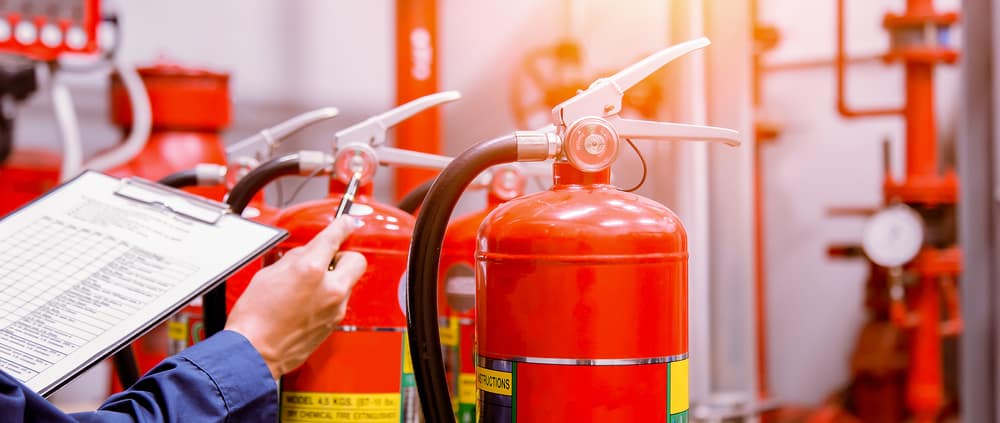
Summary:
Why Fire Extinguisher Inspections Fail in Long Island
Fire extinguisher inspections fail for the same handful of reasons across Nassau County, Suffolk County, and the NYC boroughs. These aren’t obscure technical issues that require an engineering degree to understand. They’re straightforward compliance gaps that happen when businesses treat fire extinguishers like static wall decorations instead of emergency equipment that needs regular attention.
The failure patterns are remarkably consistent whether you’re operating a warehouse in Deer Park, a restaurant in Queens, or an office building in Manhattan. Inspectors check the same basic elements every time: documentation, accessibility, physical condition, pressure levels, and proper placement. When any of these elements fall short, you fail—even if the extinguisher itself would technically work during a fire.
Understanding these failure points matters because the consequences extend beyond a simple violation notice. Failed inspections can trigger insurance coverage issues, OSHA penalties that start at $15,625 per violation, and in NYC, fines ranging from $300 to $1,000 per extinguisher. More importantly, an extinguisher that fails inspection is an extinguisher that might fail during an actual emergency when someone’s counting on it to work.
Expired or Missing Inspection Tags
The single most common reason fire extinguisher inspections fail is also the easiest to spot: expired or missing inspection tags. This isn’t about the extinguisher being broken. The unit might be in perfect working condition, fully charged, and ready to extinguish a fire. But without current documentation proving it was inspected within the required timeframe, inspectors have no choice but to mark it as non-compliant.
Inspection tags serve as visible proof that a certified professional examined the extinguisher and verified it meets safety standards. These tags must show the date of the last inspection, the inspector’s initials or certification number, and in NYC, they must be FDNY-issued serialized tags with security features like hologram strips and QR codes. Since 2018, NYC has required these specialized tags to prevent fraud and ensure only licensed companies perform inspections.
The problem happens in several ways. Sometimes businesses conduct informal checks without updating the tag. Other times, tags become detached and nobody replaces them. Most commonly, the annual inspection deadline simply passes while everyone assumes someone else is tracking it. A tag that’s even one day expired creates the same violation as a tag that’s been expired for six months.
Long Island businesses face an additional layer of complexity because requirements vary by location. Nassau County operates under centralized Fire Commission oversight with uniform standards. Suffolk County has 109 independent volunteer fire departments, each potentially adding local requirements beyond state minimums. A business with locations across multiple jurisdictions needs to track different inspection schedules and tag requirements for each property.
The fix is straightforward but requires consistent attention. Implement a tracking system that flags upcoming inspection deadlines at least 30 days in advance. After each professional inspection, verify the new tag is properly attached and legible. For monthly visual checks, document the inspection date and inspector initials on the tag as required. Digital systems can automate reminders and maintain electronic records that supplement the physical tags.
Missing or expired tags account for more inspection failures than any other single issue. The irony is that this is often the easiest problem to prevent with basic calendar management and a relationship with a certified fire extinguisher service provider who tracks your inspection schedule for you.
Blocked Access to Fire Extinguishers
Fire extinguishers that nobody can reach might as well not exist. Blocked access is the second most common inspection failure and one of the most frequent OSHA violations. The scenario plays out the same way in warehouses, retail stores, offices, and restaurants across Long Island: operations evolve, inventory shifts, furniture gets rearranged, and suddenly the fire extinguisher that was perfectly accessible last month is now hidden behind a rolling cart, stacked boxes, or seasonal displays.
OSHA and NFPA standards are explicit about accessibility. Fire extinguishers must be readily accessible without requiring anyone to move obstacles, open jammed cabinets, or navigate around equipment. The regulations exist because during an actual fire, every second counts. Someone dealing with a small fire shouldn’t have to waste precious time moving obstacles while flames spread.
Inspectors don’t just glance at where extinguishers are mounted. They walk the actual path an employee would take during an emergency. If they have to sidestep anything, move something, or squeeze through a tight space, that’s a failed inspection item. The extinguisher needs to be visible from normal travel paths, and the route to it must remain completely clear.
This failure happens gradually in busy facilities. A temporary stack of inventory becomes permanent. A cart gets parked “just for today” and stays there for weeks. New equipment gets installed without considering how it affects access to existing fire safety equipment. Nobody intentionally blocks fire extinguishers, but operational pressures create situations where accessibility becomes an afterthought.
Long Island businesses often face space constraints that make this challenge worse. Retail stores need to maximize display space. Warehouses operate at capacity. Restaurants have tight kitchen layouts. These realities don’t change the compliance requirements, though. Fire extinguisher access takes priority over operational convenience.
The solution requires building accessibility checks into regular operations. During daily walkthroughs, verify that all fire extinguishers remain visible and accessible. Train staff to recognize and immediately report blocked extinguishers. When planning layout changes, equipment installations, or inventory placement, map out fire extinguisher locations first and design around them rather than treating them as obstacles to work around.
Some businesses find it helpful to mark floor space around fire extinguishers with tape or paint to create a visual reminder that the area must stay clear. Others include extinguisher accessibility in opening and closing checklists. The specific method matters less than creating a system that prevents access issues before they become violations.
Physical accessibility also extends to mounting height and visibility. Extinguishers must be mounted so the handle sits between 3.5 and 5 feet from the floor per OSHA requirements. They need clear signage indicating their location, especially in areas where the extinguisher itself might not be immediately visible from all angles. An extinguisher mounted too high, too low, or without proper signage fails inspection even if nothing blocks the path to it.
Pressure Gauge and Physical Condition Failures
A fire extinguisher with the wrong pressure reading or visible damage represents the most serious type of inspection failure because it indicates the unit might not function properly during an emergency. Unlike missing tags or blocked access—which are documentation and accessibility issues—pressure and condition failures mean the extinguisher itself is compromised.
Every rechargeable fire extinguisher has a pressure gauge with a needle that should rest in the green zone. Inspectors check this gauge on every visit. If the needle sits in the red zone—either overcharged or undercharged—the extinguisher fails inspection immediately. Research shows approximately 15% of extinguishers are found undercharged during professional inspections, meaning a significant portion of fire safety equipment isn’t ready for use.
Pressure loss happens gradually and isn’t always obvious without regular checks. A slow leak, a faulty valve, or simple age can cause pressure to drop over time. The extinguisher might look fine from the outside, but when someone pulls the pin during an emergency, nothing happens—or worse, it discharges weakly and fails to suppress the fire. This is why monthly visual inspections specifically require checking the pressure gauge, and why annual professional inspections include more detailed pressure testing.
Physical Damage and Corrosion Issues
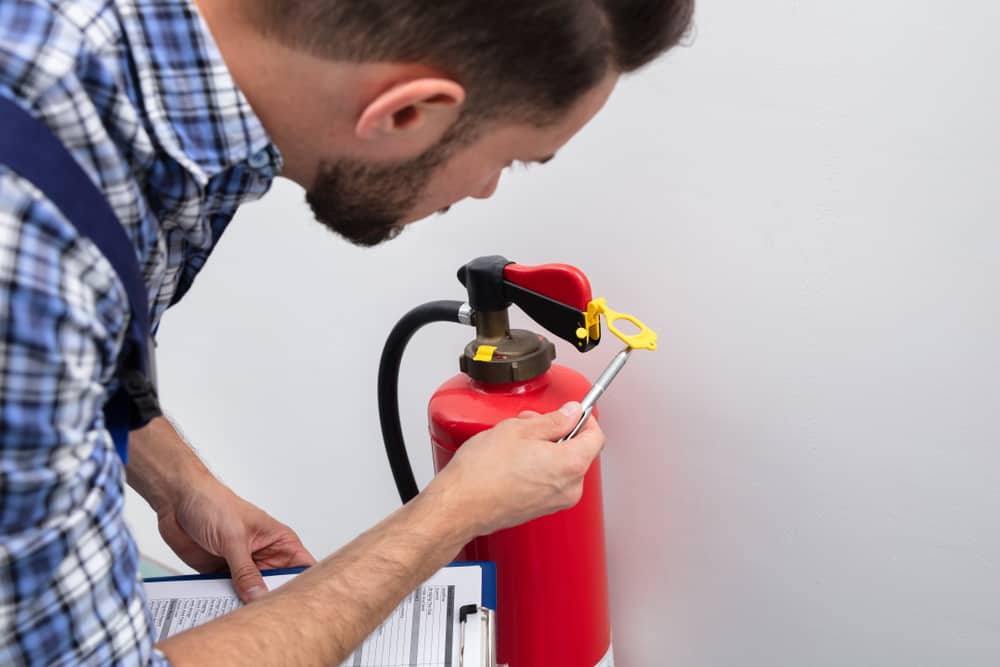
Beyond pressure problems, physical damage and corrosion account for approximately 30% of fire extinguisher failures according to industry data. Inspectors examine the entire unit for dents, rust, leaks, damaged hoses, clogged nozzles, broken safety pins, and missing tamper seals. Any visible damage triggers a failure because compromised structural integrity creates safety risks.
Corrosion is particularly insidious because it often develops in areas that aren’t immediately visible. Extinguishers stored near machinery, outdoors, or in humid environments develop rust and weakened seals over time. A corroded cylinder might look functional but could fail catastrophically under pressure. This is why NFPA 10 requires internal examinations every six years for stored pressure extinguishers—to catch deterioration that isn’t visible from the outside.
Environmental factors accelerate physical damage. Extinguishers in commercial kitchens face grease exposure and temperature fluctuations. Units in warehouses might get bumped by forklifts or equipment. Outdoor extinguishers endure weather exposure. Coastal Long Island properties deal with salt air that accelerates corrosion. Each environment creates specific challenges that require appropriate extinguisher selection and more frequent inspections.
The tamper seal and safety pin deserve special attention because their absence indicates the extinguisher may have been used or tampered with. During annual inspections, certified technicians remove these seals to perform maintenance, then install new ones. Between professional inspections, intact seals and pins confirm nobody has discharged or interfered with the unit.
Physical damage isn’t always dramatic. A small dent might seem insignificant, but inspectors can’t verify the cylinder’s structural integrity without proper testing. Faded labels that make operating instructions illegible fail inspection because during an emergency, someone might need those instructions. A hose with minor cracks might work today but could fail under pressure tomorrow.
Long Island businesses operating across multiple locations need to account for different environmental conditions at each site. A fire extinguisher that performs well in a climate-controlled Manhattan office might deteriorate rapidly in a Suffolk County warehouse without environmental controls. We assess these factors and recommend appropriate inspection frequencies and maintenance schedules based on actual operating conditions.
Regular professional maintenance catches condition issues before they become failures. Annual inspections include detailed examinations of all mechanical parts, hoses, nozzles, and cylinders. When problems are identified early, repairs or recharging can restore the unit to full functionality. When problems go unaddressed, the extinguisher eventually fails inspection and requires complete replacement at significantly higher cost.
Wrong Extinguisher Type or Inadequate Coverage
Having fire extinguishers doesn’t satisfy compliance requirements if they’re the wrong type for the hazards present or if there aren’t enough units to provide adequate coverage. This failure category combines technical knowledge of fire classifications with spatial planning based on travel distance requirements.
Fire extinguishers are classified by the types of fires they can handle. Class A covers ordinary combustibles like wood, paper, and cloth. Class B handles flammable liquids and gases. Class C is for electrical fires. Class K is specifically designed for commercial cooking oils and fats. Using the wrong extinguisher type on a fire can be ineffective or even dangerous—applying water to an electrical fire creates electrocution risk, while using the wrong agent on a grease fire can cause it to spread.
Inspectors verify that the extinguisher types match the hazards in each area. A commercial kitchen must have Class K extinguishers within 30 feet of cooking equipment. Areas with electrical equipment need Class C-rated extinguishers. Warehouses storing flammable liquids require Class B coverage. Many businesses use ABC-rated multi-purpose extinguishers because they handle the most common fire types, but specialized environments need specialized equipment.
Coverage requirements are equally specific. For Class A fires, employees must be able to reach an extinguisher within 75 feet of travel distance. Class B hazards require 30 to 50 feet depending on the extinguisher rating and hazard level. Travel distance means the actual walking path through doorways and around obstacles, not a straight line through walls or equipment. A seemingly compliant 60-foot straight-line measurement becomes a code-violating 90-foot journey when you account for the actual route someone would take.
Long Island businesses face unique challenges because fire code enforcement differs between Nassau and Suffolk Counties. Nassau County’s centralized Fire Commission creates uniform standards across municipalities. Suffolk County’s 109 independent fire departments can add local requirements beyond state minimums. A business operating in multiple Suffolk towns might face different extinguisher placement requirements at each location.
The solution requires working with fire protection professionals who understand both the technical classifications and local code requirements. A proper hazard assessment identifies fire risks in each area of your facility. Based on those risks, professionals recommend appropriate extinguisher types, ratings, and placement locations that satisfy both safety needs and compliance requirements. As your business operations change—new equipment, different materials, layout modifications—the fire protection plan needs updating to maintain compliance.
Inadequate coverage often becomes apparent during expansion or renovation. A business adds square footage but doesn’t add fire extinguishers proportionally. A layout change increases travel distances beyond code limits. New equipment introduces hazards that existing extinguisher types don’t address. These situations create compliance gaps that professional fire extinguisher installation and ongoing fire extinguisher service prevent by reassessing coverage whenever operational changes occur.
Preventing Fire Extinguisher Inspection Failures in Long Island
Fire extinguisher inspection failures happen for predictable reasons that professional service prevents. Expired tags, blocked access, pressure problems, physical damage, and inadequate coverage account for the vast majority of violations across Nassau County, Suffolk County, and the NYC boroughs. The pattern is consistent whether you’re operating a small retail store or managing multiple commercial properties.
The common thread is that these failures rarely happen suddenly. Tags don’t expire overnight—they approach their deadline gradually while everyone assumes someone else is tracking it. Access doesn’t get blocked in one moment—it happens incrementally as operational needs create obstacles. Pressure doesn’t drop instantly—it declines slowly over weeks or months. Catching these issues requires consistent attention and professional expertise.
Working with certified fire extinguisher service providers transforms compliance from a reactive scramble into a proactive system. Professional inspections catch problems before they become violations. Proper documentation satisfies inspectors and insurance companies. Regular maintenance extends equipment lifespan and ensures everything works when you actually need it. For Long Island businesses navigating different requirements across multiple jurisdictions, that expertise becomes even more valuable.
We provide comprehensive fire extinguisher inspection, installation, maintenance, repair, and recharge services throughout Long Island and the NYC boroughs. Our certified technicians understand the specific compliance requirements for Nassau County, Suffolk County, and all five boroughs, ensuring your fire safety equipment meets local codes and actually functions during emergencies.