How Long Do Fire Extinguishers Last? A Guide to Expiration Dates
February 23, 2026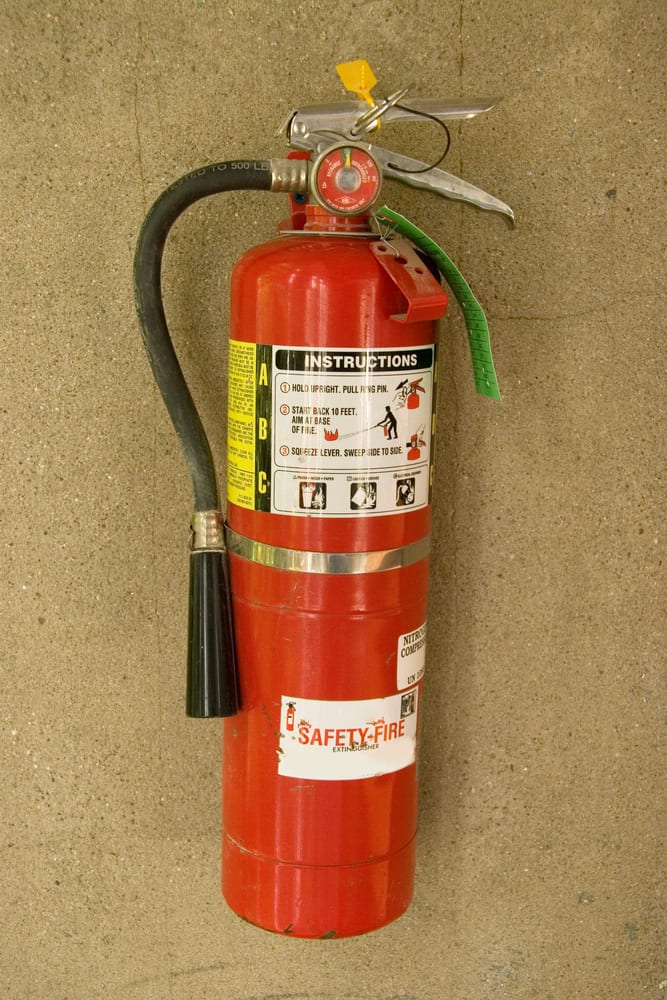
Summary:
Why Fire Extinguisher Service Appointments Matter in New York
New York doesn’t mess around with fire safety compliance. Whether you’re operating in Manhattan, Brooklyn, Queens, the Bronx, Staten Island, or anywhere across Nassau or Suffolk County, annual fire extinguisher inspections aren’t suggestions—they’re legal requirements backed by FDNY regulations, NFPA standards, and local fire codes.
Business owners who skip service appointments or let their inspection tags expire face real consequences. Fire marshal inspections can result in fines ranging from $300 to over $1,000 per extinguisher for non-compliance. Insurance companies may deny claims if your fire safety equipment wasn’t properly maintained. In severe cases, businesses can be shut down until violations are corrected.
But compliance isn’t just about avoiding penalties. Properly serviced fire extinguishers actually work when you need them. A technician’s inspection catches pressure loss, physical damage, and internal corrosion before a small office fire becomes a total loss because your extinguisher failed at the worst possible moment.
What Happens Before the Technician Arrives
The service appointment actually starts before anyone shows up at your door. When you schedule with us at M&M Fire Extinguishers Sales & Services, Inc., we’ll typically ask about your property type, number of extinguishers, and when your last service was completed.
This isn’t just administrative busywork. Different building types have different requirements. A restaurant in Queens needs Class K extinguishers for commercial cooking equipment. A warehouse in Suffolk County might need wheeled units for larger spaces. An office building in Manhattan has different placement requirements than a retail store in Nassau County.
Our technician arrives with the right equipment, replacement parts, and—critically—legitimate FDNY-issued tags if you’re in New York City. Since June 2018, NYC requires standardized tags with holograms and QR codes to combat fraudulent service companies. These aren’t something you can print yourself or buy from a supply catalog. Only licensed companies approved by FDNY can purchase them, and inspectors know how to spot counterfeits.
You should have a list of where your extinguishers are located. Floor plans help, especially in larger facilities. The technician needs to inspect every single unit, including ones tucked in storage rooms, stairwells, or back offices that people forget about. Missing an extinguisher during inspection means it’s not compliant, even if all your other units pass.
Make sure extinguishers are accessible. If you’ve stacked boxes in front of one or moved furniture that blocks access, the technician can’t properly inspect it. Fire codes require extinguishers to be visible and reachable without obstacles—not just for the technician’s convenience, but because that’s exactly how they need to be during an actual emergency.
Business owners sometimes ask if they need to be present during the inspection. You don’t have to hover over the technician’s shoulder, but someone should be available to answer questions, provide access to locked areas, and receive documentation when the service is complete. This is your business’s compliance record, not something to delegate entirely and forget about.
The Visual Inspection: What Technicians Check First
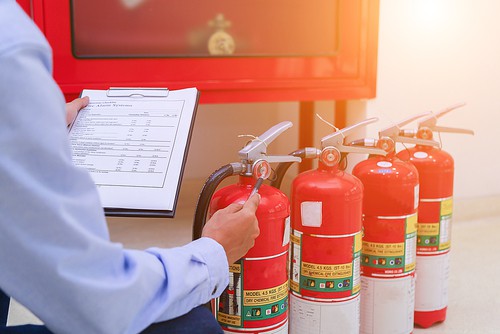
Every fire extinguisher service appointment starts with a thorough visual inspection. The technician isn’t just glancing at your extinguishers—they’re systematically checking multiple components that could affect whether the unit works during a fire.
Physical damage is the first red flag. Dents in the cylinder, even small ones, can compromise the pressure vessel’s integrity. Rust and corrosion, especially around the base or valve assembly, indicate moisture exposure that weakens the metal. Cracks anywhere on the unit mean it’s unsafe to use. Any extinguisher with significant physical damage gets tagged for replacement or repair, not returned to service.
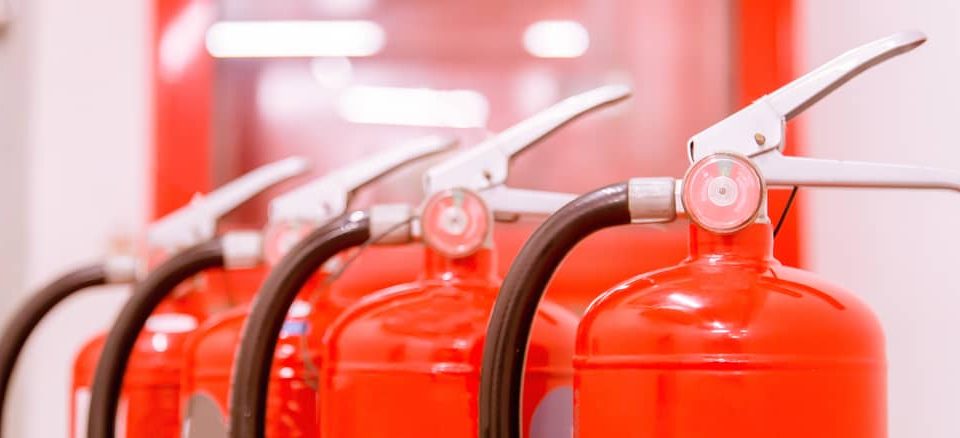
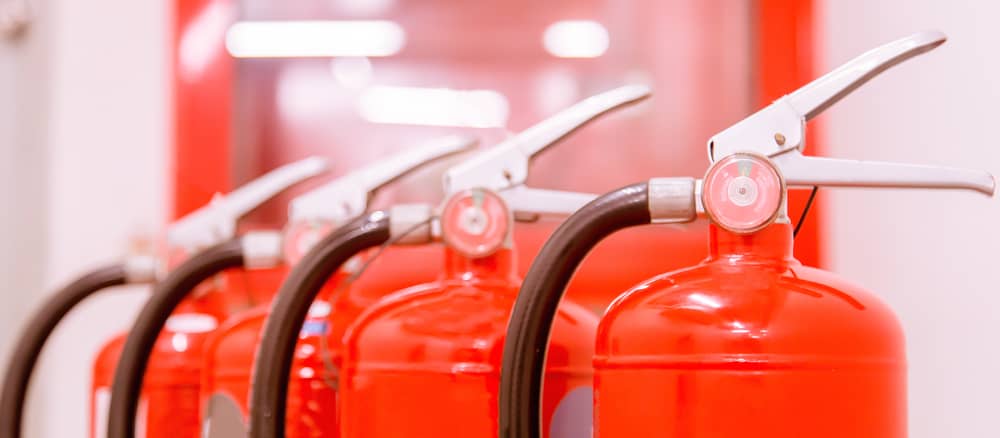
The pressure gauge gets checked next. That dial with the green zone isn’t decorative. The needle should sit firmly in the green, indicating the extinguisher is properly pressurized and ready to discharge. If the needle’s in the red—either over-pressurized or under-pressurized—the extinguisher won’t work correctly. Low pressure means weak discharge that can’t fight a fire effectively. High pressure risks valve failure or cylinder rupture during use.
Hoses and nozzles receive close attention. The technician checks for cracks, blockages, and secure connections. A cracked hose will leak extinguishing agent instead of directing it at the fire. A blocked nozzle prevents discharge entirely. The discharge mechanism—whether it’s a squeeze handle, push button, or other activation method—gets tested to ensure it moves freely without sticking or breaking.
Labels and instruction placards must be legible. If the text has faded, peeled off, or been painted over, users won’t know what type of extinguisher they’re grabbing or how to operate it during an emergency. Fire codes require clear, readable instructions on every unit. Damaged labels mean the extinguisher needs re-labeling or replacement.
The technician verifies the safety pin and tamper seal are intact. A missing pin means someone may have used or tampered with the extinguisher. A broken seal indicates the same thing. Either way, the unit needs to be weighed or discharged to verify it’s still full. Partially used extinguishers must be recharged before returning to service, even if they were only used for a few seconds.
Mounting and placement get evaluated too. Extinguishers should be mounted with the bottom at least four inches off the floor and the top no higher than five feet from the floor. This isn’t arbitrary—it’s about accessibility during emergencies. The location itself matters. Class A extinguishers need to be within 75 feet of travel distance from any point in the building. Class B hazards require closer placement, typically 30 to 50 feet depending on the extinguisher rating.
The inspection tag from the previous service gets checked. The technician looks at the date to confirm annual service hasn’t lapsed. In NYC, they verify the tag is a legitimate FDNY-issued tag with proper hologram and QR code, not a counterfeit. Monthly inspection records, if you keep them on the tag itself, get reviewed to ensure you’ve been performing your own visual checks.
All of this happens relatively quickly for extinguishers in good condition—maybe a few minutes per unit. But the technician isn’t rushing. They’re methodically working through a checklist that protects your business from compliance violations and ensures your fire safety equipment actually works when you need it.
The Technical Inspection: Beyond What You Can See
Visual checks only tell part of the story. Professional fire extinguisher service includes technical inspections that go deeper than what you can see from the outside.
The technician weighs certain types of extinguishers to verify they’re full. CO2 extinguishers, for example, don’t have pressure gauges you can read visually. The only way to confirm they haven’t leaked or been partially discharged is by weighing them and comparing the result to the specified weight stamped on the cylinder. If the weight is low, the extinguisher needs recharging.
For rechargeable extinguishers, the technician may remove the valve assembly to inspect internal components, especially during the required 6-year maintenance. This is when they check for internal corrosion, examine the siphon tube, inspect the valve stem and spring, and verify all seals and O-rings are in good condition. Internal problems aren’t visible from outside, but they’ll cause the extinguisher to fail when you try to use it.
Hydrostatic testing becomes required at specific intervals—typically every 12 years for dry chemical extinguishers, every 5 years for CO2 and wet chemical units. This test involves emptying the extinguisher, filling the cylinder with water, and pressurizing it to verify the pressure vessel can still safely contain the required pressure. The test happens in a protective cage because a cylinder failure during testing is dangerous. Units that fail hydrostatic testing must be permanently removed from service and replaced.
The technician documents everything. They’re not just fixing problems—they’re creating a compliance record that proves your business meets fire safety requirements. This documentation includes the date of service, what was inspected, what issues were found, what repairs or replacements were made, and the technician’s certification information. You’ll need these records for fire marshal inspections, insurance audits, and your own tracking.
What Happens When Problems Are Found
Not every fire extinguisher passes inspection. When problems are found, the technician explains what’s wrong and what needs to happen next.
Minor issues can often be fixed on-site. Low pressure? The extinguisher can be recharged. Damaged hose? It can be replaced. Missing inspection tag? A new one gets attached. Illegible labels? New ones get applied. These repairs typically happen during the same appointment, and the extinguisher goes back into service immediately.
More significant problems require the extinguisher to be taken off-site for servicing. Internal maintenance, hydrostatic testing, and major repairs can’t be done in your hallway. The technician will remove the extinguisher and provide a loaner unit with equal or greater rating so your business maintains fire protection while the original unit is being serviced. This isn’t optional—fire codes require you to maintain protection even when extinguishers are temporarily removed for maintenance.
Some extinguishers can’t be repaired. Severe physical damage, failed hydrostatic tests, or obsolete units that no longer meet current standards must be permanently removed from service and replaced. The technician will recommend appropriate replacements based on your specific fire hazards and building requirements.
Cost conversations happen at this point. We provide clear pricing for repairs, recharges, and replacements. You shouldn’t be surprised by hidden fees or inflated charges. If the technician finds issues, they explain what needs to be done and what it costs before proceeding.
You’ll receive documentation of all work performed. This includes receipts with the technician’s name and certification number, our contact information, details of what was done to each extinguisher, and—in NYC—the official FDNY-issued tags that prove legitimate service. Keep these records. Fire marshals will ask for them during inspections, and insurance companies need them for audits.
The technician also advises on any compliance gaps beyond individual extinguisher problems. Maybe you don’t have enough extinguishers for your building size. Maybe they’re not the right type for your fire hazards. Maybe placement doesn’t meet travel distance requirements. We don’t just fix what’s broken—we help you understand what’s needed to stay fully compliant.
How Long Service Appointments Take and How to Prepare
Appointment length depends on how many extinguishers you have and their condition. A small office with three or four extinguishers in good shape might take 30 minutes. A larger facility with dozens of units, some needing repairs, could take several hours.
Most businesses find that annual inspections on well-maintained equipment move quickly. The technician works through each unit systematically, and if everything’s in good condition, the process is straightforward. It’s the first inspection after years of neglect, or situations where multiple units need recharging or repair, that take significantly longer.
You can speed things up with simple preparation. Make a list of all extinguisher locations so the technician doesn’t waste time hunting for units. Clear access to each extinguisher—no boxes, furniture, or equipment blocking them. Have someone available who can unlock storage rooms, mechanical spaces, or other areas where extinguishers are located. Provide any previous service records if you have them, especially if you’re switching service companies.
Business owners sometimes worry about disruption. Will the technician need to shut down operations? Will they be in the way of customers or employees? In most cases, fire extinguisher service causes minimal disruption. The technician works around your schedule as much as possible. They’re not setting up equipment in your main workspace or blocking critical areas for extended periods.
The one exception is when extinguishers need to be removed for off-site servicing. You’ll have loaner units during that time, but there’s a gap between when the original is removed and when the serviced unit (or the loaner) is returned. We minimize this gap—often completing off-site work within days and returning your equipment quickly.
Scheduling matters too. Don’t wait until the day before a fire marshal inspection or insurance audit to schedule service. If your extinguishers need repairs or recharging, you need time for that work to be completed. If units need to be replaced, you need time to order and install new equipment. Annual inspections should happen on a regular schedule, not in a panic when you realize your tags expired months ago.
Some businesses prefer to schedule service during slower periods—early morning, after hours, or during seasonal lulls—to minimize any potential disruption. We accommodate scheduling requests to work around your business needs.
Getting the Most Value from Your Fire Extinguisher Service
Fire extinguisher service appointments aren’t just about checking boxes for compliance. They’re opportunities to make sure your fire safety equipment actually protects your business when it matters most.
The key is working with a licensed, certified company that understands New York’s complex regulatory landscape. FDNY requirements differ from Nassau County standards, which differ from Suffolk County’s 109 independent fire departments. A company that holds the proper certifications for your specific jurisdiction knows exactly what’s required and how to document compliance correctly.
You want technicians who do thorough work, not rushed inspections that miss problems. You want honest recommendations about repairs and replacements, not upselling you don’t need. You want clear documentation that satisfies fire marshals and insurance companies. And you want a company that helps you stay ahead of compliance deadlines instead of leaving you to track everything yourself.
When you’re ready to schedule your fire extinguisher service, we bring the local expertise and professional service that New York City and Long Island businesses depend on for reliable fire protection.