
Why Certified Fire Extinguisher Repair is Non-Negotiable for NY Insurance Compliance
March 11, 2026
The Homeowner’s Guide to Professional Fire Extinguisher Installation: Why DIY Isn’t Enough
March 13, 2026
Summary:
What Makes Fire Extinguisher Recharge an Environmental Decision
Recharging a fire extinguisher keeps a functional steel cylinder in service instead of manufacturing a new one. That matters because producing fire safety equipment requires raw materials, energy-intensive manufacturing, and transportation that all generate carbon emissions. When you recharge, you’re extending the useful life of equipment that’s already been produced.
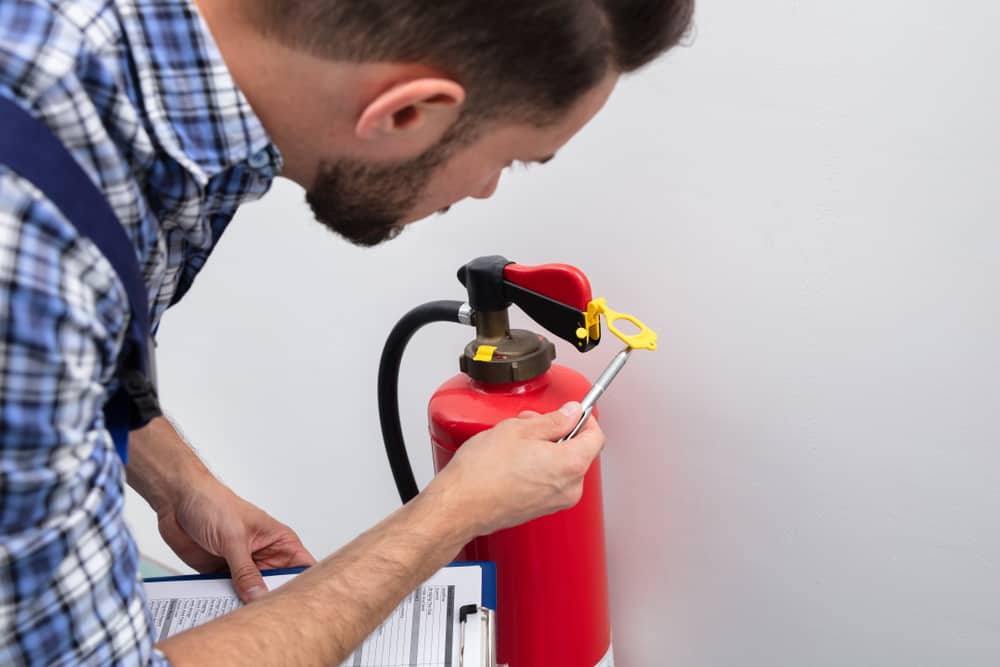
The process is straightforward. A certified technician depressurizes the unit, inspects the cylinder and components for damage, refills it with the appropriate extinguishing agent, re-pressurizes it to specification, and certifies it for another year of service. That’s it. No mining for new steel, no factory production line, no cross-country shipping.
It’s not about being perfect. It’s about recognizing that every rechargeable fire extinguisher kept in service is one less unit demanding new resources. And in 2026, when investors and regulators are asking for proof of environmental performance, these operational choices add up.
How Chemical Disposal Regulations Affect Your Fire Safety Equipment
Fire extinguishers don’t just disappear when you’re done with them. The chemicals inside—monoammonium phosphate in ABC extinguishers, potassium bicarbonate in others—are classified as hazardous materials that require specific disposal procedures. In New York State, you can’t throw them in regular trash or recycling. They need proper depressurization, agent removal, and component separation before disposal.
Here’s where it gets expensive. Improper disposal can result in fines, environmental contamination, and liability issues. The chemicals in dry powder extinguishers can leach into soil and groundwater if not handled correctly. CO2 extinguishers, while leaving no residue when used, still contain pressurized gas that poses risks during disposal.
New York requires that fire extinguishers be brought to FDNY-certified retailers or SAFE Disposal Events. That means coordinating pickup, paying disposal fees, and documenting proper handling. For a building with dozens of extinguishers, that’s a logistical headache and a line item that adds up quickly.
Recharging sidesteps most of this. The cylinder stays in service, the agent is replenished, and you avoid the disposal cycle entirely. It’s not just environmentally smarter—it’s operationally simpler. You’re not scheduling hazardous waste pickups or tracking disposal documentation. You’re maintaining equipment that’s already where it needs to be.
The regulatory landscape is tightening. As green building standards evolve and chemical disposal rules become more stringent, the cost and complexity of throwing away functional equipment will only increase. Recharging positions you ahead of that curve, keeping your fire safety program compliant without adding environmental liability.
The Hidden Carbon Footprint of Buying New Fire Extinguishers
Manufacturing a new fire extinguisher starts with steel production—one of the most energy-intensive industrial processes. The cylinder, valve assembly, and mounting bracket all require raw materials that must be mined, refined, and shaped. Then there’s the extinguishing agent itself, whether that’s dry chemical powder, CO2, or clean agent formulations. Each has its own production footprint.
Once manufactured, that equipment gets transported—often multiple times. From factory to distributor, distributor to supplier, supplier to your building. Each leg adds fuel consumption and emissions. For a property manager in Queens ordering extinguishers from a national supplier, you’re looking at cross-country shipping before that equipment even reaches your facility.
Now multiply that by every building in New York City replacing extinguishers on a routine schedule. The cumulative impact is significant. We’re talking about thousands of units moving through the supply chain annually, each one demanding new resources and generating transportation emissions.
Recharging eliminates most of that chain. The extinguisher stays on-site. A technician brings the refill agent—a fraction of the weight and volume of a complete new unit. No steel cylinder in transit, no packaging materials, no multi-stop distribution network. Just the agent needed to bring your existing equipment back to full capacity.
The difference shows up in carbon accounting. For buildings tracking Scope 3 emissions—the category that includes purchased goods and services—choosing to recharge versus replace directly reduces your reported footprint. That matters for LEED certification, for ESG reporting, and for any organization with sustainability commitments that require documentation.
It’s not theoretical. In 2026, the commercial real estate industry has shifted from announcing climate goals to proving progress. Financing terms, insurance rates, and tenant attraction all increasingly depend on demonstrated environmental performance. The fire safety equipment decisions you make today become data points in next year’s sustainability report. Recharging gives you a defensible, documentable choice that reduces environmental impact without compromising safety.
Green Building Compliance and Fire Safety Equipment in 2026
Green building standards have evolved from voluntary certifications to enforceable requirements. In New York City, Local Law 97 sets emissions caps for large buildings, with penalties for non-compliance. LEED certification criteria now include operational carbon, not just design features. And investors are using frameworks like GRESB to evaluate portfolio-wide environmental performance.
Fire safety equipment fits into this picture. While a single extinguisher recharge won’t move the needle on building-wide emissions, the aggregate effect of operational decisions matters. Procurement policies, waste reduction, resource efficiency—these are the categories where property managers demonstrate environmental responsibility in practice, not just in policy documents.
Recharging supports multiple green building criteria. It reduces waste sent to landfills. It lowers demand for new manufactured goods. It minimizes transportation emissions. And it extends the useful life of durable equipment, which aligns with circular economy principles that are increasingly central to sustainability frameworks.
How Fire Extinguisher Recharge Supports LEED and Green Certification
LEED v4.1, the current standard, includes credits for waste diversion, purchasing, and life cycle impact reduction. Recharging fire extinguishers contributes to all three. When you keep equipment in service rather than replacing it, you’re diverting steel, chemicals, and components from the waste stream. That counts toward waste diversion metrics.
The purchasing credit rewards environmentally preferable products and services. Recharging qualifies because it reduces demand for new manufacturing and the associated environmental impacts. You’re choosing a lower-impact service over a higher-impact product purchase. That distinction matters in LEED documentation.
Life cycle impact reduction looks at the full environmental cost of building operations, from resource extraction through end-of-life disposal. Extending equipment life is a direct strategy for reducing that impact. You’re getting more use from resources already invested, which is exactly what life cycle thinking prioritizes.
For buildings pursuing or maintaining LEED certification, these operational choices provide documentation opportunities. You’re not just saying you prioritize sustainability—you’re showing it through procurement records, service contracts, and waste reduction data. That’s the kind of evidence evaluators look for.
Beyond LEED, other green building frameworks are moving in the same direction. WELL certification considers environmental health. Fitwel includes waste reduction. The Living Building Challenge requires net-positive resource use. All of these frameworks value decisions that reduce environmental impact across building operations, and fire safety equipment maintenance is part of that operational picture.
The shift in 2026 is toward proof over promises. Buildings that can document environmental performance across all operational areas—including maintenance and safety equipment—are better positioned for financing, higher occupancy rates, and lower operating costs. Recharging fire extinguishers is one piece of that larger strategy, but it’s a piece that’s easy to implement and straightforward to document.
Why Sustainability Reporting Now Includes Fire Safety Equipment Decisions
Corporate sustainability reporting has become mandatory for many organizations. The EU’s Corporate Sustainability Reporting Directive requires detailed environmental disclosures. In the U.S., California’s climate disclosure laws apply to companies doing business in the state. New York is moving toward similar requirements for large commercial buildings.
These reporting frameworks look at operational decisions across the board. Energy use, water consumption, waste generation, and procurement all get scrutinized. Fire safety equipment might seem like a minor category, but it’s part of the broader picture of how a building operates and what environmental choices management makes.
When you report on waste diversion, every extinguisher recharged instead of discarded counts. When you report on Scope 3 emissions from purchased goods, choosing to recharge reduces that number. When you report on circular economy initiatives, extending equipment life is a concrete example. These aren’t hypothetical benefits—they’re documentable actions that show up in the data.
The trend toward sustainability reporting creates both risk and opportunity. The risk is that organizations without clear environmental practices face increased scrutiny from investors, regulators, and tenants. The opportunity is that buildings demonstrating strong environmental performance gain competitive advantages in financing, leasing, and valuation.
Fire safety equipment decisions might not be the headline item in a sustainability report, but they’re part of the operational foundation that makes credible reporting possible. You can’t claim to prioritize resource efficiency if you’re routinely discarding functional equipment. You can’t tout waste reduction if your procurement practices generate unnecessary disposal. Consistency across operations matters.
For property managers and building owners in Long Island, Brooklyn, Queens, Manhattan, and the Bronx, this means thinking about fire safety service providers differently. You’re not just hiring someone to maintain extinguishers—you’re choosing a partner whose practices either support or undermine your environmental goals. Providers who prioritize recharging when appropriate, who handle disposal properly when replacement is necessary, and who can document their services for sustainability reporting are more valuable in 2026 than those who simply sell new equipment.
The regulatory and market environment has shifted. Buildings are being evaluated on environmental performance with increasing rigor. Every operational decision, including how you maintain fire safety equipment, contributes to that evaluation. Recharging isn’t just about saving money or reducing waste—it’s about positioning your property for a market that demands documented sustainability performance.
Making Fire Safety Decisions That Support Your Environmental Goals
The environmental case for fire extinguisher recharge is straightforward. You reduce waste, lower carbon emissions, avoid hazardous chemical disposal, and extend the life of functional equipment. Those benefits align with green building standards, support sustainability reporting, and position your property for a market that increasingly values environmental performance.
This isn’t about perfection. It’s about making informed choices when the opportunity arises. When an extinguisher loses pressure but the cylinder is sound, recharging makes sense environmentally and financially. When equipment is damaged or obsolete, replacement is the right call. The key is working with a fire safety provider who can assess each situation and recommend the appropriate service.
In 2026, sustainability has moved from aspiration to accountability. The decisions you make about fire safety equipment—like every other operational choice—now carry environmental implications that affect compliance, reporting, and building performance. For properties across Long Island, NYC, Brooklyn, Queens, and Manhattan, that means partnering with providers who understand both fire safety requirements and environmental responsibility. At M&M Fire Extinguishers Sales & Services, Inc., we bring that dual focus to every service call, helping you maintain code compliance while supporting your sustainability goals.