
What Fire Extinguisher Service Actually Covers at Every Service Level
August 13, 2026
5 Signs Your Extinguisher Inspection May Not Hold Up in Nassau County
August 14, 2026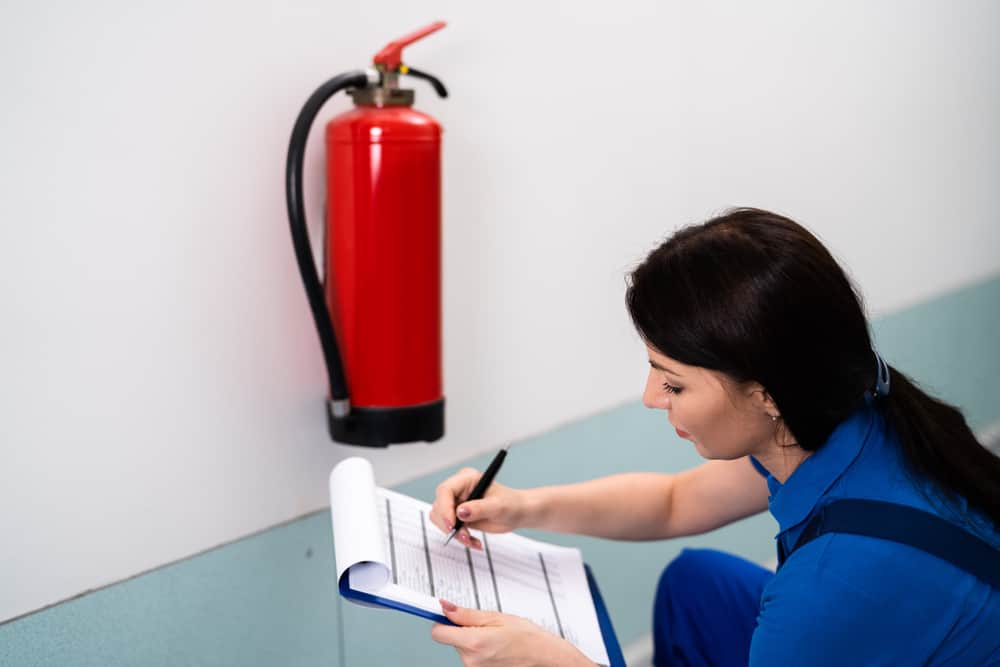
Summary:
September arrives, the heating system kicks on for the first time in months, and somewhere in the back of your mind you’re wondering whether your fire extinguishers are actually current. Maybe you had someone out last year. Maybe you’re not sure. Either way, fall is the window when New York fire marshals and FDNY inspectors tend to get active — and they don’t send warning letters before they show up.
This checklist is built for businesses in NYC and Long Island who want to know where they actually stand before someone official comes to tell them. Let’s start with what inspectors are really looking for.
What a Fire Inspection Checklist Actually Covers in New York
A fire inspection in New York isn’t just a glance at your extinguisher tags. Inspectors — whether they’re from FDNY, the Nassau County fire marshal’s office, or the Suffolk County fire marshal — are looking at a combination of physical conditions and paperwork. Both matter equally, and failing on either one can result in a violation.
On the physical side, they’re checking that extinguishers are present, properly mounted, unobstructed, and in the right locations. On the documentation side, they want to see that inspections were performed by a certified company, that the right tags are in place, and that monthly visual inspection logs are being maintained. That last one catches more businesses off guard than almost anything else.
The Monthly Log Problem Most Business Owners Don't Know About
Here’s the part that surprises people: NFPA 10 — the national standard that New York follows — requires visual inspections at least once every 30 days, performed by trained building staff. These aren’t full technical inspections. They’re a quick check to confirm the extinguisher is in its designated spot, the pressure gauge is in the green, the pin and tamper seal are intact, and nothing is blocking access to it. Takes a few minutes. But the log has to exist, and it has to be current.
When a fire marshal walks into your building and asks for your inspection records, they’re not just looking for the annual service tag. They want to see that someone on your staff has been doing those monthly checks and writing them down. Missing monthly logs is one of the most commonly cited violation reasons in New York — not because business owners are careless, but because most of them were never told this was required.
The annual inspection by a certified technician gets all the attention, and the monthly log requirement quietly gets overlooked. For businesses in Nassau County and Suffolk County, county fire marshals apply the same NFPA 10 standard. The enforcement context is different from FDNY — you’re not dealing with Smart Tags or the NYC Fire Code — but the monthly documentation requirement is identical.
A restaurant in Deer Park and a retail shop in Garden City are both on the hook for those logs. The fix is straightforward: create a simple log sheet, post it near each extinguisher, and designate someone to check and sign off monthly. It doesn’t have to be elaborate. It just has to exist.
NYC-Specific: The FDNY Smart Tag Requirement and Why It Matters
If your business is located anywhere in the five boroughs — Manhattan, Brooklyn, Queens, the Bronx, or Staten Island — there’s a layer of compliance that goes beyond NFPA 10. After 2019, all fire extinguishers in New York City must carry FDNY-mandated Smart Tags that are inspected yearly. Not just any inspection tag. An FDNY Smart Tag, applied by a company that’s authorized to issue them.
This requirement came about for a specific reason. The NYC Department of Investigation found that a number of companies were attaching tags from other companies, or applying fraudulent compliance markers that looked legitimate but weren’t. Businesses thought they were covered. They weren’t.
The FDNY Smart Tag mandate was designed to create a verifiable audit trail that inspectors can actually check. What this means practically: if you’ve been using a provider that isn’t FDNY-authorized, or if you purchased extinguishers from a retail store and had them “inspected” by someone without the right credentials, your equipment may look tagged but won’t pass FDNY scrutiny. That’s not a minor technicality — it’s a violation waiting to happen.
Speaking of retail: buying a fire extinguisher from a home improvement store does not certify it for commercial use in New York. Commercial extinguishers need to come from a licensed fire protection company to be compliant. If you’re not sure where your current equipment came from or who serviced it, that’s worth finding out before an inspector does.
The travel distance rule is another NYC-specific detail worth knowing. The NYC Fire Code requires that no point in your building is more than 75 feet from the nearest Class A extinguisher. A 10,000-square-foot facility typically needs somewhere between 15 and 20 units depending on the floor plan. If your building has grown, changed layout, or added occupancy since the last time someone reviewed placement, it’s worth checking.
Your Annual Fire Inspection Checklist: What Should Be Current Before Fall
Beyond the monthly logs and the tag requirements, there’s a broader documentation picture that businesses should review before fall. Think of it as a paper audit that runs alongside the physical one. If a fire marshal walks in and asks for records, you want to be able to hand them over without hesitation.
The annual certified inspection is the foundation. A licensed technician must perform a full maintenance inspection each year, attach a service tag with the date and their credentials, and provide documentation of what was done. That record needs to be accessible on-site — not filed away somewhere unreachable.

What Documentation Should Be on Hand for a Fall Fire Marshal Inspection
Start with the annual inspection report from your certified fire protection company. This should show the date of service, the technician’s credentials, the condition of each extinguisher, and any work performed — recharges, repairs, replacements. If anything was flagged during the last inspection and you addressed it, that follow-up documentation matters too.
Next, pull your monthly visual inspection logs. These should cover every month since the last annual inspection. If there are gaps, that’s a problem you want to discover and address now rather than during an inspection. The logs don’t need to be elaborate — date, name of the person who checked, and a note that the extinguisher was in proper condition is usually sufficient — but they need to be consistent.
For businesses in NYC, you’ll also want to confirm that your FDNY Smart Tags are current and that the company who applied them is on the FDNY’s authorized list. If you’ve changed service providers, it’s worth verifying that the new company is properly authorized before assuming the tags are valid.
Hydrostatic testing records are another item inspectors may request, depending on the age of your equipment. Dry chemical stored-pressure extinguishers require an internal examination every six years and hydrostatic testing every twelve years. If your extinguishers are aging and you’re not sure when testing was last done, that’s worth checking.
Finally, take a look at your signage. Extinguishers need to be clearly marked and visible. OSHA-compliant signage above each unit — especially in warehouses, kitchens, and storage areas — is a detail that’s easy to overlook but quick to fix.
What Happens If You Already Have an FDNY Violation
If you’ve received an FDNY summons, the clock starts immediately. You have 35 days from the date of the summons to correct the condition and file a Certificate of Correction with the FDNY. Miss that window and you’re looking at a hearing, escalating fines, and the possibility of the violation compounding into something more serious.
First-time violations in New York typically carry fines in the range of $300 to $1,000 per extinguisher. Repeat offenses or willful negligence can reach higher. And beyond the fines, there’s a less-discussed risk: if a fire occurs at your property and post-incident investigation reveals that your extinguishers were out of compliance, commercial property insurance policies often contain clauses that allow the insurer to deny a payout.
The practical path forward when you have a violation is to get a certified fire protection company on-site quickly, correct whatever triggered the summons, and get the documentation in order to file the Certificate of Correction before the deadline. The correction itself — whether it’s a new inspection, a replacement extinguisher, or updated tags — is usually straightforward. It’s the documentation and the filing that businesses often struggle with, especially if they’re trying to coordinate it on their own.
For businesses across Long Island and the five boroughs, having a local provider with deep experience in the New York market makes a real difference. Someone who knows the FDNY process, understands what the Certificate of Correction requires, and can move fast enough to meet the deadline. The 35-day window sounds like a lot of time until it isn’t.
Getting Your New York Business Ready for Fall Fire Safety Inspections
The businesses that get through fall fire inspections without issues aren’t the ones with the newest equipment or the fanciest systems. They’re the ones with current documentation, consistent monthly logs, and extinguishers that were serviced by someone who actually knows what New York requires — not just what the national standard says.
Run through the basics before October gets here: confirm your annual inspection is current, check that your monthly logs are complete, verify your tags meet the requirements for your jurisdiction, and make sure your extinguishers are where they’re supposed to be. If anything comes up that you’re not sure about, that’s worth a conversation with someone who knows the difference between an FDNY Smart Tag and a standard inspection tag.
We at M&M Fire Extinguishers Sales & Services, Inc. have been working with businesses across Long Island and all five boroughs of New York City for over 35 years. If you want a straight answer about where your business stands heading into fall, we’re available around the clock and can often get to you the same day.
FAQ: fire safety check
Q: What is a fire safety check and how often does my New York business need one?
A: A fire safety check has two parts, and both are required. The first is a monthly visual inspection — a quick check of each extinguisher performed by someone on your staff to confirm it’s accessible, properly mounted, and showing normal pressure. This needs to happen at least once every 30 days, and the results need to be logged. The second is an annual inspection performed by a certified fire protection technician, who conducts a full maintenance check, documents the condition of each unit, and attaches a service tag. In New York City, that tag must be an FDNY-mandated Smart Tag applied by an authorized provider. Both inspections are required — the annual doesn’t replace the monthly, and missing either one can result in a violation.
Q: What should I do if my business is in Long Island and I’ve missed monthly inspection logs?
A: Start documenting now. Pull together whatever records you do have from the past year, and begin logging monthly inspections going forward. If a fire marshal inspects before you’ve built up a full year of logs, be honest about the gap and show that you’ve started the process. For businesses in Nassau County and Suffolk County, the county fire marshal’s office will be looking for consistency going forward more than perfection in the past. We can help you set up a simple logging system and conduct a full inspection to get you current before the fall inspection season.
Q: Do I need an FDNY Smart Tag if my business is on Long Island?
A: No. FDNY Smart Tag requirements apply only to businesses in the five boroughs of New York City — Manhattan, Brooklyn, Queens, the Bronx, and Staten Island. If your business is in Nassau County or Suffolk County, you follow the NFPA 10 standard and your fire marshal will be looking for a current annual inspection tag from a certified fire protection company, along with your monthly logs. That said, the standard of service and documentation should be just as rigorous. We serve businesses across both Long Island and NYC, and we make sure your equipment meets the specific requirements for your jurisdiction.
Related posts