Fire Extinguisher Inspection in Nassau County: What Businesses Must Know
August 11, 2026
Your Fall Fire Safety Audit Checklist for New York Businesses
August 13, 2026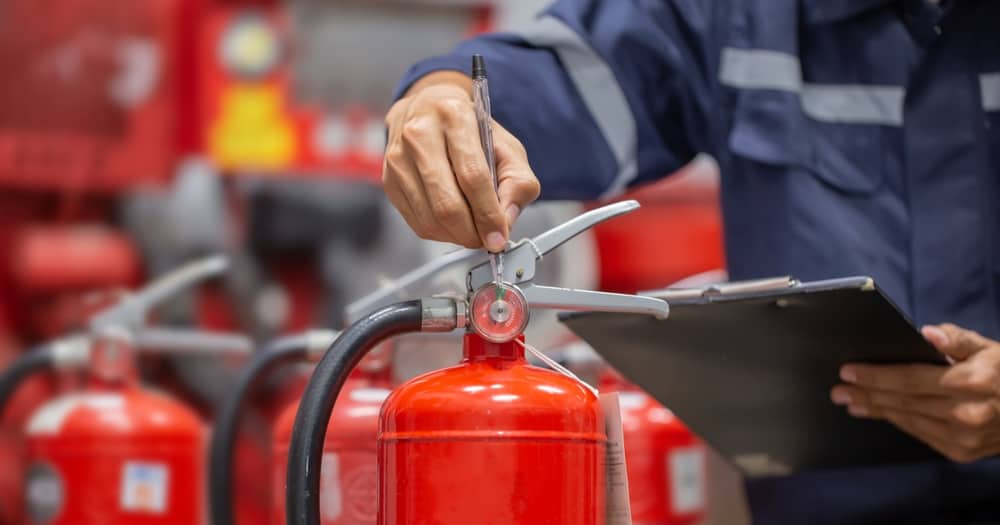
Summary:
Most business owners assume “fire extinguisher service” means someone comes out once a year, looks at the unit, sticks a tag on it, and leaves. That’s part of it — but only part. There are actually four distinct service levels, each with its own requirements, its own cost, and its own legal footing. Some of those levels fall on you, not the service company. Others involve disassembling the extinguisher entirely — something most owners never hear about until they’re handed an unexpected invoice. Here’s what fire extinguisher service actually covers, level by level, so you’re never caught off guard.
Fire Extinguisher Servicing: The Four Levels Most Business Owners Don't Know Exist
NFPA 10 — the national standard that governs portable fire extinguishers — defines four required service intervals. They don’t replace each other. They stack. And each one has a specific trigger: monthly, annual, every six years, and every five to twelve years depending on extinguisher type.
The confusion usually starts because most service companies only talk about the annual inspection. That’s the one that generates the tag on the wall. But the other three levels are just as legally required, and skipping any of them puts you in violation of NFPA 10, OSHA 29 CFR 1910.157, and — if you’re operating in New York City — the FDNY fire code.
Understanding the full picture isn’t just about compliance. It’s about knowing whether the extinguisher on your wall would actually work if you needed it.
Monthly Fire Extinguisher Inspection: This One Is on You
Here’s something most service companies never tell their customers: the monthly visual inspection is not the service company’s job. Under NFPA 10, the responsibility for the monthly check falls on the business owner or designated employee — not the technician who comes out once a year.
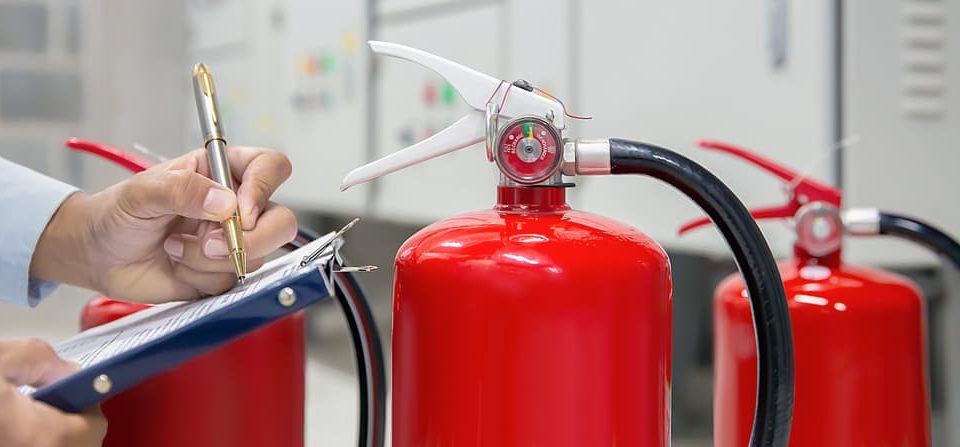
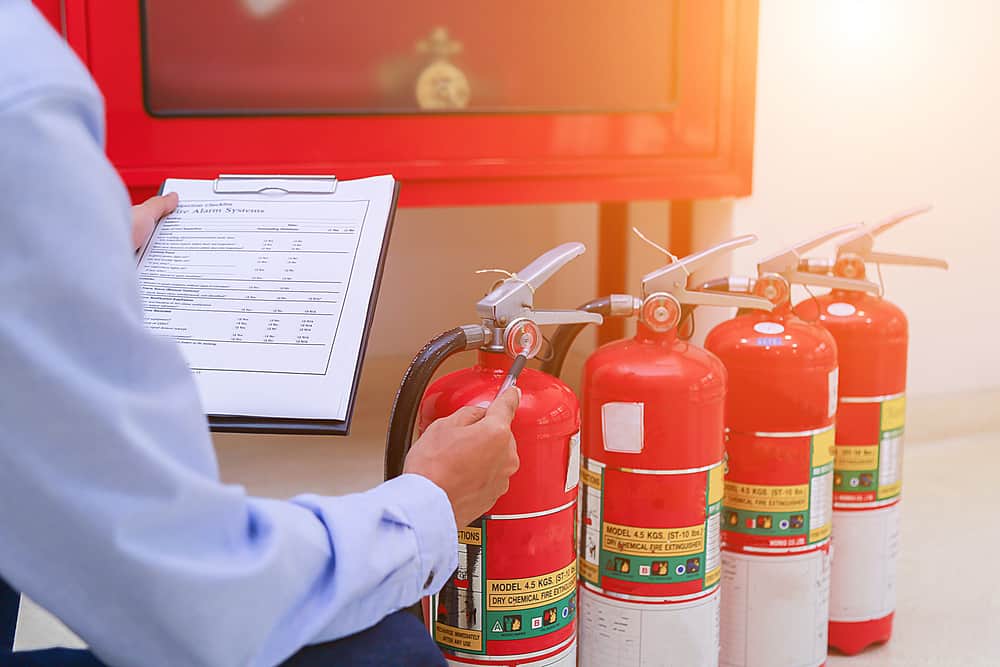
What does a monthly check actually involve? You’re looking at a few basic things. Is the extinguisher in its designated location and easy to reach? Is the pressure gauge reading in the green? Is the tamper seal intact? Is there any visible damage — dents, corrosion, or a clogged nozzle? Does it have a current inspection tag from a certified company?
If the answer to any of those is no, the unit needs attention before the next professional visit. The other piece most owners skip: documentation. NFPA 10 requires that monthly inspections be recorded — at minimum, the month, the year, and the initials of the person who performed the check. This doesn’t have to be elaborate, but it does have to exist.
During an FDNY inspection of your building, the absence of monthly inspection records is a citable violation, even if the extinguisher itself looks fine. This is one of the most common compliance gaps we see in commercial buildings across Long Island and the five boroughs. A business will have a perfectly tagged, professionally serviced extinguisher — and still get hit with a violation because no one was keeping the monthly log.
The fix is simple once you know it’s required. Ask your service provider to walk you through it during the annual visit. We can show you exactly what the monthly check involves for your specific extinguisher type, and help you set up a documentation system that takes minutes each month.
The 6-Year Maintenance Most Business Owners Have Never Heard Of
This is the service level that generates the most confusion — and the most surprise invoices. At the six-year mark, a stored-pressure dry chemical fire extinguisher (the standard ABC unit found in most commercial spaces) must undergo what NFPA 10 calls an internal examination. This is not the same as an annual inspection. It’s significantly more involved, and it costs more for a reason.
Here’s what actually happens during a 6-year maintenance: we fully discharge the extinguisher, open the cylinder, and inspect every internal component — the valve, the siphon tube, the discharge hose, the dry chemical agent itself — for corrosion, moisture contamination, or mechanical wear. If anything is degraded, it gets replaced. Then the unit is refilled with fresh agent, repressurized, tested for leaks, and re-tagged.
Why does this matter? Because the agent inside a dry chemical extinguisher can clump or cake over time, especially in environments with temperature fluctuations or humidity — both of which are common in Long Island warehouses, commercial kitchens, and older New York City buildings. An extinguisher that looks perfectly fine on the outside and reads green on the pressure gauge can still have a compromised agent that won’t discharge properly in a fire.
The 6-year maintenance is how that gets caught. OSHA 29 CFR 1910.157 reinforces this requirement for workplace settings, mandating that stored-pressure dry chemical extinguishers be emptied and subjected to this full maintenance procedure at the six-year interval. This isn’t optional, and it isn’t a service company upsell — it’s a federal workplace safety requirement.
The reason so many business owners are blindsided by this service is straightforward: they’ve been getting annual inspections for years, the cost has been consistent, and then suddenly they’re told the unit needs to be taken apart and recharged. Without context, that sounds like a scam. It isn’t. But you shouldn’t have to find that out mid-service call. Knowing it’s coming — and roughly when — lets you plan for it.
Fire Extinguisher Recharging and Hydrostatic Testing: The Deeper Tiers
Beyond the 6-year maintenance, there are two additional service requirements that apply depending on your extinguisher type and its service history. Fire extinguisher recharging and hydrostatic testing are distinct procedures, and understanding when each applies saves you from both unnecessary costs and genuine compliance gaps.
Recharging is required any time an extinguisher has been discharged — even partially — and also as part of the 6-year internal maintenance process. Hydrostatic testing is a separate procedure that tests the structural integrity of the cylinder itself, not the agent inside it. Both are required by NFPA 10, and both are commonly misunderstood.
When Does a Fire Extinguisher Need to Be Recharged?
Fire extinguisher recharging is required in three situations: after any discharge (even a brief test pull), when the pressure gauge drops below the acceptable range, and as part of the 6-year internal maintenance described above. The recharge process involves refilling the extinguishing agent, repressurizing the cylinder to the manufacturer’s specification, installing a new tamper seal, and re-tagging the unit.
One question that comes up often: can you just buy a new extinguisher instead of recharging the old one? Sometimes that’s actually the right answer, and we’ll tell you honestly. Non-rechargeable disposable extinguishers — the kind often sold in hardware stores — cannot legally be recharged and must be replaced once discharged or at the end of their service life, which NFPA 10 sets at 12 years from the manufacture date.
Rechargeable extinguishers, on the other hand, are designed to be serviced and can remain in use for decades with proper maintenance. The decision depends on the extinguisher type, its age, and its condition. An older unit that’s approaching its hydrostatic test date may be more cost-effective to replace than to recharge and test. A newer rechargeable unit in good condition almost always makes more sense to service.
For businesses in Nassau County and Suffolk County, this is worth paying attention to because many commercial properties in those areas have older extinguisher stock that’s been in place for years without anyone tracking the manufacture date or service history. If you don’t know when your extinguishers were last recharged or tested, that’s a reasonable starting point for a service call with us.
What Is Hydrostatic Testing and When Is It Required?
Hydrostatic testing is the service level that most business owners have never heard of until a technician mentions it — usually at the worst possible time. It’s also the one that generates the most skepticism, because it’s expensive and infrequent enough that it feels unfamiliar.
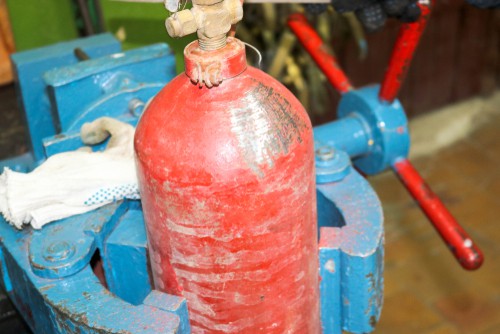
Here’s what it is: hydrostatic testing subjects the extinguisher cylinder to internal water pressure significantly above its normal operating pressure to verify that the metal hasn’t weakened, corroded, or developed micro-fractures that could cause it to fail under pressure. It tests the structural integrity of the shell itself, not the agent inside. This is a completely separate concern from whether the extinguisher is properly charged.
The required interval depends on the type of extinguisher. Stored-pressure dry chemical extinguishers — the most common type in commercial settings — require hydrostatic testing every 12 years. CO2 extinguishers require testing every 5 years. Wet chemical (Class K) units used in commercial kitchens also follow a 5-year interval. These intervals reset from the date of the last hydrostatic test or recharge, whichever is most recent, which is why accurate service records matter.
Why does this test exist? Because roughly 5 to 10 percent of extinguishers fail hydrostatic testing due to cylinder degradation — and there’s typically no visible sign of the problem on the outside. An extinguisher can look and read perfectly normal and still be a cylinder that would fail under the pressure of actual discharge. In a fire, that’s not a risk worth taking.
In New York City, where the FDNY responds to more than 27,000 structural fires per year, the margin for equipment failure is zero. FDNY inspectors check service records, not just the tag on the wall. If your hydrostatic test date is past due, that’s a citable violation — and it won’t be dismissed because the unit looks fine.
If you’re not sure where your extinguishers are in their testing cycle, we can pull the manufacture date and service history from the unit itself and tell you exactly what’s due and when.
How to Make Sure Your Fire Extinguisher Service Is Actually Complete
Fire extinguisher service covers more ground than most people realize — and the gaps between service levels are exactly where violations happen. The monthly visual check is on you. The annual inspection requires a certified professional. The 6-year maintenance involves disassembly and recharging that goes well beyond a visual check. And hydrostatic testing addresses a structural risk that no amount of visual inspection can catch.
In New York City and across Long Island, the stakes are higher than in most markets. FDNY enforcement is real, violation fines are significant, and since 2019, only FDNY-approved companies can issue the numbered smart tags that constitute valid proof of inspection in New York City. A tag from a non-approved company doesn’t protect you — it just means you’re still in violation.
We’re available around the clock and hold certifications for New York City, Nassau County, and Suffolk County — so one call covers all of it. If you’re not certain which service levels your extinguishers are current on, or if you’ve received an FDNY violation and need it resolved quickly, we can help.
Related posts