FDNY Violation Fines vs. Inspection Costs: Real Dollar Comparison for Nassau County
October 2, 2026
What NYC Fire Code Requires Across All Five Boroughs (and How Nassau County Differs)
October 13, 2026
Summary:
You’ve probably already read a few cost guides. They say installation runs $2,000 to $5,500, you call a local contractor, and the quote comes back at $6,500. That disconnect is frustrating — and it’s not a mistake. National averages don’t account for Nassau County labor rates, permit fees, or the specific compliance requirements that local fire marshals actually enforce.
This page gives you the real numbers: what installation costs here, what semiannual inspections run, what’s changed under the latest NFPA 96 update, and what it actually costs to do nothing. Let’s get into it.
Commercial Kitchen Fire Suppression System Cost: What Nassau County Restaurants Are Actually Paying
The honest answer is that cost depends on your kitchen — its size, the equipment you run, and the condition of any existing system. But there are reliable ranges that give you a real starting point, and they look different from what most national guides publish.
For a standard commercial kitchen in Nassau County, installation of a wet chemical hood suppression system typically runs between $3,500 and $8,500. A single 6-foot hood system generally falls in the $3,500 to $5,000 range. Double hood setups or larger 10-foot configurations push into the $6,500 to $8,500 range.
Those numbers reflect local labor costs, permit fees, and the compliance documentation that Nassau County fire inspectors expect — costs that national guides routinely leave out. Ongoing maintenance is a separate line item. By law, a certified technician must inspect and service your kitchen suppression system every six months. Each of those visits typically runs $200 to $400, depending on system size and what the inspection turns up.
What the Installation Price Actually Includes
When we quote you an installation price, it’s worth knowing what that number is supposed to cover — because not every quote is built the same way.
A properly scoped installation includes the system itself (typically a wet chemical unit like an Ansul R-102 or equivalent UL 300-compliant system), mounting hardware, nozzle placement calibrated to your specific cooking equipment, fusible link installation, connection to the gas shutoff so the system cuts fuel automatically when it activates, and the documentation required to pass a Nassau County inspection.
The type of cooking equipment you run matters more than most owners expect. A kitchen with high-output fryers, wok burners, or solid fuel equipment presents a different hazard profile than a standard flat-top setup, and the system has to be specified accordingly. This is one reason why a qualified technician needs to see your kitchen before giving you a real number — not because we’re being evasive, but because the system design genuinely depends on what’s underneath that hood.
One thing that catches Nassau County restaurant owners off guard: if your building was constructed in the 1960s through the 1980s, there’s a real possibility the existing hood system is an older dry chemical unit. As of the 2025 edition of NFPA 96, grandfather clauses for pre-UL 300 dry chemical systems have been eliminated. If your kitchen is still running one of those older systems, your insurance carrier may deny fire-related claims — even if you’ve been getting it inspected on schedule. That’s not a technicality. It’s a meaningful exposure that a lot of Nassau County operators haven’t been told about yet.
What Does a Semiannual Kitchen Suppression System Inspection Actually Cost?
This is where a lot of restaurant owners get surprised — not by the price, but by what a proper inspection is supposed to include.
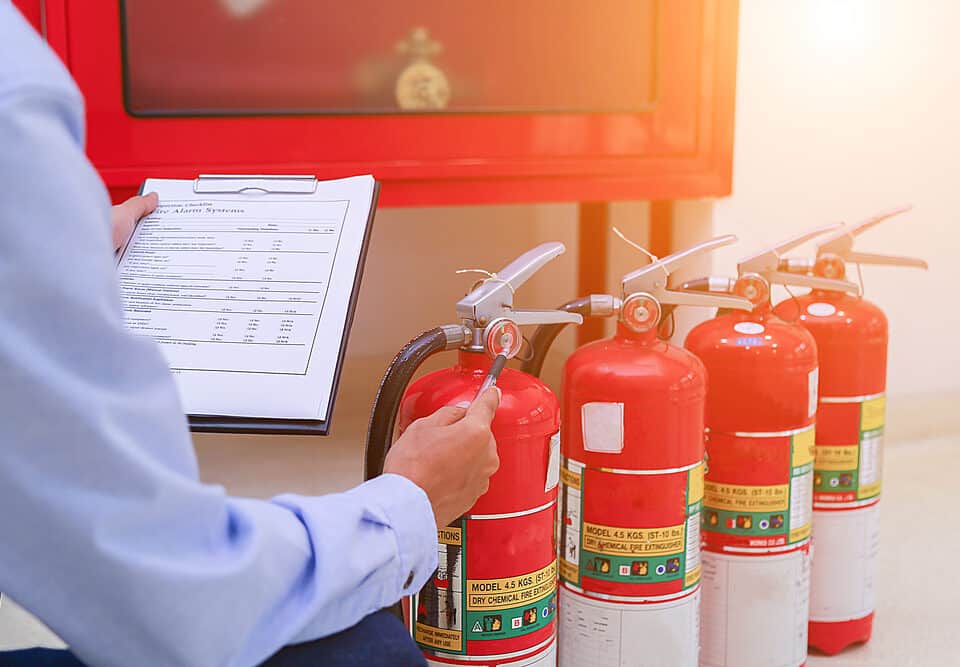
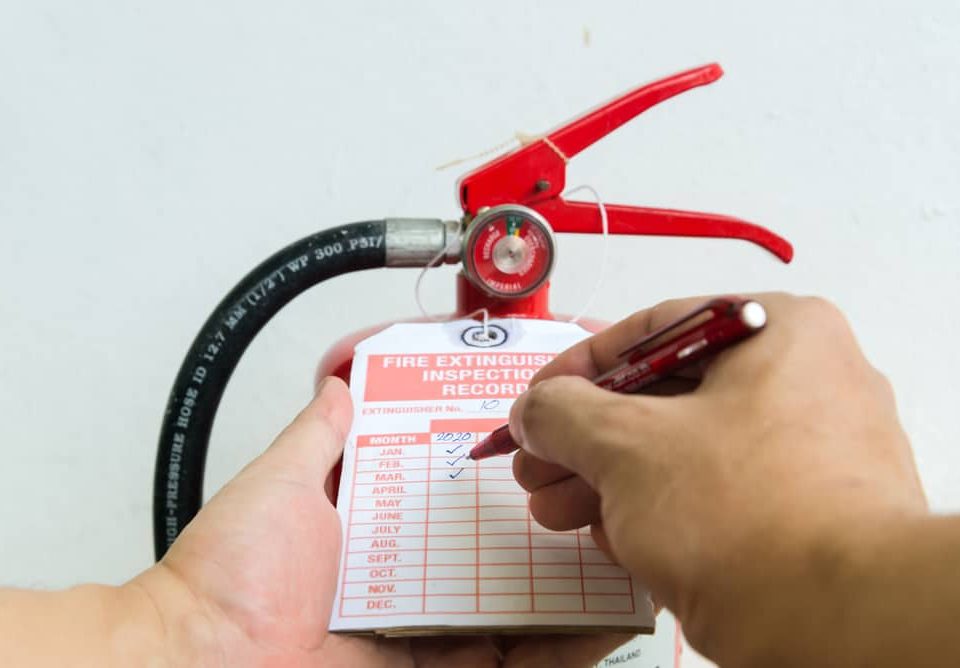
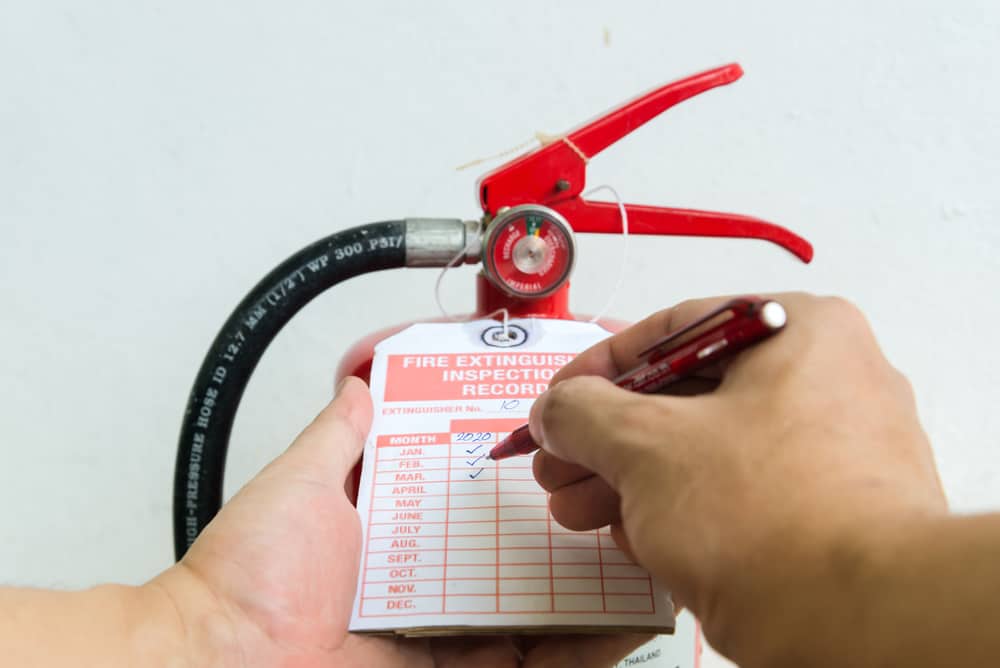
NFPA 96 and local Nassau County fire codes both require semiannual professional inspections of commercial kitchen fire suppression systems. That’s twice a year, regardless of how new your system is or how recently it was installed. The inspection isn’t a visual once-over. A certified technician should be testing activation mechanisms, verifying agent levels, replacing fusible links on schedule, checking nozzles and pressure gauges for grease buildup or damage, and providing the official certification tag that keeps you compliant with your fire marshal and your insurance carrier.
Each semiannual inspection typically runs $200 to $400 in Nassau County. That’s the range for a standard commercial kitchen system. Some operators have been getting inspections done for less — and some of those operators have ended up with incomplete service tags, missed components, and a failed inspection anyway. The cost of a re-do, plus any violation, tends to exceed what a properly priced inspection would have cost in the first place.
It’s also worth knowing that inspection frequency isn’t always semiannual. Under NFPA 96, high-volume kitchens and those operating 24 hours require quarterly inspections. Solid fuel kitchens — wood-fired ovens, charcoal grills — require monthly inspections. Nassau County has no shortage of diners and catering halls that fall into those higher-frequency categories, and a lot of owners don’t realize their schedule should be more frequent than twice a year.
Beyond the inspection itself, agent recharge or replacement is an occasional additional cost when the system has been discharged or when agent levels are found to be low during inspection. That’s a separate line item from the inspection fee, and your technician should flag it clearly rather than bundling it in without explanation.
Fire Suppression System Compliance in Nassau County, NY: What the Local Rules Actually Require
Nassau County operates under a centralized fire commission that sets uniform standards across the county. Restaurant operators who’ve worked in Nassau County know the compliance expectations are serious and specific to this jurisdiction. We work within Nassau County’s Authority Having Jurisdiction standards every day, and we know what local inspectors actually look for.
Violations from Nassau County fire inspectors can halt operations immediately. And insurance claims may be denied without documented proof of inspection — which means the paperwork your technician leaves behind matters as much as the work itself.
What Happens If Your Restaurant Fails a Fire Suppression Inspection in Nassau County?
The short version: it can get expensive fast, and not just in fines.
A failed inspection typically results in a violation notice from the Nassau County Fire Commission. Violations can trigger forced closure until the deficiency is corrected and re-inspected. For a restaurant, that means zero revenue from the moment the doors close to the moment compliance is restored. Industry data puts the average revenue loss from a kitchen fire closure at $40,000 to $120,000 — and that’s before accounting for the direct damage, which averages around $23,000 per incident.
The math on this is straightforward. A properly installed, properly maintained wet chemical suppression system costs $3,500 to $8,500 upfront and $200 to $400 per inspection twice a year. The cost of a single kitchen fire — or a forced closure from a violation — can wipe out years of those inspection costs in a matter of days.
There’s also the insurance angle. Carriers are increasingly requiring documented proof of semiannual inspection before honoring fire-related claims. Some Nassau County operators have discovered this only after a loss — at which point the documentation gap becomes a claim denial. Verified, compliant systems can also earn insurance premium discounts of 10 to 20%, which offsets a portion of the ongoing inspection cost over time.
If you’ve received a violation and don’t know where to start, we have specific violation removal capability — not just inspection experience. Resolving an open violation involves understanding what the inspector cited, correcting it to code, and getting the documentation in front of the right authority. It’s not the same process as a routine inspection, and not every fire protection company handles it.
How Do I Know If My Nassau County Kitchen Suppression System Is Still Compliant?
This is one of the most common questions we hear from restaurant owners who’ve recently taken over an existing space — and it’s a legitimate concern, because inherited systems don’t come with a compliance guarantee.
The first thing to establish is what type of system you have. If it’s a wet chemical system that’s UL 300-compliant, the next question is when it was last professionally serviced and whether the service documentation is complete. A proper inspection tag on the system is a starting point, but it’s not the whole picture — the tag tells you the date, not whether the technician actually tested the activation mechanism and replaced the fusible links on schedule.
If the system is an older dry chemical unit, the NFPA 96 2025 update is directly relevant to you. The elimination of grandfather clauses means that dry chemical systems that were previously allowed to remain in service are now out of compliance. This isn’t a future issue — it’s current. Nassau County’s older commercial building stock makes this more common than owners might expect, particularly along the county’s established restaurant corridors.
The most straightforward way to get a clear answer is a free on-site estimate from a certified technician who can look at the actual system, pull the service history if it exists, and tell you exactly where you stand. That conversation costs nothing and gives you a real picture instead of a guess. If upgrades are needed, you’ll know the scope and the cost before committing to anything.
Even if your system passes inspection today, the documentation you receive matters for the next time an insurance adjuster or fire marshal asks for proof of compliance. Make sure your provider delivers proper inspection reports and service records — not just a tag on the cylinder.
Getting an Honest Fire Suppression System Cost Estimate in Nassau County
The numbers in this guide — $3,500 to $8,500 for installation, $200 to $400 per semiannual inspection — are real starting points for Nassau County restaurant owners. They’re not guarantees, because your kitchen is specific and your system has to match it. But they’re a better baseline than what most national guides are publishing, and they reflect what local compliance actually requires.
Cooking equipment causes 61% of restaurant fires in the United States. Grease buildup accounts for another 20 to 25% of structure fires. A system that’s out of compliance, overdue for inspection, or running outdated dry chemical agent isn’t just a code problem — it’s a real risk with a real price tag.
If you’re not sure where your system stands, the right next step is a conversation with someone who can actually look at it. We’ve been serving Nassau County for over 35 years, with certified technicians, 24-hour availability, violation removal capability, and free on-site estimates. Reach out and get a clear answer — no commitment required.
Related posts