
Class C Fire Extinguisher: Types & Uses
May 5, 2026
Foam Fire Extinguisher vs Other Types: Which to Choose
May 12, 2026
Summary:
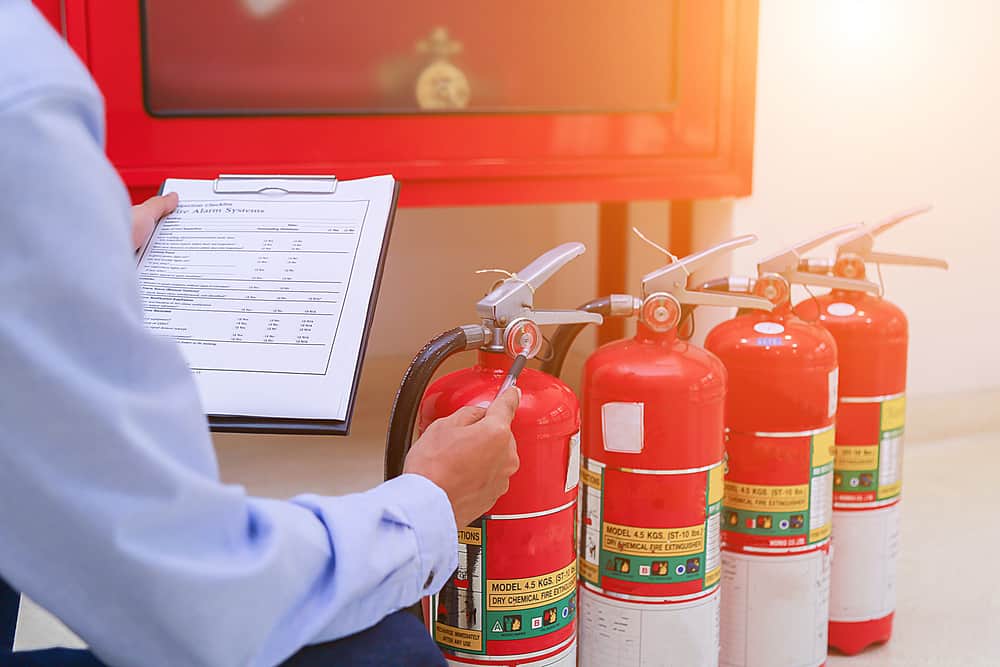
You’ve seen them mounted on walls in just about every commercial building. Red canisters with pressure gauges and pull pins. But when you’re responsible for keeping a facility safe and code-compliant, “it’s there on the wall” isn’t enough.
You need to know what’s inside that canister, how it actually stops a fire, and whether it’s the right choice for your space. Because not every fire extinguisher works the same way, and the wrong one can leave you with equipment damage, compliance issues, or worse—a fire that keeps burning.
Here’s what ABC dry chemical fire extinguishers actually do, how the chemistry works, and what you should consider before your next inspection or purchase.
What Is an ABC Dry Chemical Fire Extinguisher
An ABC dry chemical fire extinguisher is a multi-purpose unit designed to handle three types of fires: Class A (ordinary combustibles like wood, paper, and cloth), Class B (flammable liquids like gasoline, oil, and grease), and Class C (energized electrical equipment).
The “dry chemical” part refers to the extinguishing agent inside—a fine powder, typically monoammonium phosphate, that’s been specially treated to flow smoothly and resist clumping. This powder is what makes ABC extinguishers so versatile.
Most ABC extinguishers you’ll find in offices, warehouses, and commercial buildings are stored-pressure units. That means the powder sits inside a pressurized cylinder, usually at around 195 psi, ready to discharge the moment you pull the pin and squeeze the handle. When activated, the powder shoots out in a cloud that can reach 10 to 20 feet, giving you enough distance to attack a fire without getting too close.
How Does an ABC Extinguisher Work on Different Fire Types
The reason ABC dry chemical extinguishers work across multiple fire classes comes down to chemistry and physics working together.
For Class A fires involving ordinary combustibles, the monoammonium phosphate powder melts when it hits temperatures around 350°F. As it melts, it forms a sticky, molten residue that coats the burning material. When this residue cools, it hardens into a crust that creates a barrier between the fuel and oxygen. This barrier prevents re-ignition, which is critical for materials like wood or cloth that can smolder and reignite hours later.
For Class B fires involving flammable liquids, the powder works differently. Instead of forming a coating, it smothers the fire by creating a blanket that separates the fuel from oxygen. It also interrupts the chemical chain reaction that keeps flames burning. When you spray the powder over burning gasoline or oil, it breaks down the combustion process at a molecular level, essentially choking out the fire before it can spread.
For Class C fires involving electrical equipment, the key advantage is that the dry chemical powder is non-conductive. Unlike water, which conducts electricity and can cause electrocution or equipment damage, the powder won’t transmit electrical current back to you. Once you discharge the extinguisher on an electrical fire, the powder smothers the flames without creating additional hazards. However, it’s worth noting that Class C fires are really just Class A or B fires that happen to involve energized equipment—the powder still works the same way, it’s just safe to use around electricity.
The versatility comes from monoammonium phosphate’s ability to perform multiple actions simultaneously: it smothers, it cools (though not as effectively as water), it creates barriers, and it disrupts the chemical reactions that sustain combustion. That’s why one ABC extinguisher can replace multiple single-purpose units in most commercial settings.
But there’s a trade-off. While ABC extinguishers handle common fire types effectively, they’re not suitable for everything. They don’t work on Class K fires (commercial cooking oils and fats), and they’re completely inappropriate for Class D fires (combustible metals like magnesium or titanium). Using an ABC extinguisher on these fire types can actually make things worse.
What Is the Dry Chemical Powder Made Of
The active ingredient in ABC dry chemical extinguishers is monoammonium phosphate, sometimes labeled as ammonium dihydrogen phosphate with the chemical formula NH₄H₂PO₄. It’s a salt of phosphoric acid, and it’s chosen specifically because it can tackle all three fire classes.
But raw monoammonium phosphate isn’t enough. The powder has to flow freely when stored for months or years and discharge smoothly when you need it. That’s why manufacturers treat it through a process called fluidizing and siliconizing. The particles are milled to a specific size and coated with a small amount of silicone. This treatment prevents the powder from caking inside the cylinder and ensures it comes out in a steady stream rather than clumping.
Most ABC extinguishers contain a blend of monoammonium phosphate (typically 40% to 90%) and ammonium sulfate, which acts as a filler and anti-caking agent. The exact ratio varies by manufacturer, but the monoammonium phosphate is always the active firefighting ingredient. The ammonium sulfate just helps with bulk and flow.
When the powder is exposed to heat during a fire, it undergoes decomposition. First, it melts. Then it breaks down into phosphoric acid and ammonia gas. The phosphoric acid is what forms that sticky, glassy coating on Class A fires. The ammonia gas is non-flammable and helps dilute the concentration of flammable gases in the fire zone, contributing to extinguishment.
It’s also important to understand what this powder isn’t. It’s not classified as toxic in the amounts you’d encounter from a portable extinguisher, but it is considered a nuisance dust. Prolonged or repeated inhalation can cause respiratory irritation or coughing. If you discharge an extinguisher indoors, ventilate the area afterward. And if the powder gets on your skin or in your eyes, rinse with water—it can cause irritation.
The bigger concern for most businesses is the corrosive nature of monoammonium phosphate. When it contacts moisture, it forms an acidic residue that can damage metals, electronics, and other sensitive equipment. This is why cleanup after an ABC extinguisher discharge needs to happen quickly and thoroughly. The longer that powder sits on surfaces, especially in humid environments, the more damage it can cause.
ABC Fire Extinguisher Maintenance and Inspection Requirements
Owning an ABC fire extinguisher isn’t a one-time purchase. It’s an ongoing responsibility, and if you’re in Nassau County or anywhere in New York, it’s also a legal requirement.
NFPA 10 standards, which are enforced by local fire marshals and required by insurance companies, mandate specific inspection and maintenance schedules. Missing these deadlines can result in fines, insurance lapses, or even forced closure of your business until you come into compliance.
Here’s what’s required: monthly visual inspections, annual professional maintenance, six-year internal maintenance, and twelve-year hydrostatic testing. Each serves a different purpose, and none of them can be skipped.
How Often Should Fire Extinguishers Be Inspected
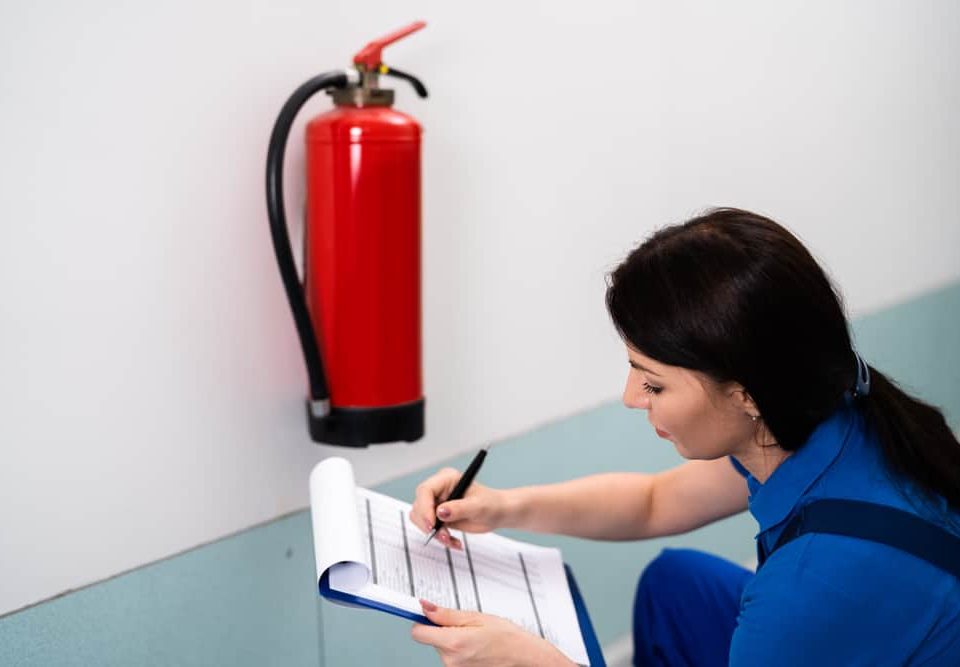
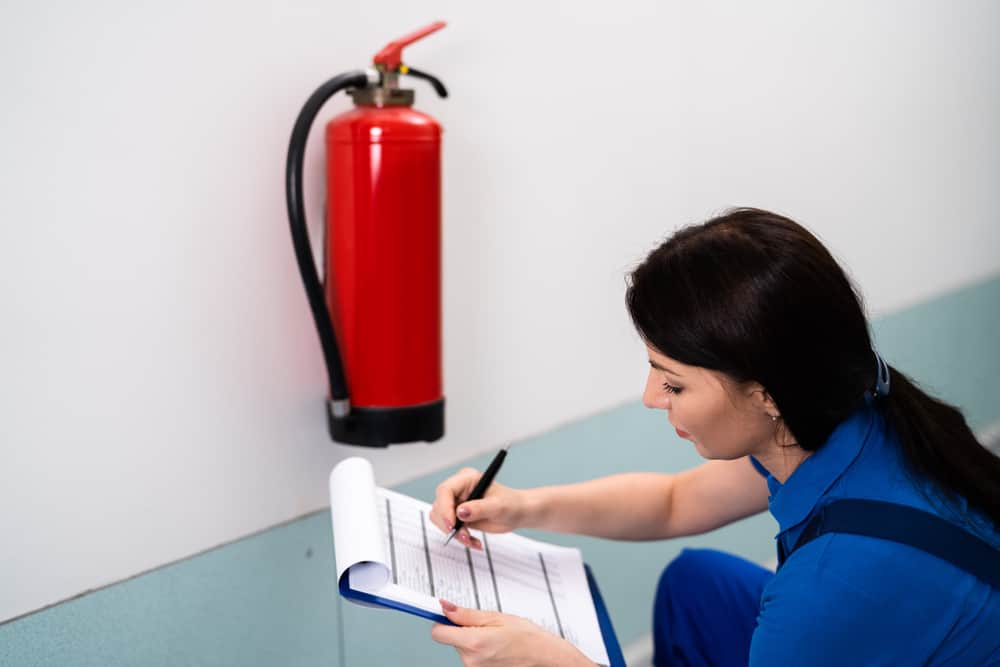
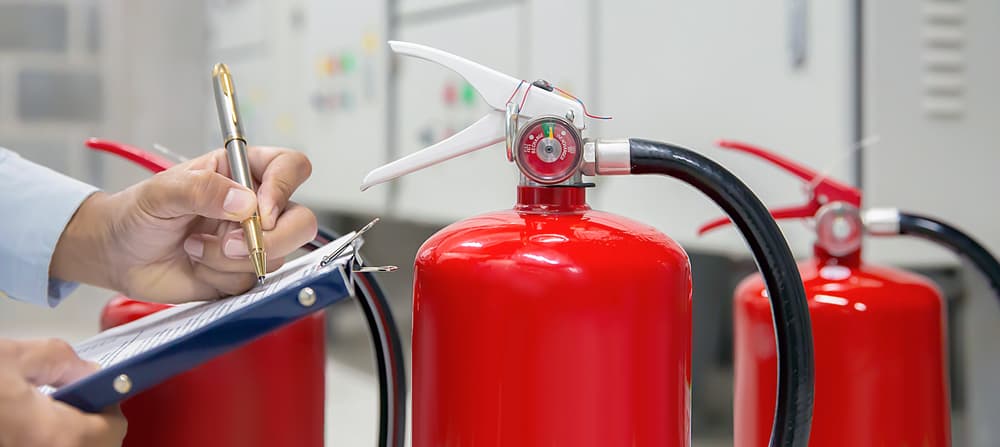
Monthly visual inspections can be performed by your own staff. This is a quick check to ensure the extinguisher is in its designated location, the pressure gauge reads in the green zone, the pin and tamper seal are intact, and there’s no visible damage or obstruction. You’re not opening the unit or testing it—you’re just confirming it appears ready to use. OSHA requires this monthly check for all portable fire extinguishers in the workplace.
Annual professional maintenance is where a certified technician comes in. This isn’t something your staff can do. A licensed fire protection company will perform a thorough examination that includes checking the pressure, inspecting the hose and nozzle for blockages, examining the cylinder for corrosion or damage, and updating the inspection tag. In Nassau County, this annual inspection is mandatory for commercial spaces, multi-family residences, and municipal buildings. The inspection tag must show a date within the past 12 months, or you’re out of compliance.
Six-year internal maintenance is more involved. The extinguisher is emptied, disassembled, and inspected internally. The technician examines the extinguishing agent, checks internal components and seals, and replaces any worn parts. This ensures the unit hasn’t degraded from the inside over time. After reassembly, it’s recharged and returned to service. This six-year interval is required by NFPA 10 for stored-pressure ABC dry chemical extinguishers.
Twelve-year hydrostatic testing is the most rigorous. The cylinder is pressurized to a specific level to check for leaks or structural weaknesses. This test requires specialized equipment and must be performed by trained personnel. If the extinguisher passes, it’s recharged and can continue in service. If it fails, it must be replaced. This twelve-year interval applies to ABC dry chemical extinguishers, though some other types have different schedules.
Missing any of these intervals doesn’t just put you at risk of a fire extinguisher that won’t work—it puts you at risk of violations. Fire marshals in Nassau County routinely check inspection tags during building inspections. If your tags are expired, you can face fines, insurance issues, and in serious cases, forced business closure until you remedy the situation.
The good news is that a reputable fire extinguisher service company will track these schedules for you. They’ll set up recurring appointments to ensure your annual inspections happen on time, and they’ll notify you when six-year or twelve-year maintenance is due. That takes the burden off your shoulders and keeps you compliant without having to remember multiple deadlines.
ABC Extinguisher Sizing and Placement for Commercial Buildings
Buying an ABC fire extinguisher isn’t as simple as picking one off the shelf. You need the right size for your space, and you need to place it correctly to meet code requirements.
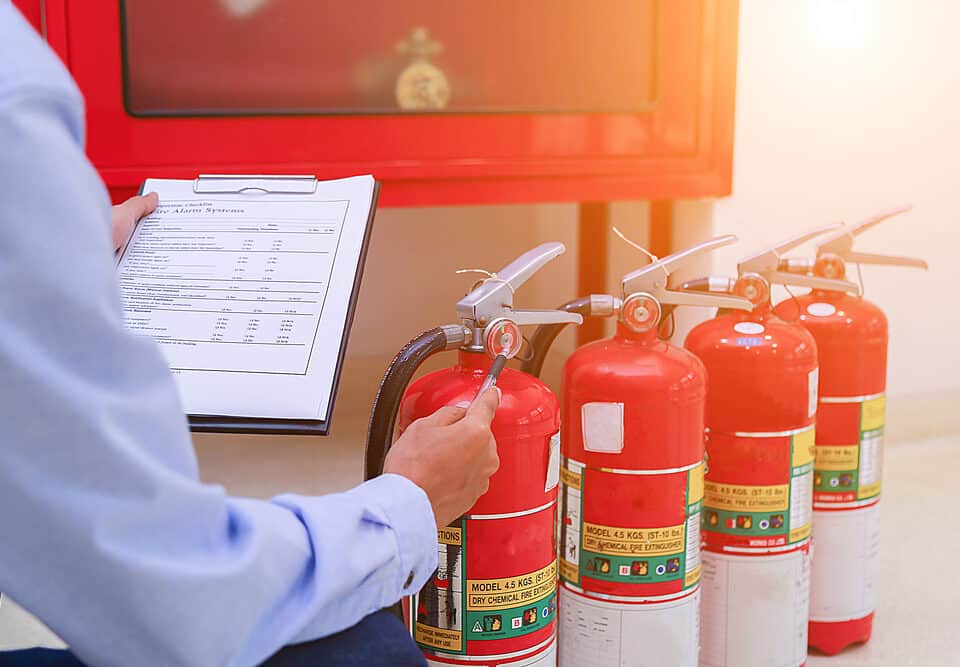
Fire extinguisher sizing is based on ratings. You’ll see numbers and letters on the label, like 2A:10B:C or 4A:60B:C. The number before the “A” tells you the extinguisher’s effectiveness on Class A fires, roughly equivalent to gallons of water. A 2A rating equals about 2.5 gallons of water. The number before the “B” indicates square footage coverage for Class B fires. A 10B rating can cover about 10 square feet of flammable liquid fire. The “C” has no number because it just means the agent is non-conductive and safe for electrical fires.
For most commercial buildings in Nassau County, the minimum standard is a 2A:10B:C extinguisher. But depending on your occupancy type and hazard classification, you might need larger units. Light hazard occupancies, like offices with minimal combustible materials, can often get by with 2A-rated extinguishers. Ordinary hazard occupancies, like retail spaces or warehouses with moderate combustibles, typically require at least 2A-rated units. Extra hazard occupancies, like industrial facilities with high fire loads, may need 4A-rated or larger extinguishers.
Placement rules are specific. For Class A hazards, NFPA 10 requires that no point in the building is more than 75 feet of travel distance from an extinguisher. That’s not a straight-line measurement—it’s the actual path someone would walk, accounting for walls, furniture, and obstacles. As a general guideline, one 2A-rated extinguisher covers up to 3,000 square feet, but you still have to respect the 75-foot travel distance rule.
For Class B hazards involving flammable liquids, the travel distance drops to 30 to 50 feet depending on the severity of the hazard. If you have a workshop with gasoline or paint storage, you need extinguishers closer together than you would in a standard office.
Mounting height matters too. NFPA 10 specifies that extinguishers weighing less than 40 pounds should be mounted so the top is no more than 5 feet above the floor. Heavier extinguishers should be mounted lower. The goal is to make them accessible without requiring a ladder or excessive reaching.
Extinguishers must be visible and unobstructed. You can’t hide them behind boxes, lock them in cabinets without emergency access, or place them where they’re not immediately obvious. Signage helps—a red “Fire Extinguisher” sign mounted above the unit makes it easier to locate during an emergency.
If your building layout changes—renovations, new equipment, occupancy shifts—your extinguisher placement may need to change too. What was compliant five years ago might not meet code today if you’ve added storage areas, changed your operations, or installed new machinery. That’s another reason to work with a professional fire protection company. They can assess your space, calculate coverage areas, and recommend the right number and placement of extinguishers to keep you compliant.
Choosing the Right ABC Fire Extinguisher Service in Nassau County
Understanding how ABC dry chemical fire extinguishers work is one thing. Making sure yours are properly sized, placed, maintained, and ready to perform when you need them is another.
The monoammonium phosphate powder inside these extinguishers is effective across Class A, B, and C fires, but only if the unit is charged, inspected, and compliant. A dusty extinguisher with an expired tag isn’t protecting anyone—it’s just taking up wall space and putting you at risk of violations.
If you’re in Nassau County, Long Island, or the Five Boroughs, you need a fire protection partner who understands local codes, responds quickly, and keeps you compliant without adding stress to your day. We’ve been doing exactly that for over 35 years at M&M Fire Extinguishers Sales & Services, Inc. Family-owned, available 24/7, and offering same-day service when you need it most.
Whether you’re dealing with an expired inspection tag, planning new extinguisher installations, or just want to make sure your current equipment is up to code, reach out to us for a free on-site estimate. Because fire safety isn’t something you figure out after an emergency—it’s something you handle now.
Related posts