
Fire Extinguisher Inspection Certification: Who Can Issue It in NY
July 9, 2026
What Fire Marshal Inspections Actually Check in New York
July 16, 2026
Summary:
Summer on Long Island means packed dining rooms, busier retail floors, and facilities running at full capacity. It also means your fire safety equipment is working harder than ever—and fire marshals are watching closer. The last thing you need during your busiest season is a violation notice taped to your door or, worse, a forced closure until you fix the problem.
If you’re running a commercial property in Nassau County, NY, you already know the fire codes here aren’t suggestions. They’re enforced, they’re specific, and they can shut you down if you’re not prepared. This guide breaks down what you actually need to do before summer hits, what inspectors look for, and how to keep your equipment ready when the heat is on.
Fire Safety Inspection Preparation for Summer
Getting ready for a fire safety inspection isn’t about cramming the night before. It’s about knowing what’s coming and having your systems in order before the fire marshal shows up unannounced.
Nassau County, NY uses a centralized fire safety approach through the Nassau County Fire Commission. That means the rules are consistent, but they’re also strictly enforced. Annual inspections of commercial properties and multi-dwelling residences are required by state law, and summer is prime inspection season.
Start by understanding what’s actually on the inspector’s fire safety checklist. They’re verifying that your fire extinguishers are accessible, properly mounted, and recently inspected. They’re checking that exit signs are lit, pathways are clear, and your fire alarm system is functional. They’re looking at your documentation—those inspection tags and maintenance records you hopefully kept organized.
What Fire Marshals Actually Look for During Summer Inspections
Fire marshals in Nassau County, NY follow the Nassau County Fire Prevention Ordinance, which covers everything from fire detection systems to storage of flammable materials. During a fire marshal inspection, they’re not just glancing around—they’re systematically checking specific compliance points.
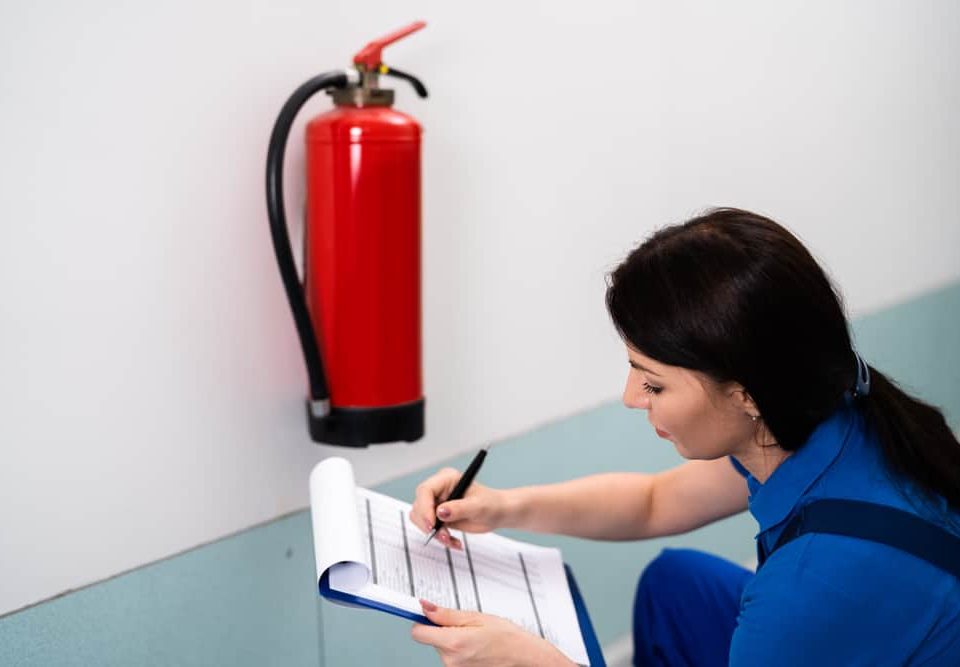
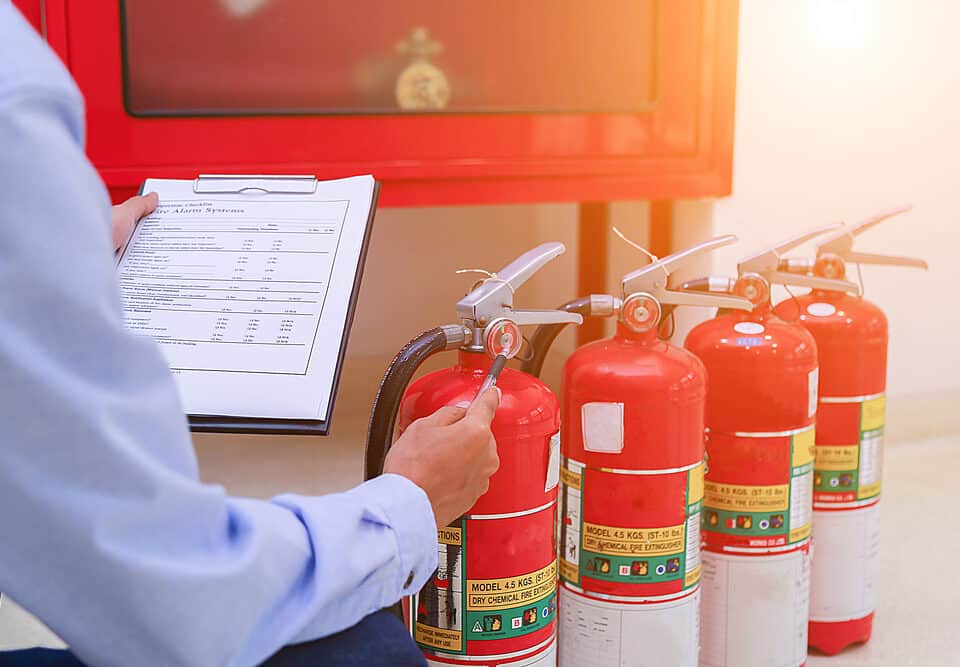
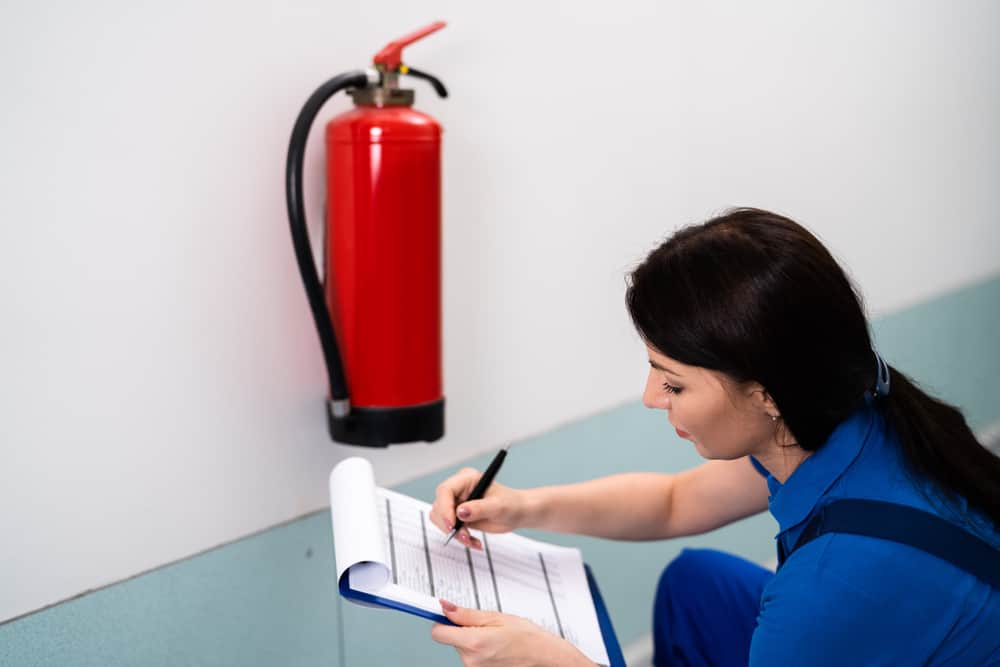
First, they verify your fire extinguishers. Each one should have a current inspection tag showing it was serviced within the last 12 months by a certified professional. The pressure gauge needs to be in the operable range. The extinguisher should be mounted at the proper height, unobstructed, and visible. If you’ve got a commercial kitchen, they’re checking that Class K extinguishers are within 30 feet of cooking equipment.
They’ll inspect your fire alarm system to ensure it’s been tested and maintained according to NFPA 72 standards. Smoke detectors should be clean and functional. Emergency lighting needs to work when they test it. Exit signs must be illuminated and clearly visible from anywhere in your space.
Your documentation matters more than you might think. Inspectors want to see records of your annual fire extinguisher maintenance, sprinkler system tests, hood suppression system inspections (if applicable), and any repairs or upgrades made to fire protection equipment. Missing paperwork can trigger violations even if your equipment is technically functional.
Summer adds another layer of complexity. If you’re running outdoor events, using temporary cooking equipment, or have construction happening on-site, inspectors will evaluate those additional fire hazards. Propane storage, extension cord usage, and temporary electrical setups all fall under scrutiny.
The inspection also covers housekeeping and operational practices. Combustible materials can’t be stored near heat sources. Exit pathways must remain clear—not blocked by seasonal inventory or outdoor furniture waiting to go on the patio. Fire doors need to close properly and can’t be propped open, even on hot days when you’re trying to get airflow.
Creating Your Pre-Inspection Fire Safety Checklist
The best way to avoid surprises during a fire marshal inspection is to inspect yourself first. Walk through your property with the same critical eye a fire marshal would use, following a comprehensive business fire safety checklist.
Start at your fire extinguishers. Check every single one. Is it in its designated location? Can you see it clearly, or is it hidden behind boxes or equipment? Look at the inspection tag—when was it last serviced? If it’s been over a year, you’re already out of compliance. Check the pressure gauge. It should be in the green zone. Look for any visible damage to the cylinder, hose, or nozzle. Make sure the pull pin is intact and the tamper seal hasn’t been broken.
Move to your exit routes. Walk from the farthest point in your building to the nearest exit. Is the path clear? Are exit signs visible and lit? Do doors open easily without keys or special knowledge? Emergency lighting should activate immediately when you cut the power—test it. Time how long the backup batteries last. They need to provide adequate illumination for at least 90 minutes.
Inspect your fire alarm system. When was it last tested by a professional? Do you have documentation? Test the pull stations if your maintenance schedule allows it. Check that smoke detectors are free of dust and debris. If you have a sprinkler system, verify that heads aren’t painted over, obstructed by storage, or damaged.
Look at your overall housekeeping. Flammable liquids should be in approved containers, stored away from heat sources, and not exceeding storage limits for your occupancy type. Electrical panels need to be accessible with at least three feet of clearance. Extension cords should be temporary solutions only—if you’ve had one plugged in for months, you’re creating a fire hazard and a code violation.
Document everything you find. Take photos. Make notes. Create a punch list of items that need immediate attention versus things you can schedule for later. This becomes your action plan and proof that you’re taking fire safety seriously.
For businesses with commercial kitchens, your fire safety checklist expands significantly. Hood suppression systems require inspection every six months. Grease buildup in hoods and ducts is a major fire hazard—if you can see buildup, it’s time for cleaning. Your kitchen fire extinguishers should be easily accessible but out of reach of heat sources that could damage them.
Commercial Fire Safety Requirements During Peak Season
Summer operations put extra stress on your fire protection systems right when you can least afford a failure. Higher occupancy loads, increased electrical demand from cooling systems, and longer operating hours all factor into your commercial fire safety requirements.
Nassau County, NY commercial fire safety requirements don’t change seasonally, but the risks do. Your fire extinguishers need to be sized and distributed based on your occupancy and square footage. For most commercial spaces, you need a 2A-rated extinguisher for every 3,000 square feet, with a maximum travel distance of 75 feet to reach one.
If your summer operations include outdoor dining, temporary structures, or special events, additional fire code compliance requirements kick in. Temporary tents over certain sizes require permits and fire protection equipment. Outdoor cooking equipment needs appropriate extinguishers nearby. Propane tanks must be stored and handled according to Nassau County regulations.
Understanding NFPA Standards for Fire Protection Equipment
The National Fire Protection Association sets the standards that Nassau County, NY enforces. NFPA 10 covers portable fire extinguishers. NFPA 25 addresses water-based fire protection systems. NFPA 72 governs fire alarm systems. Understanding these standards helps you stay ahead of fire code compliance issues.
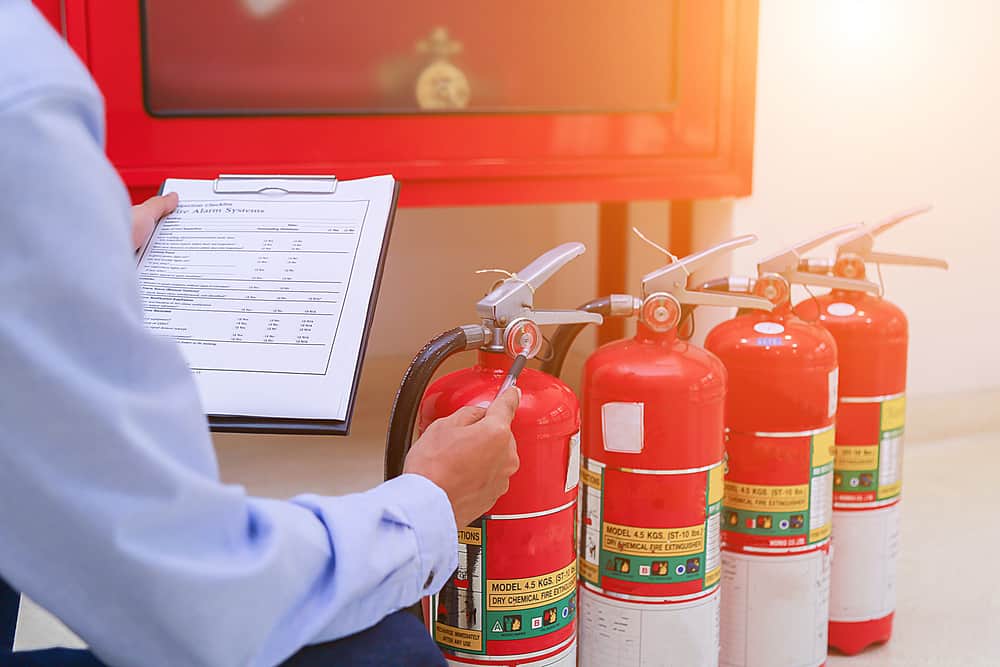
NFPA 10 requires monthly visual inspections of fire extinguishers. You or your staff can do these—they’re quick checks to verify the extinguisher is in place, accessible, and appears ready for use. The pressure gauge should be in the operable range. The tamper seal should be intact. There shouldn’t be obvious physical damage.
Annual maintenance is different. This must be performed by a certified professional with the proper training and equipment. During annual maintenance, the technician conducts a thorough examination of all mechanical parts, the extinguishing agent, and the expelling mechanism. They’ll verify the extinguisher is fully charged, test the pressure, and install a new tamper seal. You’ll get a signed and dated tag as documentation.
Every six years, stored-pressure dry chemical extinguishers require internal examination. The extinguisher is emptied, disassembled, and inspected for internal corrosion or damage. This service requires specialized equipment and training.
Hydrostatic testing pressure-tests the cylinder to verify its structural integrity. The testing interval depends on the extinguisher type—every five years for pressurized water, carbon dioxide, and wet chemical extinguishers, and every twelve years for dry chemical extinguishers. This testing catches potential failures before they become dangerous.
Your fire alarm system needs professional inspection and testing annually. Smoke detectors, heat detectors, pull stations, notification devices, and the control panel all require functional testing. The system’s connection to monitoring services must be verified. Any deficiencies found during testing must be corrected promptly.
Sprinkler systems follow NFPA 25 standards for inspection, testing, and maintenance. Monthly inspections verify that control valves are in the correct position and the system appears normal. Quarterly inspections include testing alarm devices. Annual inspections are comprehensive, covering everything from sprinkler heads to water flow alarms to fire department connections.
Fire Safety Equipment Maintenance When You're Running at Capacity
Summer is when your business is busiest, which makes it the worst possible time for equipment failures—and the most likely time for them to happen. Increased electrical loads from air conditioning stress your systems. More occupants means more potential for accidental damage to fire safety equipment. Longer operating hours give less downtime for fire safety equipment maintenance.
Schedule your annual fire protection equipment inspections before peak season hits. If your busy period runs June through August, get your fire extinguisher inspection completed in April or May. Have your fire alarm system tested in the spring. Get your kitchen hood suppression system inspected before summer crowds pack your restaurant.
This timing serves two purposes. First, you’re compliant before the busy season when fire marshal inspections are more likely. Second, you identify and fix problems during slower periods when you have more flexibility to shut down systems for repairs.
Pay attention to your electrical systems during summer. Overloaded circuits cause fires. If you’re running multiple air conditioning units, refrigeration equipment, and normal business operations, your electrical panel is working hard. Watch for frequently tripping breakers, flickering lights, or outlets that feel warm to the touch. These are warning signs that shouldn’t be ignored.
Keep your fire extinguishers accessible even when you’re juggling summer inventory or outdoor furniture. That spot where you usually keep an extinguisher can’t become temporary storage for patio umbrellas. Exit routes that are clear in winter can’t be blocked by seasonal merchandise displays.
Monitor your commercial kitchen more closely during high-volume periods. Grease buildup accelerates when you’re cooking more food. Your hood suppression system only works if the nozzles aren’t clogged and the system can discharge properly. Schedule professional hood cleaning based on your cooking volume, not just the calendar.
If you’re bringing in temporary staff for summer, include basic fire safety in their training. They need to know where fire extinguishers are located, how to activate the fire alarm, and what the evacuation procedures are. A temporary employee who doesn’t know where the nearest extinguisher is located creates risk during your busiest, most vulnerable time.
Document your maintenance activities. Keep records organized and accessible. When the fire marshal shows up for an inspection, you should be able to quickly produce yourfire extinguisher inspection tags, sprinkler system test reports, hood suppression maintenance records, and fire alarm inspection certificates. Good documentation demonstrates that you’re managing fire safety proactively, not reactively.
Staying Fire-Safe and Compliant Through Summer
Fire safety compliance isn’t a one-time checkbox. It’s an ongoing responsibility that gets more critical when your business is running at full capacity. The good news is that most fire safety requirements are straightforward once you understand what’s expected and build them into your operational routine.
Your fire protection equipment only works if it’s properly maintained and actually accessible when needed. Annual inspections by certified professionals aren’t optional—they’re required by Nassau County, NY regulations and your insurance policy. Monthly visual checks help you catch problems before they become violations.
Summer brings specific challenges to Long Island businesses, from increased electrical loads to temporary outdoor operations. Understanding these seasonal risks and preparing for them keeps your property protected and your operations running smoothly. If you’re behind on inspections, dealing with a violation, or just want to make sure everything is in order before peak season, we provide the local expertise and 24/7 availability that Long Island businesses need to stay compliant and protected.
Related posts