
Fake Fire Extinguisher Inspection Tags Are a Real Long Island Scam
July 9, 2026
Essential Summer Fire Hazard Inspection Guide
July 14, 2026
Summary:
Here’s a situation that plays out more often than it should: a business owner in Queens or Nassau County has been getting their fire extinguishers inspected every year, has a tag on every unit, and genuinely believes they’re compliant. Then a fire marshal shows up. And suddenly there are violations.
The problem isn’t that they skipped the inspection. The problem is that they didn’t know what “compliant” actually means in New York — and their service provider never told them. If you’re trying to figure out whether your fire extinguisher certification is legitimate, or you’ve just received a violation you didn’t see coming, this page is going to answer the questions you’re actually asking.
What Fire Extinguisher Inspection Certification Actually Means in New York
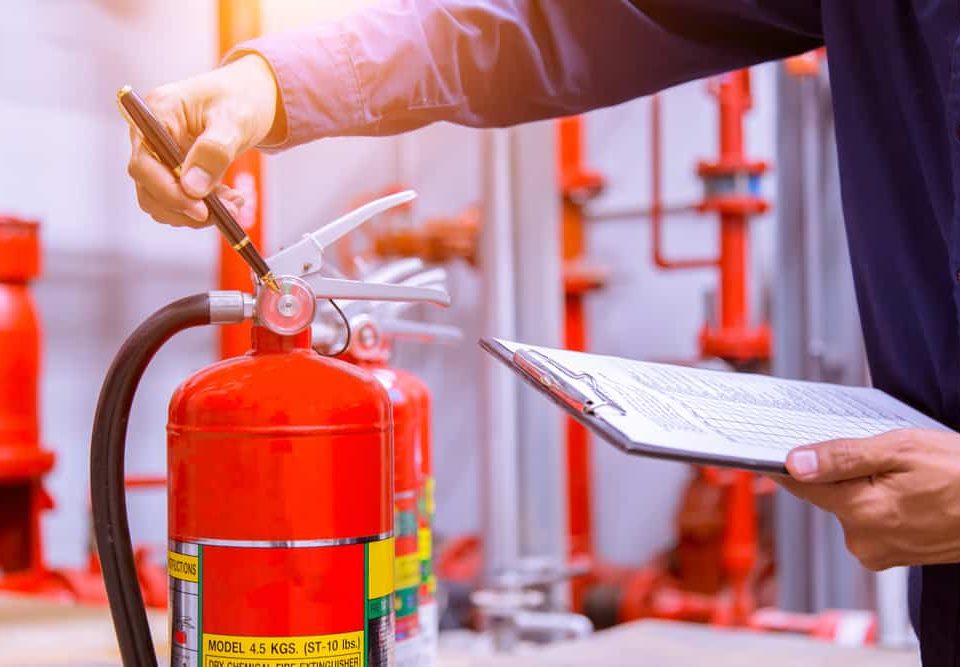
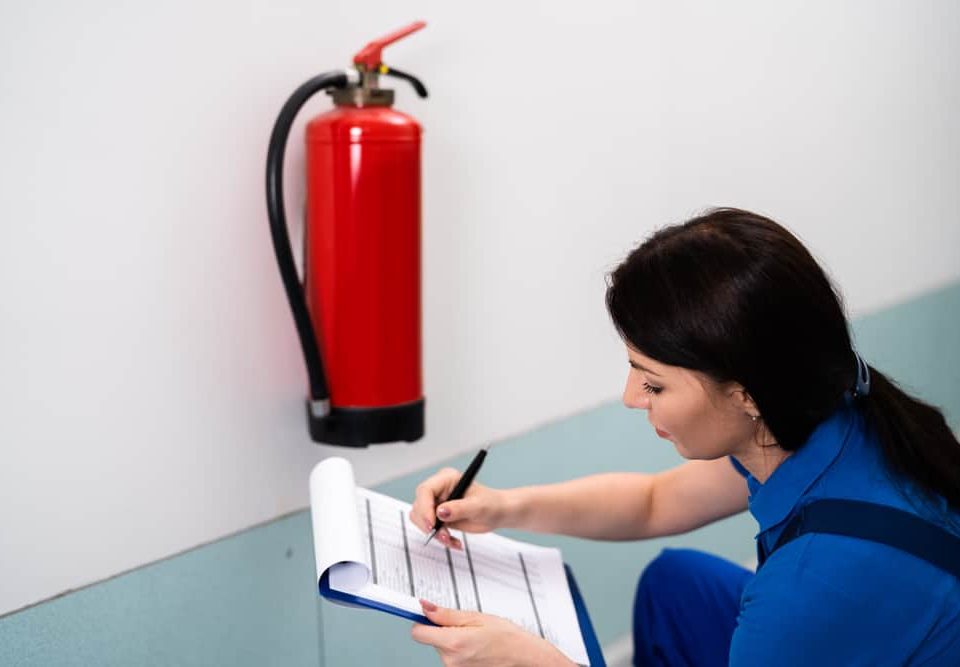
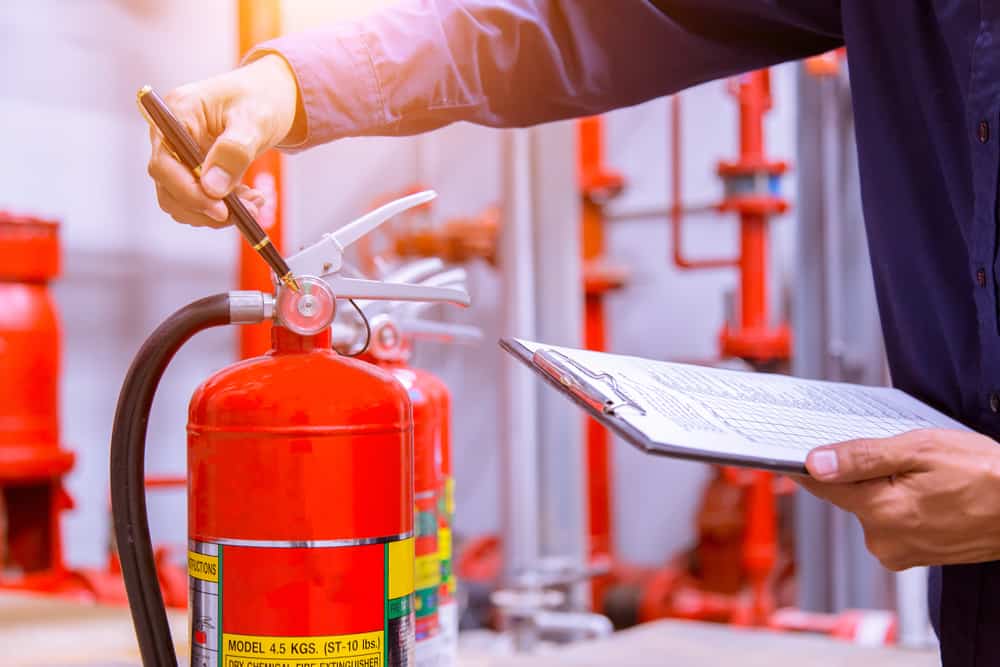
Fire extinguisher inspection certification isn’t a single document or a sticker on a unit. It’s a combination of annual professional service, documented monthly visual checks, and on-site records that prove both have been done consistently — by the right people, in the right way.
In New York City specifically, the rules go further than the national standard. Under FDNY Rule 3 RCNY 115-02, which took effect in June 2018, every portable fire extinguisher in a commercial building must have a serialized, FDNY-issued tag affixed after each annual inspection. That tag can only be purchased and applied by companies that hold a current FDNY Portable Fire Extinguisher Servicing Company Certificate. A tag from a company that isn’t on the FDNY approved list isn’t just insufficient — it’s a violation in itself.
Who Is Legally Authorized to Inspect Fire Extinguishers in NYC and Long Island
This is the question most business owners don’t think to ask until something goes wrong. In New York City, annual fire extinguisher inspections must be performed by a company holding an active FDNY Portable Fire Extinguisher Servicing Company Certificate. The individual technician performing the work must also hold a personal FDNY Certificate of Fitness — a separate credential issued to the technician, not just the company. Both have to be in place. One without the other doesn’t satisfy the requirement.
What that means practically: if you hired a company that seemed legitimate, showed up in a van, put a tag on your units, and handed you a receipt — but that company isn’t on the FDNY approved list — the inspection doesn’t count. You may have paid for a service that leaves you just as exposed as if you’d done nothing at all.
For businesses in Nassau County and Suffolk County, the enforcement structure is different. Long Island properties fall under state fire code enforced by local fire marshals rather than FDNY, but the standard for who can perform a legally recognized annual inspection is still strict. The technician must be properly certified, and the documentation must be complete. A company that only knows how to navigate FDNY requirements may not be familiar with the nuances of how Long Island fire marshals conduct inspections — which is a real gap if your business has locations in both markets.
The bottom line: before you let anyone inspect your extinguishers, ask directly whether the company holds a current FDNY Portable Fire Extinguisher Servicing Company Certificate and whether their technicians hold active Certificates of Fitness. A legitimate provider will answer that without hesitation. If there’s any uncertainty in the response, that tells you something.
What Documentation a Fire Marshal Will Actually Check
Having a tag on your extinguisher is a starting point. It’s not the finish line. When an FDNY fire marshal walks into your building — whether that’s a scheduled inspection or a surprise visit — they’re looking for more than a tag on the wall.
Under NYC Fire Code Section FC107.7, you’re required to maintain on-site inspection records that include the date of each inspection, the name of the servicing company, and the Certificate of Fitness number of the technician who performed the work. Those records need to be available immediately, not stored somewhere off-site or accessible only through a third-party portal. If you can’t produce them on the spot, that’s a violation — even if the inspection itself was done correctly.
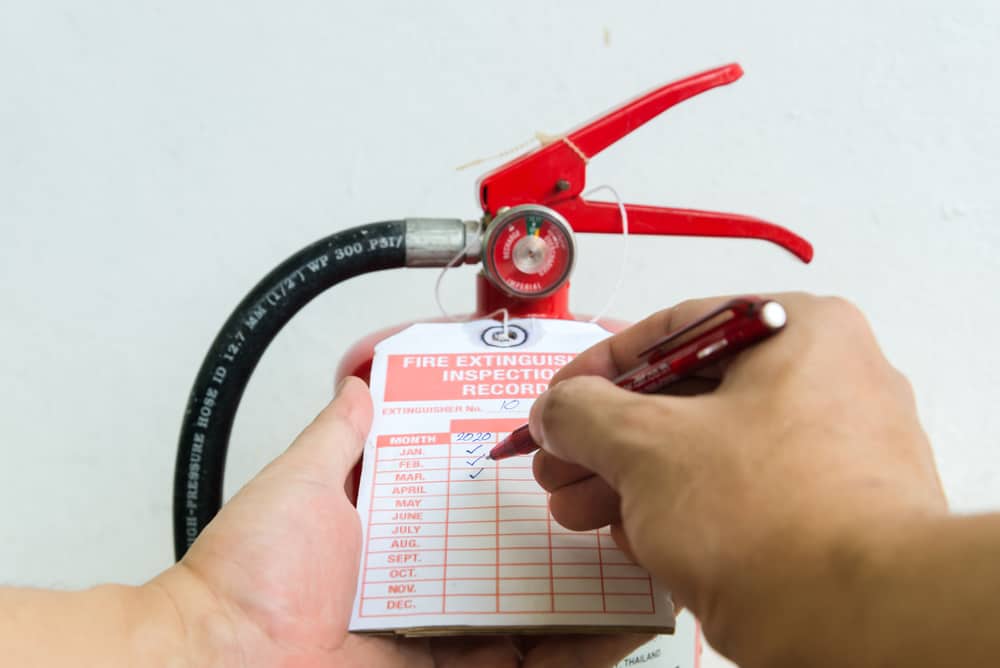
Beyond the annual inspection records, fire marshals also look for monthly visual inspection logs. This is the part that catches a lot of business owners off guard. Under NFPA 10, fire extinguishers must be visually inspected at least once every 30 days. These monthly checks don’t require a certified technician — your building staff can do them — but they do have to be documented. The log needs to show that someone checked each unit, confirmed the pressure gauge is in the correct range, verified the unit is accessible and unobstructed, and confirmed the tamper seal is intact.
First-time FDNY violations for non-compliant extinguishers start at $300 per extinguisher and can reach $1,000. Repeat violations run $1,000 to $5,000 per unit. When you’re running a restaurant with six extinguishers, or a warehouse with a dozen, those numbers add up fast. Once a violation is issued, you have 35 days to correct it and file a Certificate of Correction with the FDNY — which means you need a certified provider who can move quickly.
Monthly Fire Extinguisher Inspection: What It Requires and Who's Responsible
The annual inspection gets most of the attention, but the monthly inspection requirement is where a lot of businesses quietly fall out of compliance. NFPA 10 Section 7.2 requires that every portable fire extinguisher be visually inspected at minimum once every 30 days. This isn’t optional, and it’s not something you can skip because you had an annual inspection done recently.
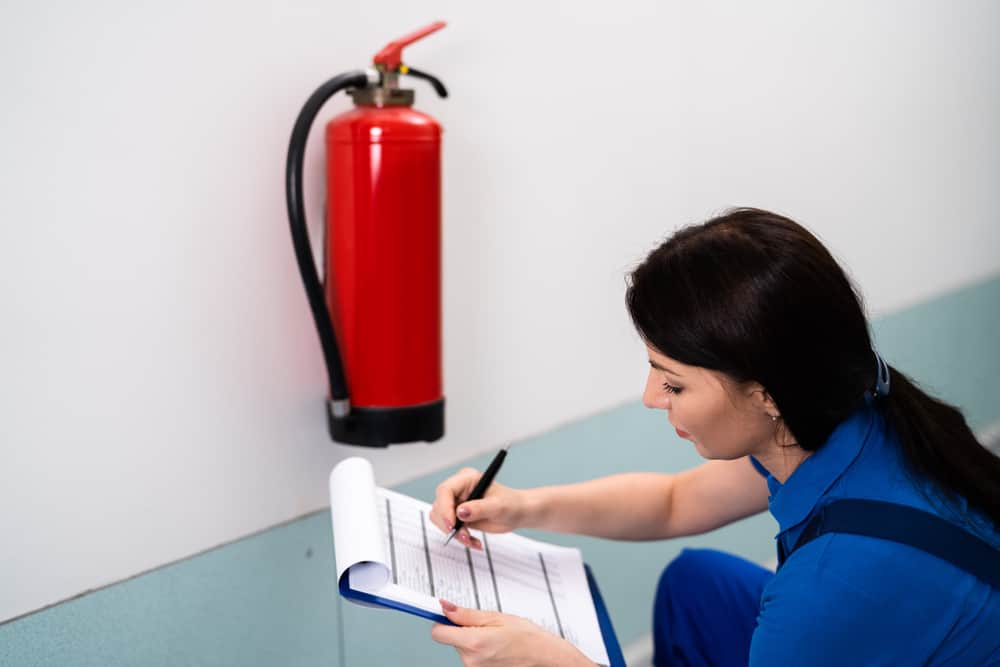
The good news is that monthly inspections don’t require a licensed technician. A trained employee can walk through the checklist — pressure gauge in the green, unit mounted in the correct location, no visible damage, tamper seal unbroken — and initial a log to confirm it was done. The bad news is that most businesses either don’t know this is required or don’t have a system in place to do it consistently.
Fire Extinguisher Inspection Cost: What to Expect in the NYC and Long Island Market
Pricing for fire extinguisher inspection services in New York varies more than it should, and the lack of transparency from some providers is a real problem. Here’s what the market actually looks like based on current data.
For a standard annual professional inspection in NYC or Long Island, expect to pay somewhere in the range of $40 to $100 per visit for typical units. Specialized extinguishers — wet chemical units used in commercial kitchens, Halotron units, and other non-standard types — can run up to $300 per inspection. Most providers also charge a minimum service call fee in the range of $80 to $150, which covers the visit regardless of how many units are on-site. If you have a larger facility with multiple extinguishers, per-unit costs typically come down when the inspection is handled in a single visit.
The more important number to keep in mind is the cost of not being compliant. A single first-time FDNY violation runs $300 to $1,000 per extinguisher. If a fire marshal cites you for five non-compliant units, you’re looking at a fine that could easily exceed what you’d spend on professional inspections for the next several years.
We offer one-time service pricing at $99 — no monthly subscription, no recurring fees for a service that only needs to happen annually. Some competitors charge around $85 per month, which adds up to over $1,000 a year for a single annual inspection. That pricing model doesn’t make sense for most small businesses.
Fire Extinguisher Recharge Service: When It's Required and What It Costs
A fire extinguisher that’s been used — even partially — cannot go back into service without being recharged first. This is non-negotiable under NFPA 10, and it applies whether the extinguisher was fully discharged or just briefly triggered. An extinguisher that’s been used and not recharged is both a safety gap and a compliance violation.
Recharging is also sometimes required after an annual inspection if the pressure has dropped below the acceptable range, or if the inspection reveals any issue with the internal components. The process involves depressurizing the unit, refilling it with the correct extinguishing agent, repressurizing to the specified level, inspecting the valve and other components, and applying a new service tag. It’s not something that can be done in the field without the right equipment — and in NYC, the recharge must be documented and tagged by an FDNY-approved company to count toward compliance.
For Long Island businesses, standard recharge costs typically run $25 to $50 per unit. Hydrostatic testing — which is required for stored-pressure dry chemical extinguishers every 12 years and for CO2 units every 5 years — runs $40 to $70 per unit. These aren’t costs you’ll face every year, but they’re part of the full picture of what fire extinguisher compliance actually involves over the life of a unit.
If your extinguisher is older and the recharge cost approaches what a new unit would cost, replacement often makes more sense. We can walk you through that decision when we’re on-site — there’s no reason to spend money recharging a unit that’s near the end of its service life when a new, fully certified unit would serve you better.
Getting Fire Extinguisher Certification Right in New York
Fire extinguisher inspection certification in New York isn’t complicated once you understand what it actually requires — but a lot of businesses are operating under assumptions that leave them exposed. The annual inspection matters. The monthly logs matter. The documentation on file matters. And the authorization status of the company performing your inspection matters more than most people realize.
If you’re not sure whether your current setup would hold up during a fire marshal visit, that uncertainty is worth resolving before a violation notice forces the issue. We’ve been serving Long Island and the five boroughs for over 35 years, and we’re available around the clock when something urgent comes up.
Reach out to M&M Fire Extinguishers Sales & Services, Inc. for a free on-site estimate — and get a straight answer about where your compliance actually stands.
Related posts