
When to Repair vs Replace Fire Extinguishers
June 30, 2026
Fire Suppression Systems vs. Extinguishers: Know the Difference
July 2, 2026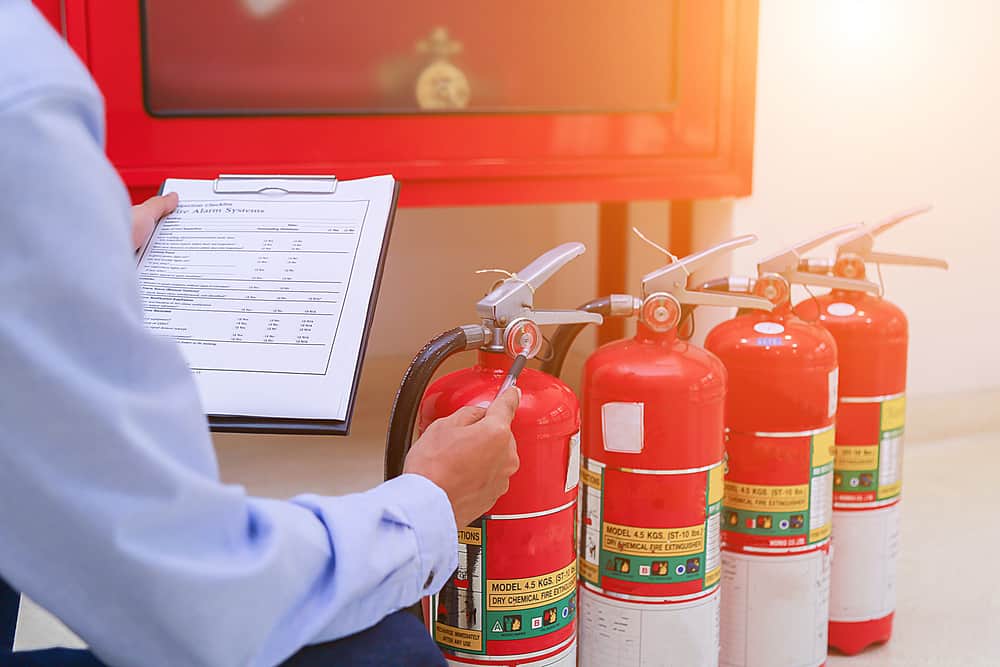
Summary:
You got the notice. Maybe it came during a routine FDNY inspection, maybe it showed up after a complaint, but either way — you’re now holding a violation summons and trying to figure out what it actually means and what you’re supposed to do about it.
The good news: this is fixable. The bad news: you have a hard deadline, a notarization requirement most people don’t know about, and a process that trips up even experienced property owners. This guide covers all of it — what the Certificate of Correction is, how to file it correctly, what proof FDNY actually needs, and why getting the underlying fire safety issue fixed by a certified technician is the only path that actually works.
What Is an FDNY Certificate of Correction and When Do You Need One?
When the FDNY issues a summons for a fire code violation, they’re not just flagging a problem — they’re starting a clock. To avoid being pulled into an OATH hearing with escalating fines, you need to correct the underlying violation and submit a notarized Certificate of Correction to the FDNY within 35 calendar days from the date on the summons. That deadline is firm. Miss it, and the case moves to a hearing automatically.
The Certificate of Correction is essentially your sworn statement that the problem has been fixed. But here’s what most business owners don’t realize: the form itself isn’t enough. FDNY requires you to attach proof of correction — service reports, receipts, inspection documentation — and the form must be notarized before submission. A COC filed without proper supporting documentation will be rejected, and a rejected COC is treated the same as no response at all.
What Triggers an FDNY Fire Extinguisher Violation in the First Place?
Most business owners who receive a fire extinguisher violation weren’t being reckless. They just didn’t know the specific requirements that FDNY enforces — and there are more of them than you’d expect.
The most common triggers include expired or missing inspection tags, extinguishers that haven’t been serviced by a certified technician within the past year, units that have been moved and are no longer within the required travel distance from any point in the building (75 feet for Class A hazards, 30 to 50 feet for Class B), and extinguishers that are physically blocked or inaccessible. Missing or improper location signage is also a frequent violation — FDNY requires visible markers indicating where extinguishers are mounted, and a lot of businesses overlook this entirely.
There’s also the documentation side. Even if your extinguisher is in perfect working condition, if you can’t produce an inspection log showing it was properly serviced and checked, FDNY can still issue a violation. The physical condition of the equipment and the paper trail behind it are both part of what inspectors evaluate.
In NYC, FDNY issued more than 22,000 violations across the city in 2024 alone. Fire extinguisher violations — categorized under VC7 for defective or missing units — are among the most common. If you operate a restaurant, warehouse, retail space, or multi-tenant building anywhere in the five boroughs or Long Island, the odds of receiving a violation at some point are not trivial. The Route 110 corridor through Deer Park, Amityville, and Farmingdale has heavy concentrations of restaurants, auto shops, and light industrial businesses — exactly the property types FDNY flags most often.
Understanding what triggered the violation in the first place matters because it shapes what “proof of correction” actually looks like. If the issue was an expired inspection tag, you need a certified annual inspection with a new tag affixed and a service report in hand. If the issue was placement, you need documentation showing the extinguisher was properly relocated and that the new position meets code. FDNY is specific about this, and vague or incomplete submissions get rejected.
The False Certification Trap: Why You Can't Just Sign and Submit
Here’s something that doesn’t get nearly enough attention: the Certificate of Correction is a sworn legal document. When you sign it, you’re certifying under penalty of law that the violation has been corrected. Under NYC Administrative Code Section 15-220.1, false certification carries a fine of not less than $1,000 and not more than $5,000 — and up to six months in jail.
That’s the actual statute. It matters because a lot of business owners assume they can fix the extinguisher themselves, sign the form, and move on. The problem is that FDNY requires the correction to be verified by a certified professional. If your technician doesn’t hold an FDNY Certificate of Fitness — which is the specific credential required to perform and certify fire extinguisher inspections in New York City — their service report doesn’t count as valid proof of correction. Your COC gets rejected. The violation stands. And now you’re facing a default judgment on top of everything else.
This is also why it matters which fire extinguisher company you call. Not every provider operating in the NYC metro holds the right credentials. A company that does good work in a state without NYC’s specific requirements may not have the FDNY Certificate of Fitness that makes their documentation legally valid here. When you’re choosing who to call after receiving a violation, the first question to ask is whether their technicians are FDNY-certified — not just licensed in a general sense, but specifically holding the Certificate of Fitness that FDNY recognizes.
At M&M Fire Extinguishers Sales & Services, Inc., our technicians carry the proper FDNY certifications, which means the service reports we provide are the kind FDNY actually accepts. We’ve been navigating this process for over 35 years, serving businesses across all five boroughs and Long Island, and we know exactly what documentation survives scrutiny and what gets kicked back.
Monthly Fire Extinguisher Inspection Checklist PDF: A Simple Reference for Your Team
Your staff doesn’t need to be fire protection experts to perform a compliant monthly inspection — they just need to know what to look for and how to record it. A basic monthly fire extinguisher inspection checklist includes confirming the unit is in its designated location, verifying it’s unobstructed and accessible, checking the pressure gauge is in the operable range, looking for visible damage or corrosion, confirming the pull pin and tamper seal are intact, and verifying the inspection tag and operating instructions are present and legible.
Each item gets checked, dated, and signed off. The completed log is filed and retained. It takes a few minutes per unit and creates the documentation trail that protects you when FDNY shows up. We can provide a monthly fire extinguisher inspection checklist in PDF or Excel format that your team can actually use — reach out and we’ll put one together for you.

Fire Extinguisher Inspection Checklist: What a Certified Annual Inspection Covers
A proper annual fire extinguisher inspection isn’t a five-minute walk-through. Under NFPA 10, the certified technician is required to evaluate a specific set of conditions for every unit. That includes verifying the extinguisher is in its designated location and clearly visible, confirming the pressure gauge is in the operable range, checking for physical damage like dents, corrosion, or leakage, ensuring the pull pin and tamper seal are intact, confirming the operating instructions are legible and facing outward, and verifying that the unit is the correct type for the hazard class in that area of the building.
Beyond the annual inspection, NFPA 10 also requires a 6-year internal examination for stored-pressure dry chemical units and hydrostatic pressure testing at intervals of 5 or 12 years depending on the extinguisher type. These aren’t optional — they’re part of the full compliance picture, and FDNY inspectors are trained to look for them.
The inspection record tag affixed to the extinguisher after a certified annual inspection is what makes all of this visible to an FDNY inspector at a glance. It shows the date of service, the technician’s name, and the company’s certification. If that tag is missing, expired, or issued by an uncertified provider, the extinguisher fails the inspection — even if it’s in perfect working condition.
Fire Equipment Inspection Checklist: What FDNY Inspectors Look For During a Visit
FDNY inspectors aren’t just looking at whether you have a fire extinguisher on the wall. They’re evaluating a broader set of conditions that determine whether your property is genuinely compliant — and any gap in that picture can result in a violation finding.
During a fire equipment inspection, FDNY typically checks that every extinguisher is properly mounted and accessible, that location signage meets code, that the correct extinguisher type is present for the specific hazard class in each area, that monthly inspection records are current, that annual service tags are affixed and dated within the past 12 months, and that any fire suppression systems — like kitchen hood suppression systems in restaurants — are also properly serviced and documented.
The monthly inspection piece is one that surprises a lot of business owners. NFPA 10 requires a visual check of every extinguisher at least once every 30 days. OSHA independently requires the same under 29 CFR 1910.157(e)(1) for any workplace that has portable fire extinguishers. These monthly checks don’t have to be done by a certified technician — your own trained staff can handle them — but they need to be recorded in a fire extinguisher monthly inspection log that FDNY can review. If that log doesn’t exist, or if it hasn’t been maintained consistently, it’s a vulnerability.
For restaurants along the Route 110 corridor in Deer Park and throughout Long Island, the kitchen hood fire suppression system is often where violations originate. These systems have their own inspection and service requirements that run parallel to fire extinguisher compliance — and they’re frequently overlooked until an FDNY inspector flags them.
What to Do After You Receive an FDNY Violation Notice
The moment you receive a violation summons, the 35-day clock starts. The path forward isn’t complicated, but it requires the right steps in the right order: get the underlying problem fixed by an FDNY-certified technician, collect the documentation that qualifies as proof of correction, have the Certificate of Correction notarized, and submit it to FDNY before the deadline.
What trips most people up is assuming any of those steps is optional — or that a quick fix without proper documentation will be enough. FDNY is specific about what they accept, and a rejected COC puts you right back at square one with less time on the clock.
If you’re dealing with a fire extinguisher violation anywhere in the five boroughs or across Long Island — from a restaurant in Queens to a warehouse in Deer Park to a retail space in Manhattan — M&M Fire Extinguishers Sales & Services, Inc. can get a certified technician to your location, provide the documentation FDNY requires, and walk you through the Certificate of Correction process from start to finish. We’re available 24 hours a day, and we’ve been handling exactly this kind of situation for over 35 years. Give us a call.
—
**Frequently Asked Questions**
**What is an FDNY Certificate of Correction?** It’s a notarized form you submit to FDNY confirming that a fire code violation has been corrected. It must be accompanied by proof of correction — service reports, receipts, or other documentation showing the underlying issue was fixed — and submitted within 35 calendar days of the violation date to avoid an OATH hearing.
**What’s on a fire extinguisher inspection list?** A certified annual inspection covers the extinguisher’s location and accessibility, pressure gauge reading, physical condition (no dents, corrosion, or leakage), pull pin and tamper seal integrity, legibility of operating instructions, and correct extinguisher type for the hazard class. The inspection results in a service tag and written report that serve as your proof of compliance.
**How often should fire extinguisher checks be performed?** Monthly visual checks are required under both NFPA 10 and OSHA for all workplaces with portable fire extinguishers. These can be performed by trained staff. A certified annual inspection by an FDNY-licensed technician is also required every 12 months. Both need to be documented.
**What do fire extinguisher inspection stickers mean?** The stickers — or inspection tags — are legal documentation showing when the extinguisher was last serviced, by whom, and under what certification. Annual tags show the certified technician’s information. Monthly tags provide a running log of visual checks. Missing, expired, or improperly issued tags are among the most common reasons businesses receive FDNY violations.
**What is a fire extinguisher inspection form and do I need one?** Yes. After every certified annual inspection, the technician completes a service report documenting what was inspected, what was found, and what work was performed. This form is your primary proof of correction if you need to file a Certificate of Correction. Without it, FDNY has no basis to accept your COC submission.
**How long do I need to keep fire extinguisher inspection records?** Under NYC Fire Code, inspection records must be retained for at least three years. This includes both the monthly inspection log and the annual service reports. FDNY can request these records during an inspection, and gaps in the documentation are themselves a compliance risk.
**How often does a fire extinguisher need to be checked?** Monthly visual checks are required every 30 days. Annual certified maintenance is required every 12 months. Stored-pressure dry chemical units require a 6-year internal examination, and hydrostatic pressure testing is required at 5 or 12-year intervals depending on the extinguisher type. All of these are NFPA 10 requirements that FDNY enforces in New York City and throughout Long Island, including properties in Deer Park and surrounding areas.
Related posts