FDNY Certificate of Correction: What NY Businesses Must Know
July 2, 2026
Prepare Your Facility for Fall Fire Safety
July 7, 2026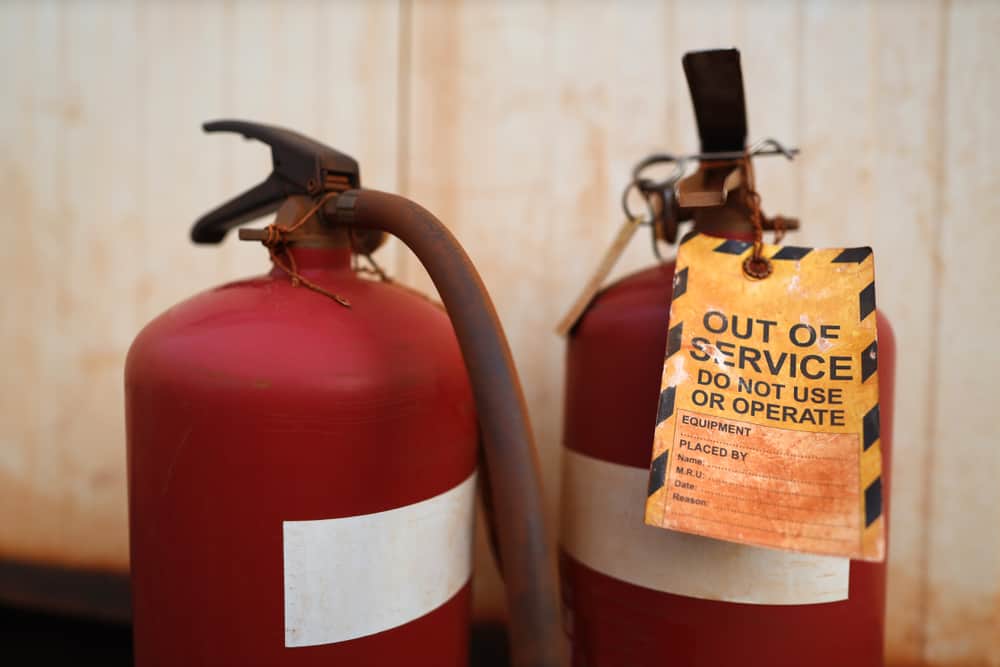
Summary:
Walk into almost any commercial space in New York — a restaurant in Queens, a warehouse in Deer Park, an office building in Manhattan — and you’ll find fire extinguishers mounted on the wall. Most business owners see those red cylinders and feel like they’ve handled their fire safety obligation. That’s a reasonable assumption. It’s also wrong, and it’s exactly the kind of misunderstanding that turns a routine FDNY inspection into a violation notice.
Fire extinguishers and fire suppression systems are not the same thing, they’re not interchangeable, and in many occupancies, the law requires both. Here’s what you actually need to know.
What Is a Fire Suppression System — and How Is It Different from a Fire Extinguisher?
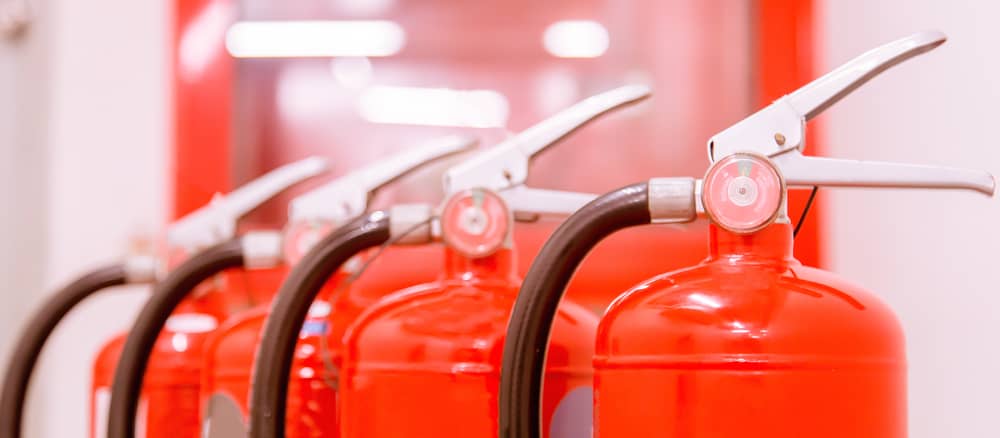
A portable fire extinguisher is exactly what it sounds like — a handheld device that a person picks up and aims at a fire. It’s manually operated, designed for incipient-stage fires (meaning small, just-started fires), and effective when the right type is used on the right class of fire. It does not activate on its own. If nobody’s in the room, it does nothing.
A fire suppression system is a fixed, built-in system that detects a fire and responds automatically — without anyone needing to pull a pin or aim a nozzle. Depending on the type, it might release water through sprinkler heads, discharge a wet chemical agent over a commercial kitchen hood, or flood a server room with a clean gas agent that won’t destroy electronics. The system activates on its own, often before a fire has had time to spread.
These two things work differently, protect against different scenarios, and are governed by completely separate sets of rules.
NFPA 13: The Standard That Governs Fire Suppression System Installation
When a fire suppression system gets installed in a building — whether it’s a wet pipe sprinkler system in an office, a dry pipe system in an unheated warehouse, or a commercial kitchen hood suppression system in a restaurant — that installation has to meet the requirements of NFPA 13, the Standard for the Installation of Sprinkler Systems. NFPA 13 dictates how systems are designed, what components are used, how sprinkler heads are spaced, and how the whole thing connects to the building’s water supply or agent storage.
Here’s something most business owners don’t realize: NFPA 13 does include a retroactivity clause, which means a system that was installed years ago under an older edition of the standard isn’t automatically required to be ripped out and rebuilt to meet today’s installation specs. If your building’s suppression system was installed correctly under the code that was in effect at the time, that installation is generally still considered compliant.
What that does NOT mean, however, is that you’re off the hook for maintenance. A lot of building owners hear “retroactivity clause” and assume their old system is grandfathered in entirely. That’s where the confusion gets expensive. Installation and maintenance are governed by two separate NFPA standards — and the maintenance standard works very differently.
In New York City, suppression system installation also has to satisfy the NYC Building Code Chapter 9, and major work like dry pipe valve testing has to be performed by a master fire suppression contractor licensed by the NYC Department of Buildings. This is not a job for an unlicensed vendor who quotes you a low number over the phone.
Once a fire suppression system is installed, the ongoing obligation shifts to NFPA 25 — the Standard for the Inspection, Testing, and Maintenance of Water-Based Fire Protection Systems. And this is where the retroactivity exception disappears entirely.
NFPA 25 does not have a retroactivity clause. That means it doesn’t matter when your system was installed or what edition of the code was in effect at the time. Your building must comply with the current maintenance requirements, full stop. You cannot grandfather out of NFPA 25. If your system is 30 years old and still in service, it still has to be inspected, tested, and maintained according to today’s standard.
NFPA 25 covers everything — sprinkler heads, control valves, fire pumps, standpipes, fire department connections, and water storage tanks. It requires quarterly, semi-annual, and annual testing depending on the component. And here’s the part that surprises most building owners: NFPA 25 Section 4.1 places the legal responsibility for compliance directly on the building owner, even when they’ve hired a contractor to do the work. Hiring someone doesn’t transfer your liability. If the work isn’t done correctly, you’re still the one who answers to the FDNY.
For restaurants specifically, NFPA 96 — which governs commercial cooking equipment and kitchen hood suppression systems — requires semi-annual inspections. That’s twice a year, every year, without exception. An NYC restaurant that misses that window doesn’t just face a fine; it can face forced closure until the system is re-certified by a licensed professional. That’s not a hypothetical — it’s happened, and it’s the kind of operational disruption that no business owner wants to learn about firsthand.
Fire Extinguisher Maintenance: A Separate Compliance Clock Under NFPA 10
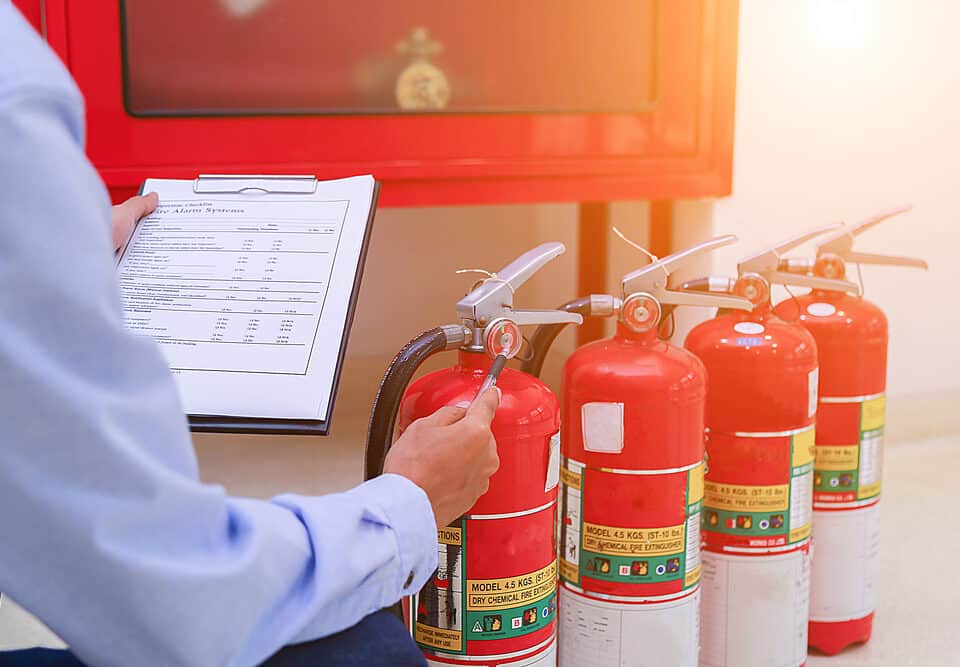
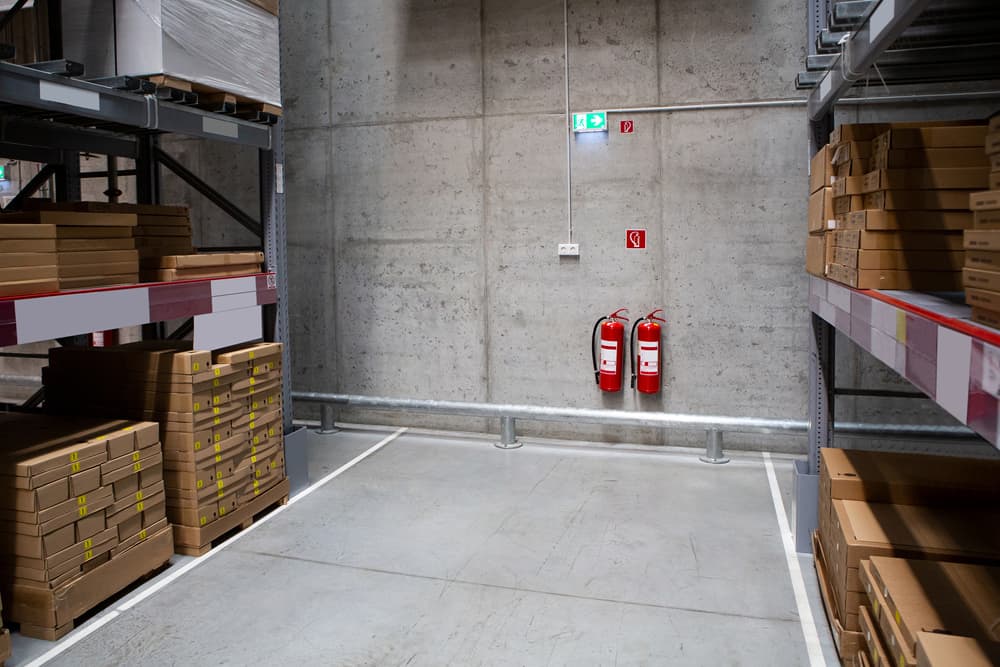
While your suppression system is running on the NFPA 25 schedule, your portable fire extinguishers are running on an entirely different clock governed by NFPA 10 — the Standard for Portable Fire Extinguishers. Most business owners know they need an annual inspection. What most don’t know is that NFPA 10 actually requires four distinct service intervals, and missing any one of them is a violation.
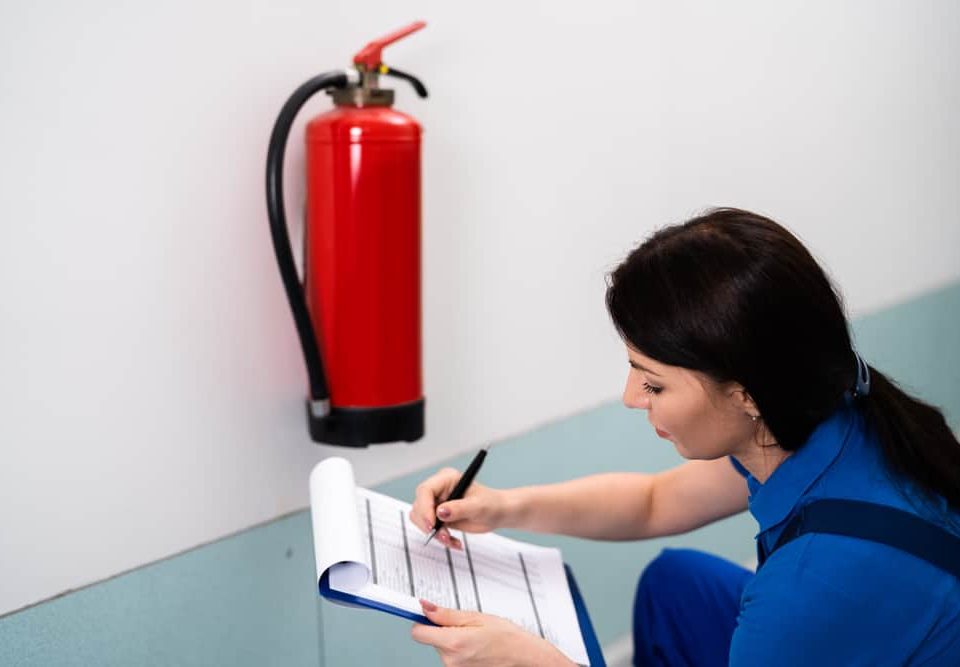
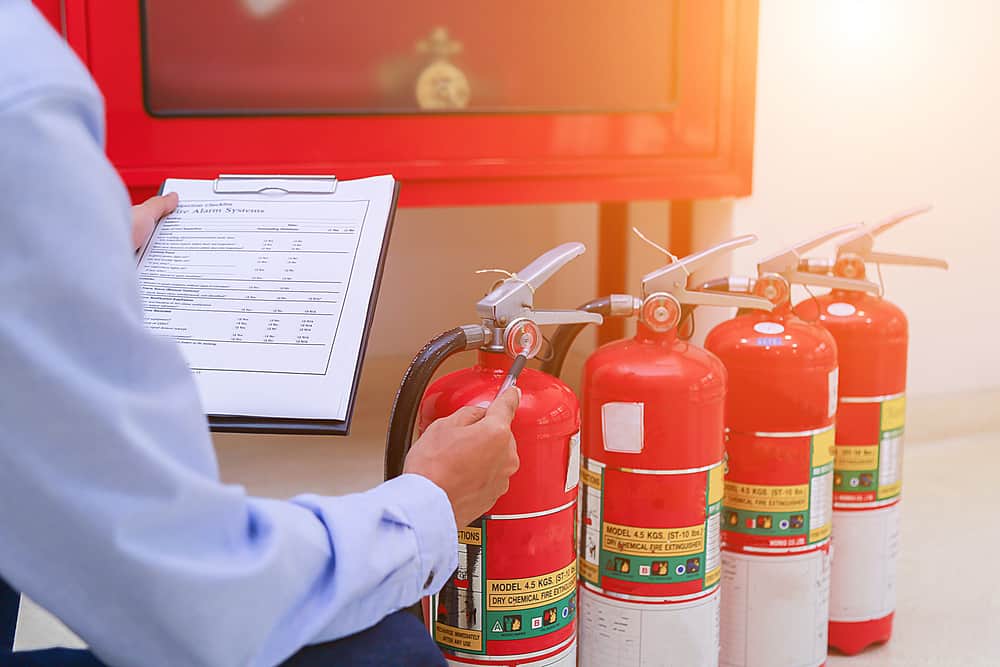
The monthly visual inspection is the first one — and it’s the one businesses are most likely to skip, because it’s designed to be performed by a trained employee, not a professional technician. It’s a quick check to confirm the extinguisher is in its designated location, the pressure gauge reads in the operable range, the pull pin and tamper seal are intact, and there’s no visible damage or obstruction. Simple, but required.
The annual professional maintenance examination goes deeper — a qualified technician checks the mechanical parts, the extinguishing agent, and the expelling means to confirm everything will actually work when it needs to.
The 6-Year and 12-Year Intervals Most Business Owners Don't Know About
Beyond the annual inspection, NFPA 10 requires a 6-year internal examination for stored-pressure dry chemical extinguishers — the most common type in commercial settings. This involves emptying the unit, inspecting the interior for corrosion or damage, replacing any worn components, and recharging it. If your extinguisher has been sitting on the wall for six or more years without this service, it’s technically out of compliance, even if it passed its last annual inspection.
At the 12-year mark, the extinguisher cylinder itself must undergo hydrostatic pressure testing — a process that verifies the structural integrity of the shell under pressure. Fail this test, and the unit has to be taken out of service. It doesn’t matter how good it looks on the outside.
Here’s a number that puts this in perspective: roughly 30% of fire extinguishers currently in service across commercial buildings are estimated to not be in proper working condition. A lot of that comes down to missed 6-year and 12-year service intervals — not because business owners are careless, but because nobody told them these requirements existed. The annual inspection sticker on the side of the cylinder doesn’t tell you the full story.
In New York City, the stakes are higher than most markets because of how actively the FDNY inspects commercial occupancies. FDNY fines for non-compliant fire extinguishers range from $300 to $2,500 per extinguisher depending on the nature and severity of the violation. And under NYC Fire Code FC 906, every point in your building must be within 75 feet of a properly rated extinguisher for Class A hazards, 50 feet for Class B, and 30 feet for Class K — which means placement matters just as much as condition.
Do You Need Both a Fire Suppression System and Fire Extinguishers?
Yes — and this is the misconception that creates the most compliance exposure for business owners in the NYC metro area.
Having a fire suppression system does not eliminate your obligation to maintain portable fire extinguishers. NFPA and NYC Fire Code require both in most commercial occupancies, and they serve different purposes. The suppression system handles larger, spreading fires automatically. The extinguisher is what your employees use to fight an incipient-stage fire before it grows — or to protect an exit path if the suppression system has already activated. They’re complementary, not interchangeable.
The reverse is also true. If your occupancy type requires a fixed suppression system — a commercial kitchen, a large retail space, an office building above a certain square footage — portable extinguishers alone don’t satisfy that requirement. You need both.
This is where the NYC-specific regulatory layer matters. Under 3 RCNY Section 115-02, only FDNY-approved companies are authorized to service fire extinguishers and commercial cooking exhaust systems in New York City. This rule wasn’t created arbitrarily — it was enacted after a pattern of unlicensed operators providing bogus fire protection services that led directly to fires, injuries, and property loss. Hiring an uncertified vendor doesn’t just mean you got substandard work. It means your compliance documentation is worthless, and you’re still exposed to FDNY violations as if the service never happened.
For Long Island businesses in Nassau and Suffolk Counties, the same principle applies: the technician servicing your equipment needs to be properly certified, and the documentation they leave behind needs to hold up if an inspector walks through your door. Businesses along Long Island’s commercial corridors — from the light industrial zones around Deer Park to the restaurant strips throughout the Island — face the same recurring compliance obligations as their NYC counterparts. The geography changes; the standards don’t.
Fire Code Compliance in NYC and Long Island: What to Do Next
The bottom line is straightforward: fire suppression systems and portable fire extinguishers are both required in most commercial occupancies, governed by different NFPA standards, and inspected on completely separate schedules. Assuming one covers the other is the most common — and most costly — mistake business owners make before an FDNY inspection.
NFPA 13 governs how your suppression system was installed. NFPA 25 governs how it must be maintained going forward, with no grandfathering. NFPA 10 governs your extinguishers across four service intervals, not just one annual visit. And in New York City, all of it has to be handled by a certified, FDNY-approved provider — or the paperwork doesn’t count.
If you’re not certain where your equipment stands on any of these timelines, that uncertainty is worth resolving before an inspector shows up. We at M&M Fire Extinguishers Sales & Services, Inc. have been serving businesses across Long Island and all five boroughs of New York City for over 35 years. We handle both extinguisher service and fire suppression system work, we’re available around the clock, and we offer free on-site estimates. If you’ve already received a violation, we can help with that too — often the same day. Give us a call and let’s figure out exactly where you stand.
Related posts