Class D Fire Extinguisher: Metal Fire Protection
June 4, 2026
Fire Extinguisher for Electrical Fire: Class C
June 11, 2026
Summary:
You’ve got fire extinguishers mounted throughout your building. That should be enough, right? Not quite. Having fire extinguishers and having compliant fire extinguishers are two very different things. When the fire marshal walks through your Nassau County property, they’re not just checking if extinguishers exist—they’re looking at tags, testing dates, and documentation. One missing signature or expired inspection can trigger violations that shut down operations until you fix the problem. The testing requirements exist for a reason: to make sure your equipment actually works when fire breaks out. Let’s walk through what NFPA 10 requires, what happens during each type of inspection, and how to stay ahead of compliance headaches.
What Are Fire Extinguisher Testing Requirements Under NFPA 10
NFPA 10 is the national standard that governs portable fire extinguisher selection, installation, inspection, maintenance, and testing. It’s not a suggestion. It’s the framework that local fire codes in Nassau County and across New York are built on.
The standard breaks testing into distinct categories based on time and depth. Monthly visual inspections make sure nothing’s obviously wrong. Annual maintenance digs deeper into mechanical function. Six-year internal examinations catch issues you can’t see from the outside. And hydrostatic testing checks the structural integrity of the cylinder itself.
Each level of testing serves a specific purpose, and skipping any of them creates gaps in your fire protection. More importantly, it creates compliance gaps that inspectors will catch.
Monthly Visual Inspections for Fire Extinguishers
Monthly inspections are the most frequent requirement, and they’re designed to be quick. You’re checking that the extinguisher is in its designated spot, hasn’t been tampered with, and shows no obvious damage. The pressure gauge should be in the green zone. The pull pin and tamper seal should be intact. The hose and nozzle should be clear of obstructions.
This isn’t a deep dive. It’s a status check. Can be done by trained staff—no certification required. But it still needs to be documented. That means marking the inspection tag with the date and your initials every single month.
Where businesses get tripped up is consistency. Skipping a month here and there seems harmless until an inspector notices the gap. Those missing initials on the tag become evidence of non-compliance. And if the extinguisher was damaged or discharged during that gap, you had no way of knowing.
Monthly inspections also help you catch problems early. A gauge that’s dropped into the red zone. A broken seal that suggests someone used the extinguisher and didn’t report it. Physical damage from a forklift or moving equipment. Catching these issues in a monthly check means you can address them before they become violations.
The key is treating monthly inspections as non-negotiable. Set a calendar reminder. Assign responsibility to specific people. Make it part of your routine facility checks. It takes minutes per extinguisher, and it’s your first line of defense against compliance problems.
Annual Maintenance by Certified Technicians
Annual maintenance is where things get serious. This isn’t something your facilities team can handle. NFPA 10 requires that annual maintenance be performed by trained, certified professionals who know what they’re looking for and how to document it properly.
During annual maintenance, the technician examines the extinguisher inside and out. They’re checking seals, testing operating mechanisms, verifying pressure levels, inspecting hoses and nozzles, and confirming that the extinguishing agent is still in good condition. They’re looking for corrosion, leaks, clogs, and any signs of wear that could prevent the extinguisher from working.
This is also when the official inspection tag gets updated with the technician’s certification information and the date of service. That tag is your proof of compliance. Without it, or with one that’s expired, you’re out of code.
Here’s what a lot of business owners don’t realize: not all fire extinguisher companies are created equal. In Nassau County and across New York, technicians need proper licensing and certification to perform this work. Using an unlicensed company might save you a few dollars upfront, but it leaves you exposed. If their tags aren’t recognized by the fire marshal, you’re still in violation even though you paid for service.
The annual maintenance window is strict. Once a year means once a year. If your last service was in March, your next one needs to happen by the following March. Going over by even a few weeks puts you out of compliance, and inspectors don’t give grace periods.
Annual maintenance also catches issues that monthly inspections miss. Internal components can degrade over time. Seals can weaken. Chemical agents can settle or lose effectiveness. A trained technician knows what to look for and how to test for it. They’ll recharge extinguishers that have lost pressure, replace parts that are worn, and take units out of service that can’t be repaired.
The documentation from annual maintenance is critical. It needs to show the date, the technician’s name and certification number, the work performed, and any parts replaced. That paperwork stays with the extinguisher and gets reviewed during fire marshal inspections. Incomplete or missing documentation is one of the most common violations businesses face.
Hydrostatic Testing and Internal Examination Requirements
Beyond monthly and annual requirements, fire extinguishers need deeper testing at specific intervals. This is where hydrostatic testing and internal examinations come in. These aren’t annual events—they happen every six or twelve years depending on the type of extinguisher you have.
Hydrostatic testing checks the structural integrity of the cylinder. It involves pressurizing the extinguisher with water or another non-compressible fluid to make sure it can handle the pressure it’s designed for without rupturing. This test requires specialized equipment and must be performed by certified professionals.
Internal examinations are exactly what they sound like. The extinguisher gets emptied, opened up, and inspected from the inside. Technicians are looking for corrosion, damage, or contamination that could compromise performance. For stored-pressure dry chemical extinguishers, this internal exam happens at the six-year mark.
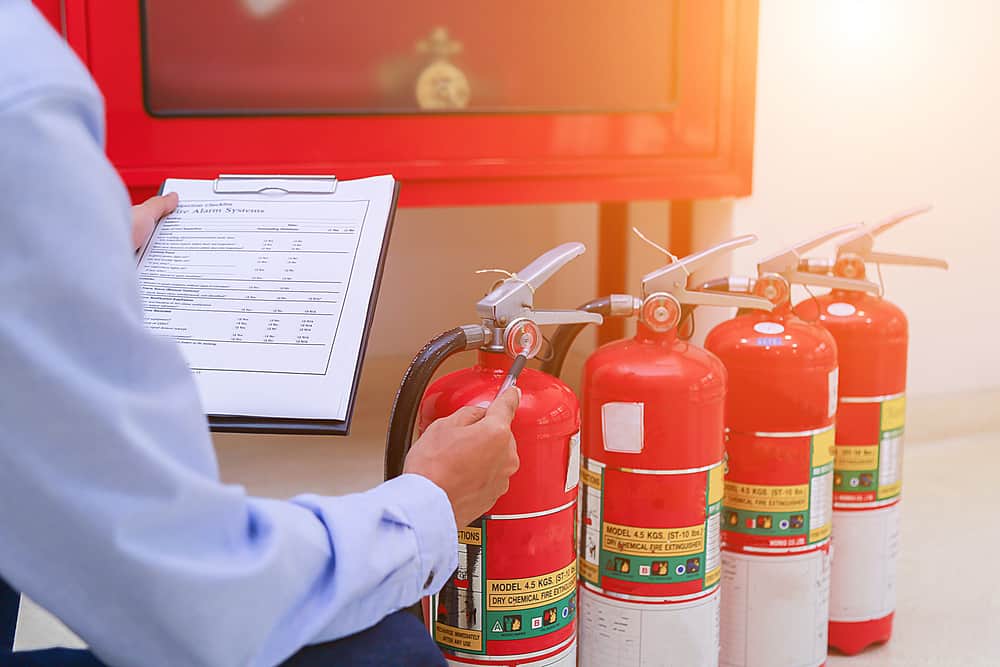
Multi Purpose Dry Chemical Fire Extinguisher Class Testing
Multi purpose dry chemical extinguishers—commonly known as ABC extinguishers—are the most widely used type in commercial buildings. They handle Class A fires like wood and paper, Class B fires involving flammable liquids, and Class C fires with energized electrical equipment. That versatility makes them the go-to choice for most businesses.
But that dry chemical agent inside needs specific attention during testing. The powder can clump or cake over time, especially if the extinguisher has been sitting in a humid environment or hasn’t been shaken periodically. Clumped powder won’t flow through the discharge mechanism properly, which means the extinguisher might not work when you need it.
During annual maintenance, technicians check for caking by weighing the extinguisher and examining the agent. At the six-year mark, the extinguisher gets emptied completely so the technician can inspect the powder directly and check the inside of the cylinder for corrosion or contamination. If the powder is compromised, it gets replaced. If the cylinder shows damage, the unit might need to be taken out of service.
ABC extinguishers follow a twelve-year hydrostatic testing cycle. That means every twelve years, the cylinder gets pressure-tested to confirm it’s still structurally sound. This test is mandatory and non-negotiable. Extinguishers that fail hydrostatic testing must be destroyed and replaced—they can’t be put back into service.
One thing that catches businesses off guard: mixing different types of dry chemical agents is dangerous. If you’ve got ABC extinguishers and BC extinguishers in the same facility, they can’t share the same recharging equipment or agent supply. Mixing agents can cause chemical reactions that produce pressure buildup and potentially rupture the cylinder. That’s why working with a certified service provider who understands these risks is essential.
The testing requirements for multi purpose dry chemical extinguishers are designed to catch problems before they cause failures. Moisture contamination. Agent degradation. Cylinder weakness. These issues don’t announce themselves until it’s too late. Regular testing at the right intervals keeps your equipment reliable.
Fire Extinguisher Inspection Tags and Documentation
Inspection tags might seem like paperwork, but they’re actually your first line of defense during a fire marshal inspection. That small tag hanging from each extinguisher tells the whole compliance story at a glance. When it was last inspected. Who performed the service. When the next maintenance is due.
In New York, and specifically in Nassau County, inspection tags must meet specific requirements. They need to be legible, properly completed, and issued by a certified company. Generic tags or handwritten notes don’t cut it. Fire marshals know what compliant tags look like, and they know when someone’s trying to fake it.
The tag should show monthly inspection marks—usually punch holes or initials in the corresponding month boxes. It should have the date and signature from the last annual maintenance. And for extinguishers that have undergone six-year or twelve-year testing, that information needs to be recorded too.
Missing tags are one of the most common violations businesses face. So are expired tags. If your last annual service was fourteen months ago and the tag shows it, you’re out of compliance the moment an inspector looks at it. There’s no talking your way out of that. The date is right there.
Invalid tags are another problem. Some companies cut corners by using non-compliant tags or failing to fill them out correctly. When the fire marshal doesn’t recognize the certification or sees incomplete information, they issue a violation. And the business owner is the one who pays the fine, even though they hired someone to handle it.
Proper documentation goes beyond the tag itself. You should be keeping records of all inspections, maintenance, and testing in a central log. That log provides a complete history of each extinguisher and serves as backup documentation during audits. NFPA 10 recommends it, and many local codes require it.
If you’re ever faced with a violation, that documentation is your evidence. It shows you took compliance seriously. It demonstrates a pattern of regular maintenance. And it can be the difference between a warning and a significant fine.
The inspection tag also serves an internal purpose. It tells your team whether an extinguisher is ready for use. A quick glance confirms the last service date and whether monthly checks are happening. If someone notices a tag that’s overdue or missing, it’s a red flag that needs immediate attention.
In Nassau County, fire marshal inspections can happen at any time. You might get advance notice, or an inspector might show up during a complaint investigation. Either way, your tags need to be current and compliant. Scrambling to get service at the last minute usually means paying premium rates for emergency work—and sometimes it’s already too late to avoid the violation.
Working with a local, certified provider who understands Nassau County requirements takes the guesswork out of tagging. We know what inspectors expect. Our tags meet local standards. And our documentation is thorough enough to pass scrutiny.
Staying Compliant with Fire Extinguisher Testing Requirements
Fire extinguisher testing requirements aren’t complicated, but they are specific. Monthly visual checks keep you aware of obvious problems. Annual maintenance by certified technicians ensures mechanical reliability. Six-year internal exams and twelve-year hydrostatic tests catch hidden issues that could cause failure.
The real challenge isn’t understanding the requirements—it’s staying on top of them. Businesses get busy. Months slip by. Tags expire. And suddenly you’re facing a violation that could have been avoided with a simple service call.
The stakes are real. Fines in Nassau County can run into thousands of dollars. Violations can delay property transactions or trigger insurance issues. And in the worst case, an uninspected extinguisher might not work when you actually need it.
If you’re in Nassau County or anywhere on Long Island, working with us at M&M Fire Extinguishers Sales & Services, Inc. means you’ve got a local partner who knows the codes, has the certifications, and provides the documentation that passes inspections. With 35 years of family-owned experience and 24-hour availability, we handle everything from routine annual maintenance to emergency compliance situations. You focus on running your business. The testing requirements get handled the right way, on time, every time.
Related posts