Fire Protection Equipment Types for Commercial Buildings
May 21, 2026
Class K Fire Extinguisher: Commercial Kitchen Protection
May 28, 2026Summary:
You need fire protection that actually matches the risks in your building. Not every facility faces the same hazards, and not every extinguisher handles the same fires.
If your Nassau County operation stores flammable liquids alongside ordinary combustibles—think warehouses with both cardboard packaging and fuel-powered equipment, or manufacturing facilities with wood materials and petroleum-based lubricants—you’re looking at Class A and Class B fire risks in the same space.
That’s where foam extinguishers earn their place. They handle both fire classes without forcing you to stock multiple extinguisher types or guess which one to grab during an emergency. Here’s what you need to know about foam extinguisher applications, how they compare to water-only models, and what Nassau County businesses should understand about professional maintenance requirements.
What Fires Do Foam Extinguishers Handle
Foam extinguishers tackle Class A fires and Class B fires. Class A covers ordinary combustibles—wood, paper, textiles, cardboard, fabric, and most plastics. Class B includes flammable liquids like gasoline, diesel fuel, oil, paint, and petroleum-based solvents.
The reason this dual capability matters is simple. Most commercial and industrial facilities don’t have just one type of fire risk. Warehouses in Hempstead might store paper products near forklifts that leak hydraulic fluid. Manufacturing plants in Garden City process wood materials while using oil-based lubricants on machinery.
Water extinguishers work great on Class A fires. They cool burning materials and soak into combustibles to stop the burning process. But spray water on a flammable liquid fire and you’ve got a problem—water doesn’t mix with oil, can’t seal vapors, and may actually spread the burning liquid across a wider area.
How Foam Extinguishers Work on Different Fire Types
The foam creates a blanket over burning materials. On Class A fires involving solids, the water component cools the fuel while the foam helps the solution penetrate deeper into materials like fabric or wood. On Class B fires involving liquids, the foam floats on the surface and forms a seal.
That seal does two critical things. First, it cuts off the oxygen supply that feeds the flames. Second, it prevents flammable vapors from escaping and re-igniting after you think the fire’s out.
Most foam extinguishers use AFFF technology—Aqueous Film Forming Foam. When you discharge the extinguisher, it releases a water-based foam solution that expands on contact with air. The water component provides cooling. The foam component provides smothering and vapor suppression.
This combination explains why foam extinguishers prevent re-ignition better than water alone. Class B fires involving gasoline or oil can flare back up if vapors aren’t sealed. The foam blanket stays in place and keeps those vapors contained while the fuel cools below its ignition temperature.
The cooling effect happens because foam extinguishers are primarily water-based. That water absorbs heat from the burning material and lowers the temperature. The foam just makes that water more effective by helping it stick to surfaces and form a barrier instead of running off or evaporating immediately.
Warehouses use foam extinguishers because both storage materials and equipment create fire risks. Petrol stations rely on them since they handle fuel spills and fires in adjacent office areas. Manufacturing facilities with mixed hazards—flammable liquids near combustible materials—keep foam units accessible for quick response.
Where You Shouldn't Use Foam Extinguishers
Foam extinguishers have limits you need to respect. Don’t use them on energized electrical equipment. The water content conducts electricity, creating shock risk for anyone operating the extinguisher. Live electrical fires require CO2 or dry chemical extinguishers rated for Class C.
Cooking oil or grease fires in commercial kitchens are off-limits too. Those are Class K fires, and they require wet chemical extinguishers specifically designed for high-temperature cooking oils. Foam won’t control those fires effectively and may cause dangerous reactions.
Metal fires—combustible metals like magnesium, titanium, or sodium—need specialized dry powder extinguishers that absorb heat and smother the reaction. Using water-based foam on burning metal can cause violent reactions or explosions. These Class D fires aren’t common in most facilities, but if you work with combustible metals, you know it.
Some modern foam extinguishers pass electrical safety testing and carry ratings for limited electrical use up to specified voltages. That information appears clearly on the extinguisher label. Never assume your foam unit is safe for electrical fires unless the label explicitly states it and provides the voltage rating.
Application method matters on flammable liquid fires. Don’t aim the foam stream directly at the flames—that can splash burning liquid and spread the fire. Aim at a nearby surface and let the foam flow across the liquid surface. The foam needs to spread gently to form an effective blanket.
For solid material fires, you can aim more directly at the base of the flames. The foam will cool and penetrate the burning materials. Just keep the discharge steady and sweep across the fire area until it’s fully covered.
Storage conditions affect foam extinguishers differently than dry chemical units. Foam extinguishers shouldn’t be stored in locations where temperatures drop below freezing. The water-based agent can freeze, damaging the extinguisher and making it useless. Unheated warehouses or outdoor locations with freezing temperatures need different equipment or antifreeze additives.
Pressurized Water Extinguisher vs Foam Models
Pressurized water extinguishers and foam extinguishers look similar. Both use water as the primary agent. Both work on Class A fires. Both get pressurized with air or nitrogen to propel the discharge. The difference is what else they can handle.
A pressurized water extinguisher is designed strictly for Class A fires—ordinary combustibles. It cools burning materials effectively, soaks into wood and fabric, and leaves no chemical residue. It’s simple, economical, and easy to refill. But it has zero effectiveness on flammable liquid fires.
Foam extinguishers add Class B capability by mixing foam concentrate with the water. That foam concentrate changes how the solution behaves when it hits a fire. Instead of just cooling, it also seals and smothers. Instead of running off liquid surfaces, it floats and forms a vapor barrier.
When Water-Only Models Make Sense
If your facility only faces Class A fire risks, pressurized water extinguishers might be all you need. Office buildings with paper, furniture, and textiles but no flammable liquids can rely on water models. Schools, residential properties, and warehouses storing only dry goods fall into this category.
Water extinguishers cost less upfront than foam models. They’re simpler to maintain and recharge. The agent is just water—no special chemicals to replace or dispose of. For facilities with straightforward fire risks, that simplicity translates to lower operating costs.
Discharge characteristics differ slightly too. Pressurized water models typically produce a solid stream that reaches 45 to 55 feet. That range lets operators stay at a safer distance from the fire. The discharge time runs about 50 to 55 seconds for a standard 2.5 gallon unit, giving you nearly a minute of continuous firefighting capability.
Water extinguishers work by removing heat from the fire triangle. Fire needs fuel, oxygen, and heat to sustain itself. Water absorbs massive amounts of heat as it evaporates, dropping the fuel temperature below its ignition point. The fire goes out and stays out as long as the material cools enough.
That same mechanism creates the limitation. Flammable liquids don’t mix with water. Oil floats on water. Gasoline spreads across water. Spray water on a liquid fire and you’re not cooling the fuel effectively because the water doesn’t make good contact. You’re definitely not sealing vapors or preventing re-ignition.
Water can make flammable liquid fires worse in some cases. The force of the water stream can splash burning liquid across a larger area. Water sinking below floating fuel can cause the fuel to overflow its container. These aren’t theoretical risks—they’re documented reasons why water extinguishers carry clear warnings against use on Class B fires.
For Nassau County businesses, the decision often comes down to risk assessment. What materials do you store? What equipment do you operate? What liquids are present in your facility? Any chance of flammable liquid fires means water-only extinguishers leave you exposed.
2.5 Gallon Water Extinguisher and Air Pressurized Options
The standard air pressurized water extinguisher holds 2.5 gallons. That’s the most common size you’ll see in commercial and industrial settings. The 2.5 gallon capacity provides enough agent for meaningful fire suppression while keeping the unit light enough for most people to handle and operate effectively.
Larger water extinguishers exist—you can find 6-liter models or bigger wheeled units for industrial applications. Smaller units exist too, though they’re less common for commercial use. The 2.5 gallon size hits the sweet spot between firefighting capability and portability.
When that 2.5 gallon unit is properly pressurized, it delivers its full contents in approximately 50 seconds. That might not sound like much time, but it’s enough to cover a significant fire area if you’re applying the agent correctly. The key is starting while the fire is still small and manageable.
Coverage area depends on fire size and type. A 2.5 gallon water extinguisher might fully extinguish a small trash can fire or control a larger fire involving stacked materials until help arrives. It’s not designed to handle major structural fires—that’s what fire departments are for. It’s designed to catch fires early when quick action makes the difference.
Foam extinguishers come in similar sizes. You’ll find 2.5 gallon foam units, 6-liter models, and larger options. The capacity you need depends on your facility size, fire risks, and local code requirements. Nassau County businesses should consult with certified fire protection professionals to determine appropriate extinguisher placement and sizing.
The pressurization method affects readiness and maintenance. Air pressurized extinguishers store compressed air in the same cylinder as the water or foam. That air provides the pressure to discharge the agent when you open the valve. These are called “stored pressure” extinguishers, and they’re the most common type today.
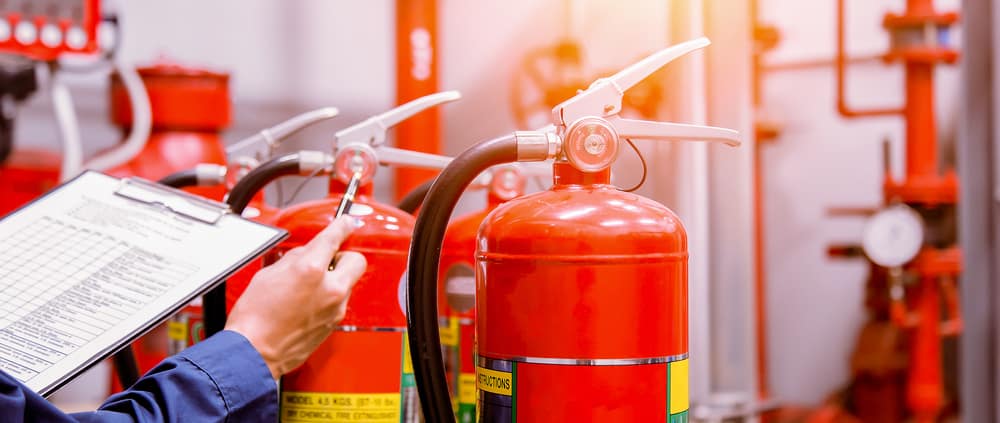
The pressure gauge on a stored pressure extinguisher shows you at a glance whether the unit is ready. The needle should point to the green zone. If it’s in the red—either over-pressurized or under-pressurized—the extinguisher needs professional service. That’s one of the checks required during monthly visual inspections.
Refilling an air pressurized water extinguisher is straightforward for certified technicians. They empty any remaining water, inspect the internal components, refill with fresh water (or water and foam concentrate), and re-pressurize the cylinder to the proper level. The simplicity keeps maintenance costs reasonable compared to more complex extinguisher types.
Choosing the Right Fire Protection for Your Nassau County Facility
Foam extinguishers handle dual-class fire risks that many commercial and industrial facilities actually face. They cool like water, seal like foam, and prevent re-ignition on flammable liquid fires that water alone can’t control. For warehouses, manufacturing plants, and operations with mixed fire hazards, that dual capability isn’t a luxury—it’s a practical necessity.
Understanding the difference between foam and pressurized water models helps you match equipment to actual risks. Water-only units work fine when you only have Class A combustibles. The moment flammable liquids enter the picture, foam becomes the smarter choice.
Nassau County businesses face mandatory annual inspections and strict compliance requirements. The equipment you choose needs professional installation, proper placement, regular maintenance, and documentation that satisfies both the Fire Commission and your insurance carrier. That’s not optional—it’s the cost of operating legally and protecting your people and property.
We’ve been helping Nassau County businesses navigate these requirements for over 35 years. From equipment selection and installation to 24/7 emergency service and annual inspections, we understand what local facilities need to stay compliant and protected.
Related posts