
Top Nassau County Fire Safety Equipment Suppliers
June 18, 2026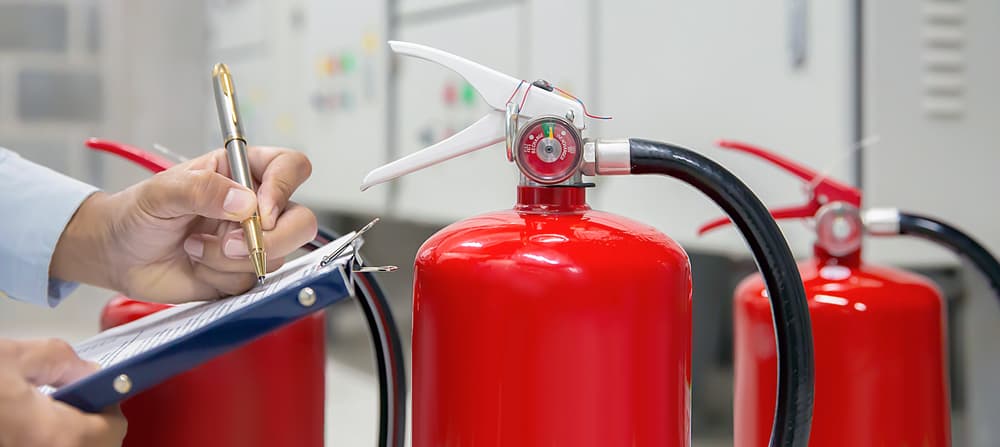
Summary:
You’ve got fire extinguishers on your walls. You know they need servicing. But when you start calling around for pricing, the answers are all over the map—and half the time, you’re not even sure what you’re being quoted for.
Is that the inspection? The recharge? Both? And why does one company charge $20 per unit while another wants $100 just to show up?
Here’s what you need to know about fire extinguisher service costs in Nassau County—what’s actually required by FDNY and local fire codes, what drives the price, and how to make smart decisions that keep you compliant without overpaying. We’ll walk through inspection costs, maintenance pricing, recharge fees, and when replacement makes more sense than repair.
Fire Extinguisher Inspection Cost Breakdown
Annual fire extinguisher inspections are required by FDNY and Nassau County fire codes. This isn’t optional. Every commercial property needs a certified technician to inspect each unit at least once per year.
Most providers charge a minimum service call fee of $80 to $150 just to show up. That covers the technician’s time, travel, certification, and the cost of those serialized FDNY tags that prove your inspection is legitimate. Once they’re on-site, the per-unit inspection cost drops significantly—usually $15 to $30 per extinguisher depending on how many you have.
The more units you have, the lower your per-extinguisher cost. A building with 20 extinguishers might pay $1,000 annually for full inspection service, while a small office with three units could pay $150 to $200 total. Volume matters because the real cost is getting someone qualified to your location.
What You Actually Get for Your Inspection Fee
When you pay for a professional fire extinguisher inspection, you’re not just getting a new tag slapped on the wall. A legitimate inspection includes a detailed check of every component that determines whether your extinguisher will actually work in an emergency.
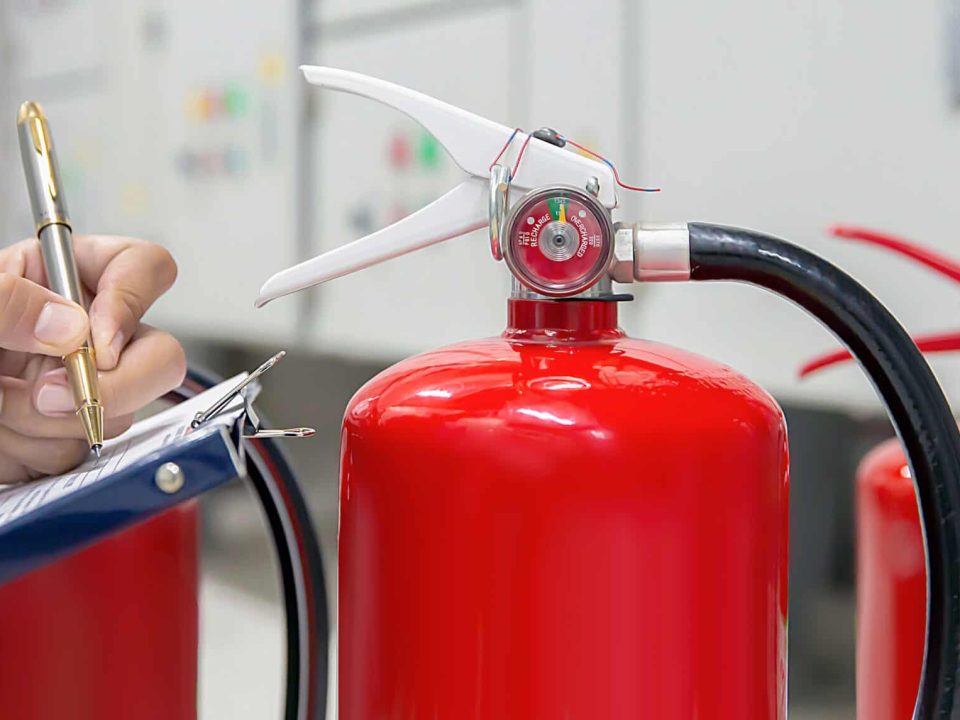
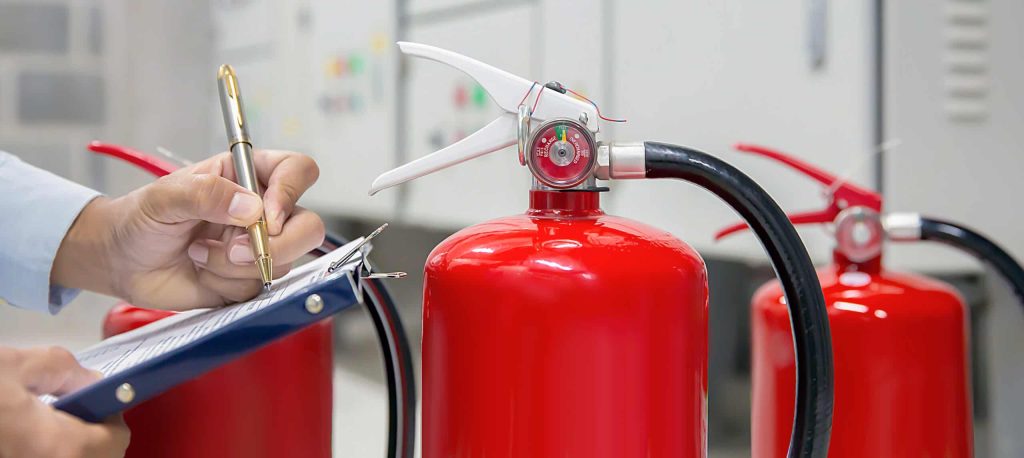
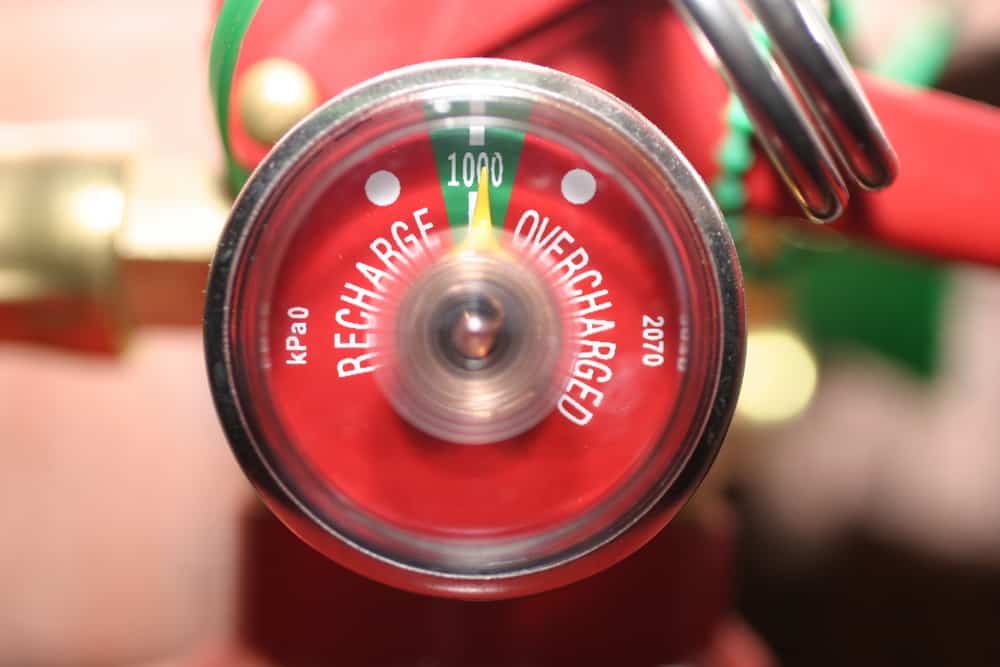
The technician examines the pressure gauge to confirm it’s in the green zone. They check the hose, nozzle, safety pin, and tamper seal for damage or wear. They verify the unit is properly mounted at the right height and location according to code. They inspect for visible corrosion, dents, or any physical damage that could compromise performance.
After the inspection, each unit gets a new FDNY-issued tag. These aren’t generic stickers you can buy online. They’re serialized, tamper-proof tags with QR codes, holograms, and barcodes that only licensed companies can purchase from the FDNY. That tag documents the inspection date, the technician’s certification number, and when the next service is due.
The inspection also generates documentation—a written report that includes unit locations, serial numbers, and any service recommendations. You’ll need this paperwork if the fire marshal shows up or if your insurance company requests proof of compliance after a claim. Missing documentation is one of the fastest ways to fail a fire code inspection even when your extinguishers are physically fine.
Here’s what most people don’t realize: unlicensed companies can’t legally inspect your extinguishers in a way that satisfies FDNY compliance requirements. They might charge less, but their tags are worthless. When the FDNY inspector arrives, those counterfeit tags trigger violations just as fast as having no tags at all. You end up paying for the inspection twice—once to the unlicensed provider, then again to a legitimate company to fix the violation and avoid fines.
How Inspection Frequency Affects Your Annual Cost
Annual inspections are the baseline requirement, but they’re not the only inspection cycle you need to track. Understanding the full inspection schedule helps you budget accurately for fire extinguisher service cost and avoid surprise expenses.
Every year, a certified technician performs the visual and operational inspection we just covered. But every six years, your extinguishers need internal maintenance. This is more involved than a standard inspection. The technician disassembles the unit, inspects internal components, replaces worn parts, refills the extinguishing agent, and reassembles everything to manufacturer specifications. This 6-year maintenance typically costs $40 to $80 per unit on top of the annual inspection fee.
Then there’s hydrostatic testing, required every 12 years for most extinguisher types. CO2 units need it every five years. Hydrostatic testing verifies the cylinder can still handle pressure safely. The extinguisher is emptied, pressurized to test levels, and inspected for leaks or structural weakness. This runs $40 to $70 per unit and often requires sending the extinguisher to a testing facility for a few days.
A building with 30 extinguishers installed in 2020 should budget $1,500 to $2,500 in 2026 for the 6-year maintenance cycle, then plan for another round of hydrostatic testing in 2032. These aren’t surprise costs if you’re tracking the age of your equipment, but they catch a lot of Nassau County property managers off guard when they all come due at once.
Smart building managers stagger their extinguisher purchases so the 6-year and 12-year cycles don’t all hit in the same year. Replacing or servicing a few units annually is easier on the budget than replacing or servicing 30 at once.
Fire Extinguisher Maintenance Cost Factors
Maintenance costs vary based on what your extinguishers actually need. Not every unit requires the same service, and understanding the factors that drive pricing helps you spot fair quotes from inflated ones.
Extinguisher type matters. A standard 10-pound ABC dry chemical unit is straightforward to service. Specialized units like wet chemical (Class K) extinguishers for commercial kitchens or Halotron clean-agent units for server rooms require specific expertise and more expensive agents. Servicing a Class K extinguisher can run 50% higher than servicing a standard ABC unit because the materials cost more and fewer technicians are trained to handle them.
The age and condition of your extinguishers also affect fire extinguisher maintenance cost. A well-maintained five-year-old unit in good condition needs less work than a 10-year-old unit that’s been sitting in a dusty warehouse with visible corrosion. Older units often need parts replaced—O-rings, valve components, discharge hoses—and those parts add to the service bill.
Fire Extinguisher Recharge Cost
Recharging is what happens when your extinguisher has been used or has lost pressure. The technician empties any remaining agent, inspects the internal components, refills the unit with fresh extinguishing agent, re-pressurizes it, and tests everything to confirm it’s ready for service.
For most ABC dry chemical extinguishers, recharge costs range from $15 to $50 depending on the size. A 5-pound unit is on the lower end. A 20-pound unit requires more agent and labor, pushing the cost higher. CO2 and clean-agent extinguishers can cost more to recharge because the agents themselves are more expensive.
Here’s the catch: recharging only makes financial sense for certain units. Small 2.5-pound extinguishers are rarely worth recharging. The labor cost to properly recharge one exceeds the cost of buying a new unit. A new 2.5-pound ABC extinguisher runs $50 to $75. Recharging it costs $15 to $30, but you still need to pay for the inspection and any parts that need replacing. By the time you’re done, you’ve spent more than a new unit would cost—and the new unit comes with a fresh warranty and a full service life ahead of it.
For larger extinguishers in good condition, recharging is absolutely the smarter move. A new 10-pound ABC extinguisher costs $75 to $150. Recharging that same unit runs $20 to $40. You’re saving 50% to 75% by recharging instead of replacing, and as long as the cylinder, valve, and hose are in good shape, there’s no reason to replace a perfectly functional unit.
The key is working with a service provider who gives you honest guidance on fire extinguisher recharge cost versus replacement. Some companies push replacement because they make more money selling new units. Others recommend recharging everything, even when the unit is so old or damaged that replacement is the safer, more cost-effective choice. A good technician evaluates each extinguisher individually and explains why they’re recommending what they’re recommending.
Around 80% of fire extinguishers are rechargeable, which means most of the time, you have a choice. But that choice should be based on the actual condition of the unit, not what’s more profitable for the service company.
When Replacement Becomes More Cost-Effective Than Service
There are clear situations where replacing an extinguisher makes more sense than continuing to service it. Knowing when you’ve crossed that line saves you money and ensures your equipment is actually reliable when you need it.
Visible damage is the most obvious red flag. If the cylinder has dents, rust, or corrosion, replacement is usually the call. Structural damage compromises the integrity of the pressure vessel, and no amount of recharging or maintenance fixes that. A compromised cylinder can fail catastrophically when pressurized, which is why hydrostatic testing exists—to catch these issues before they become dangerous.
Age is another factor. Most fire extinguishers have a service life of 10 to 15 years. Once a unit hits that range, the cost of continued maintenance starts to outweigh the cost of replacement. You’re looking at hydrostatic testing, internal maintenance, potential part replacements, and recharging—all for a unit that’s nearing the end of its useful life anyway. At some point, it makes more sense to start fresh with a new unit that won’t need major service for another six years.
Frequent recharging is a sign something’s wrong. If you’re recharging the same extinguisher every year or two because it keeps losing pressure, there’s likely a slow leak or a valve issue that’s not getting fixed. Replacing the unit solves the problem permanently instead of throwing money at repeated recharges that don’t address the root cause.
Cost comparison is straightforward. If the total cost to service an old extinguisher—recharge, parts, hydrostatic testing, labor—exceeds 75% of the cost of a new unit, replacement is the smarter financial decision. You get a brand-new unit with a full warranty, a fresh service life, and no immediate maintenance needs. That’s better value than dumping money into an aging unit that’s going to need replacement soon anyway.
The decision isn’t always black and white, but a qualified technician can walk you through the math. They’ll show you what servicing the existing unit will cost versus what a new unit costs, and they’ll factor in how much service life you’re likely to get from each option. That transparency is what separates a good service provider from one that’s just trying to maximize the invoice.
Making Smart Decisions About Fire Extinguisher Service Costs
Fire extinguisher service costs don’t have to be a mystery. Annual inspections run $80 to $150 for the service call plus $15 to $30 per unit. Recharges cost $15 to $50 depending on size and type. Six-year maintenance adds $40 to $80 per unit. Hydrostatic testing is $40 to $70 when it’s due.
The real cost isn’t the service itself—it’s the FDNY violations, fines, and insurance complications that happen when you skip it or hire the wrong provider. FDNY fines start at $300 per extinguisher and can hit $1,000 for repeat violations or missing units. A facility with 20 extinguishers paying $1,000 annually for professional inspections avoids $10,000 to $20,000 in penalties. That math makes the decision pretty simple.
Work with a provider who explains what you need and why, who gives you honest guidance on recharge versus replacement, and who provides proper FDNY-certified documentation that actually protects you during fire code inspections. We’ve been helping Nassau County businesses make these decisions for over 35 years, with transparent pricing, 24/7 availability, and the kind of local expertise that comes from being family-owned and deeply rooted in the Long Island community.
Related posts