Foam Fire Extinguisher vs Other Types: Which to Choose
May 12, 2026
Cost to Recharge Fire Extinguisher: 2026 Pricing
May 19, 2026
Summary:
You know your business needs fire extinguishers. What you might not know is that grabbing the wrong one could turn a small flame into a serious problem. Using water on an electrical fire creates electrocution risk. Spraying the wrong agent on burning grease can spread flames across your kitchen. Fire extinguisher classes exist because different fires need different solutions. This guide walks you through Classes A, B, C, D, and K, shows you which extinguisher belongs in your Nassau County business, and helps you avoid the costly mistakes that lead to failed inspections and real danger. You’ll learn what each class handles, how to size your extinguishers properly, and what local fire codes actually require.
Understanding Fire Extinguisher Classes: What the Letters Actually Mean
Fire extinguisher classes aren’t arbitrary. They’re based on the type of fuel that’s burning. Class A handles ordinary combustibles like wood, paper, cloth, and most plastics—the stuff you find in offices, retail stores, and warehouses. Class B tackles flammable liquids and gases like gasoline, oil, paint, and solvents. Class C covers energized electrical equipment, though once you cut the power, it becomes a Class A or B fire depending on what’s actually burning.
Class D is specialized for combustible metals like magnesium, titanium, and sodium—typically found in manufacturing facilities and industrial settings. Class K is designed specifically for commercial cooking operations where vegetable oils and animal fats reach temperatures that standard extinguishers can’t handle safely. Most Nassau County businesses need ABC-rated extinguishers that cover the three most common fire types, but kitchens, workshops, and specialized facilities require additional protection.
Class A Fires: Ordinary Combustibles in Commercial Spaces
Class A fires involve the materials you see every day in commercial buildings. Paper stacks in your office. Wooden pallets in your warehouse. Fabric displays in your retail store. Cardboard boxes in your storage room. Rubber components in your workshop. These materials leave ash when they burn, which is why Class A extinguishers use agents that cool and coat the burning surface.
Water-based extinguishers work for Class A fires because they absorb heat and cool materials below their ignition temperature. But most businesses choose ABC dry chemical extinguishers instead because they handle multiple fire types without switching units. The dry chemical agent melts at around 350 degrees and creates a coating that insulates the burning material, cutting off oxygen and stopping the fire from spreading.
For Class A hazards, NFPA 10 requires extinguishers within 75 feet of travel distance from any point in your building. That’s not a straight line through walls—it’s the actual path someone walks, accounting for doorways, equipment, and obstacles. A 60-foot straight measurement can become a 90-foot journey when you factor in real-world conditions. Nassau County fire marshals measure these paths during inspections, so placement matters more than most business owners realize.
One properly rated Class A extinguisher typically covers up to 3,000 square feet, but building layout, occupancy type, and specific hazards can change that number. Your storage room packed with cardboard needs different coverage than your open office space. We’ve been helping Nassau County businesses get this right for over 35 years, matching extinguisher placement to actual building conditions instead of just code minimums.
Class B and C Fires: Flammable Liquids and Electrical Hazards
Class B fires involve liquids and gases that don’t leave residue when they burn. Gasoline in your maintenance shop. Oil in your manufacturing process. Paint and solvents in your auto body facility. Lacquers and tars in your coating operation. These fires spread differently than Class A fires because the fuel can flow, creating larger fire areas faster.
Water makes Class B fires worse. It spreads burning liquids and can cause violent reactions. That’s why Class B extinguishers use smothering agents—CO2, dry chemical, or foam that creates a blanket over the liquid surface, cutting off oxygen without spreading the fire. Travel distance requirements are stricter for Class B hazards: 30 to 50 feet depending on your extinguisher rating and hazard severity.
Class C fires aren’t really a separate fuel type. They’re any fire involving energized electrical equipment where using the wrong extinguishing agent could electrocute you. Server rooms, electrical panels, machinery, computers, and anything plugged in creates Class C hazards. The “C” rating just confirms the agent won’t conduct electricity back to you.
Once you disconnect power, a Class C fire becomes whatever was actually burning—usually Class A materials like wire insulation or Class B materials like transformer oil. That’s why most commercial extinguishers carry ABC ratings. They handle ordinary combustibles, flammable liquids, and electrical equipment without forcing you to choose the right unit in an emergency.
Nassau County businesses with significant electrical equipment or flammable liquid storage need strategic extinguisher placement. A painting operation needs coverage near dipping tanks. A data center needs units accessible from server aisles. An auto shop needs extinguishers near fuel storage and work bays. The wrong placement doesn’t just risk inspection failures—it risks lives when seconds count.
How to Buy a Fire Extinguisher for Your Business
Buying a fire extinguisher isn’t complicated once you know what you’re protecting against. Start by identifying your fire hazards. Office buildings typically need ABC extinguishers for paper, electrical equipment, and general combustibles. Restaurants need Class K units near cooking equipment plus ABC extinguishers in other areas. Manufacturing facilities might need Class D extinguishers if they work with combustible metals.
Size matters more than most buyers realize. A 5lb ABC extinguisher works for small offices, retail spaces, and residential common areas. A 10 lb fire extinguisher provides extended range and discharge time for medium to large commercial spaces like warehouses and manufacturing facilities. Larger buildings might need 20lb units or wheeled extinguishers for maximum coverage.
Price ranges from $30 to $150 for purchase, with annual maintenance and inspections typically costing $20 to $50 per unit. But total ownership cost includes installation, ongoing inspections, and potential recharging after use. Cheap extinguishers with plastic components can’t be refilled and must be replaced entirely after discharge. Commercial-grade units with metal valves and steel cylinders can be serviced for years, making them more cost-effective long-term.
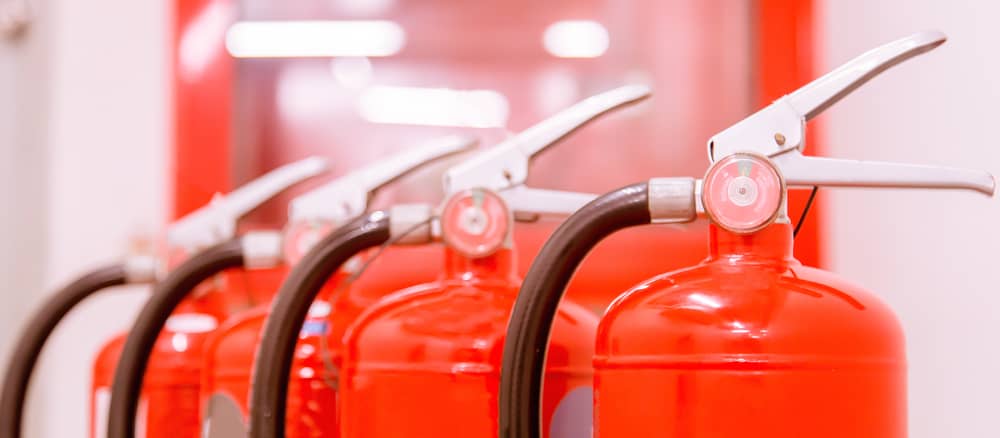
Choosing the Right 10 lb Fire Extinguisher for Commercial Properties
The 10 lb fire extinguisher hits a sweet spot for most commercial properties. It’s large enough to handle serious fires before they spread but not so heavy that employees can’t operate it effectively. With typical discharge times around 22 seconds and ranges of 15 to 21 feet, a 10lb unit gives you real firefighting capability during those critical first moments.
For commercial spaces, a 10lb ABC dry chemical extinguisher rated 4A:80B:C provides solid protection. That rating means it can handle 4 times the Class A fire of a baseline 1A unit, and 80 square feet of Class B flammable liquid fire. The C confirms it’s safe for electrical fires. This rating works for offices, classrooms, churches, parking garages, hotel common areas, retail stores, light manufacturing facilities, and auto dealerships.
One 10lb extinguisher can protect up to 5,000 square feet for Class B hazards when properly placed. For Class A hazards, you still need units within 75 feet of travel distance, but the larger capacity means fewer total extinguishers in many layouts. Manufacturing facilities with painting, dipping, or coating operations benefit from the extended discharge time when dealing with flammable liquid hazards.
Nassau County businesses should look for extinguishers with steel cylinders, metal valve assemblies, and easy-to-read pressure gauges. The gauge should show green when the unit is properly charged. The safety pin should pull easily but not accidentally. The operating pressure—typically 195 PSI for ABC units—should be clearly marked. These aren’t just quality indicators; they’re maintenance factors that affect long-term reliability and inspection compliance.
5lb ABC Fire Extinguisher: When Smaller Makes Sense
A 5lb ABC fire extinguisher isn’t just a smaller version of a 10lb unit—it serves different needs. Smaller offices, individual classrooms, vehicle mounting, residential common areas, and spaces where portability matters benefit from the reduced weight. At around 8 to 10 pounds total weight, a 5lb extinguisher is easier for all employees to handle, including those with limited strength or mobility.
The typical 2A:10B:C rating on a 5lb unit still provides meaningful fire protection. It covers Class A ordinary combustibles, 10 square feet of Class B flammable liquids, and electrical equipment. Discharge time runs 8 to 12 seconds with a range of 10 to 15 feet—enough to knock down small fires before they become major problems.
Multi-family residences, apartment buildings, condos, and co-ops often require 5lb extinguishers in hallways, common areas, laundry rooms, and near exits. Commercial buildings use them to supplement larger extinguishers, placing 5lb units in individual offices, storage closets, and areas where space is limited. Retail stores mount them near cash registers and in back-of-house areas where quick access matters more than maximum capacity.
For Nassau County businesses, 5lb extinguishers also make sense as secondary coverage. Your warehouse might have 10lb or 20lb extinguishers for primary protection, but 5lb units in offices, break rooms, and supervisor stations ensure coverage without over-investing in capacity you don’t need. The key is matching extinguisher size to actual fire hazards and building layout, not just buying the biggest unit available.
Vehicle-mounted applications—work trucks, delivery vans, service vehicles—almost always use 5lb extinguishers because they fit standard vehicle brackets and won’t shift during transport. Marine applications favor them for the same reasons. Construction sites use them in job boxes and temporary offices where portability matters during frequent moves.
Getting Your Commercial Fire Extinguisher Right
Fire extinguisher classes aren’t complicated once you understand what you’re protecting against. Class A for ordinary combustibles. Class B for flammable liquids. Class C for electrical equipment. Class D for combustible metals. Class K for commercial cooking. Most Nassau County businesses need ABC-rated extinguishers as their foundation, with specialized units added for specific hazards like commercial kitchens or metalworking operations.
Sizing matters as much as classification. A 5lb ABC fire extinguisher works for offices and small spaces. A 10 lb fire extinguisher handles medium to large commercial properties. Placement must meet NFPA 10 travel distance requirements—75 feet for Class A, 30 to 50 feet for Class B, 30 feet for Class K. And annual inspections by certified professionals aren’t optional; they’re mandatory for compliance and insurance.
We’ve been helping Long Island and Nassau County businesses get fire protection right for over 35 years. From initial selection through installation, inspection, and ongoing maintenance, we provide the local expertise and 24/7 service that keeps your business protected and compliant.
Related posts