Foam Extinguisher Applications & Uses
May 26, 2026
OSHA-Compliant Workplace Emergency Procedures
June 2, 2026
Summary:
You’ve got ABC extinguishers mounted throughout your kitchen. Fire marshal inspection coming up. Insurance current. You think you’re covered. Then you learn that your standard extinguisher won’t just fail on a grease fire—it could make things catastrophically worse. Commercial kitchens in Nassau County face fire hazards that most business owners don’t fully understand until it’s too late. The cooking oils in your deep fryers and on your grills burn hotter than almost any other common fuel, and they demand specialized protection. That’s where Class K fire extinguishers come in. Let’s break down what you actually need to keep your kitchen, your business, and your people safe.
What Is a Class K Fire Extinguisher and Why Commercial Kitchens Need One
A Class K fire extinguisher is specifically designed to combat fires involving cooking oils, fats, and grease in commercial kitchen environments. The “K” stands for kitchen, and these extinguishers use a wet chemical agent—typically potassium acetate, potassium carbonate, or potassium citrate—that works completely differently from the dry powder in your standard ABC extinguisher.
Here’s what makes them essential: when cooking oils ignite, they burn at extremely high temperatures. Modern vegetable-based oils can reach auto-ignition temperatures well above what ABC extinguishers are designed to handle. If you spray dry chemical powder on burning oil, you might knock down the visible flames temporarily, but the oil itself stays dangerously hot. Within seconds or minutes, it can reignite. That’s not just ineffective—it’s dangerous.
Class K extinguishers solve this through a chemical process called saponification. When the wet chemical agent hits burning oil, it reacts with the fat molecules to create a soapy foam layer that blankets the surface. This foam does two critical things: it cuts off oxygen to suffocate the flames, and it cools the oil below its auto-ignition temperature so it can’t flare back up. That cooling effect is what separates Class K from every other extinguisher type, and it’s why NFPA standards mandate them in any commercial kitchen with cooking appliances that use oils or fats.
How Class K Fire Extinguishers Work Differently Than ABC Extinguishers
Walk into most commercial spaces and you’ll see red ABC fire extinguishers. They’re versatile, they handle multiple fire types, and they’re what most people picture when they think “fire extinguisher.” But in a commercial kitchen, that versatility becomes a liability.
ABC extinguishers use monoammonium phosphate—a dry chemical powder that creates a barrier between fuel and oxygen. It works great on wood, paper, flammable liquids like gasoline, and electrical fires. But cooking oil fires are different animals. The problem isn’t just the flame—it’s the heat retention in the oil itself and the cooking equipment.
When you discharge an ABC extinguisher on a grease fire, the powder might smother the visible flames. But it doesn’t cool the oil. The metal surfaces of your fryers, griddles, and ranges stay superheated. The oil stays above its ignition point. And because ABC powder is corrosive, you’ve now contaminated your entire cooking area with a substance that can ruin expensive equipment and require professional cleaning before you can cook again.
Class K extinguishers discharge as a fine mist, not a powder blast. This prevents the dangerous splashing that can happen when you hit burning grease with force. The mist settles gently over the fire, reacting chemically with the hot oil to form that protective foam barrier. The agent is non-corrosive, so cleanup is as simple as soap and water rather than a costly decontamination.
There’s another critical difference: placement and training. Fire codes require Class K extinguishers to be mounted between 10 and 30 feet from cooking stations, in the path of egress. That’s close enough to grab quickly but far enough that you’re not reaching over open flames. ABC extinguishers might be anywhere in your facility, but Class K units need to be kitchen-specific and immediately accessible to cooking staff.
The visual difference helps too. Many Class K extinguishers come in stainless steel cylinders rather than the standard red, making them instantly identifiable in an emergency. When seconds count and your line cook is facing a flare-up, you don’t want confusion about which extinguisher to grab.
Here’s what most kitchen operators don’t realize until they face an actual grease fire: using the wrong extinguisher doesn’t just waste time—it can spread the fire. ABC powder can scatter burning oil droplets. Water-based extinguishers can cause explosive reactions when water hits oil at 600+ degrees. Class K is the only extinguisher type engineered specifically for the unique chemistry and temperature characteristics of cooking fires.
Class K Requirements for Nassau County Commercial Kitchens
Nassau County doesn’t mess around with commercial kitchen fire safety, and for good reason. The Nassau County Fire Prevention Ordinance Article XXI lays out specific requirements for commercial cooking operations, and Class K fire extinguishers are non-negotiable if you’re working with cooking oils and fats.
The Fire Marshal’s Office conducts regular inspections of commercial properties across Nassau County. They’re looking for properly rated extinguishers, correct placement, current inspection tags, and integration with your automatic suppression system. Miss any of these elements and you’re facing violations that can shut down your operation same-day. Insurance companies follow the same standards—lapse in compliance and you risk losing coverage right when you need it most.
NFPA 96, the Standard for Ventilation Control and Fire Protection of Commercial Cooking Operations, provides the technical backbone for these requirements. It specifies that Class K extinguishers must be installed to protect cooking appliances that use combustible cooking media. That includes your deep fryers, ranges, griddles, broilers, and any other equipment where oils and fats are heated.
Sizing matters too. Class K extinguishers are rated by their capacity to handle specific amounts of cooking oil. A 6-liter unit provides different coverage than a 2.5-gallon model. We assess your kitchen layout, the number and type of cooking appliances, and the volume of oil you’re working with to determine proper sizing and quantity.
Nassau County requires annual inspections by certified technicians. That means a qualified professional needs to verify pressure levels, check for visible damage, ensure the discharge hose isn’t blocked, and confirm the extinguishing agent is still at full capacity. They’ll attach a dated inspection tag that proves compliance. Monthly visual inspections can be done in-house, but that annual certification has to come from a licensed company.
Integration with automatic suppression systems is another layer. Most commercial kitchens in Nassau County are required to have hood suppression systems that activate automatically when temperatures spike. Your Class K extinguisher serves as the manual backup—the tool your staff can grab if a fire starts before the automatic system triggers, or if the fire is outside the hood coverage area.
Placement requirements are specific: mounted in the path of egress, meaning your escape route from the kitchen. Not behind equipment where you’d have to reach over flames. Not so far away that precious seconds are lost. The 10-to-30-foot range from cooking stations is standard, but your specific layout might require multiple units depending on kitchen size and appliance distribution.
Training is often overlooked but equally critical. Fire codes don’t just require you to have the equipment—your staff needs to know how to use it. That means hands-on training at minimum every six months, covering the PASS method (Pull, Aim, Squeeze, Sweep) and specific protocols for kitchen fires. The Fire Marshal’s Office can issue violations if your team can’t demonstrate basic fire extinguisher competency during an inspection.
One more compliance element that catches people off guard: if you modify your kitchen layout, add new cooking equipment, or change your cooking methods, your fire protection plan needs to be updated and re-approved. That new high-output wok station or additional fryer might require an extra Class K unit or repositioning of existing extinguishers. The Fire Marshal’s Office reviews these changes, and operating without approval can result in immediate citations.
Classes of Fire and Their Extinguishers: Understanding the Full System
Fire extinguishers aren’t one-size-fits-all, and understanding the classification system is essential for proper protection. The National Fire Protection Association categorizes fires into five main classes based on what’s burning, and each class requires a specific extinguishing approach.
Class A fires involve ordinary combustibles—wood, paper, cloth, rubber, and most plastics. These are the fires you’d encounter in office spaces, storage areas, or dining rooms. Water-based or dry chemical extinguishers work because these materials cool down and stop burning once you remove the heat.
Class B fires involve flammable liquids like gasoline, oil-based paints, solvents, and petroleum products. These fires spread across liquid surfaces and can’t be extinguished with water, which would only spread the fuel. Foam or dry chemical extinguishers create a barrier between the fuel and oxygen.
Class C fires involve energized electrical equipment—anything that’s plugged in or connected to power. The danger isn’t just the fire itself but the electrocution risk. That’s why Class C extinguishers use non-conductive agents like CO2 or dry chemical that won’t transmit electrical current back to the user.
Class D fires involve combustible metals like magnesium, titanium, and sodium. These are rare outside of industrial settings and laboratories, but they’re incredibly dangerous because they react violently with water and standard extinguishing agents. Specialized dry powder extinguishers are required.
Class K is the newest classification, added specifically because modern commercial cooking created fire hazards that existing classes couldn’t adequately address. The shift from animal fats to vegetable-based oils meant higher cooking temperatures and more intense fires that traditional Class B extinguishers couldn’t handle effectively.
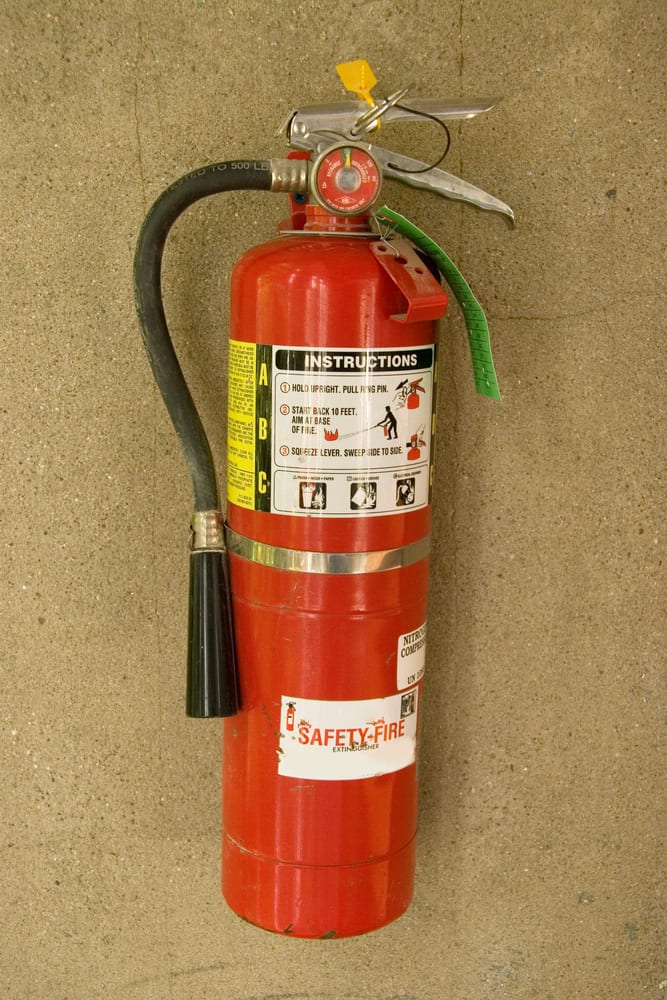
A Class C Fire Extinguisher Is Used for Energized Electrical Equipment
Class C fires are defined by one critical characteristic: the equipment is still connected to a power source. That electrical current creates a continuous ignition source and a severe shock hazard that changes how you approach fire suppression.
Think about the electrical equipment in a commercial kitchen: mixers, slicers, refrigeration units, exhaust fans, lighting systems. If any of these catch fire while plugged in, you’re dealing with a Class C situation. The electricity acts as a constant spark, making it nearly impossible to extinguish the fire until you cut the power.
Water and water-based extinguishers are absolutely prohibited on Class C fires. Water conducts electricity, which means spraying it on an electrical fire can electrocute you or anyone else in contact with conductive surfaces. It can also spread the electrical current to other areas, potentially igniting additional fires.
Class C fire extinguishers use agents that don’t conduct electricity. Carbon dioxide (CO2) is common—it displaces oxygen and leaves no residue, making it ideal for sensitive electronic equipment. The discharge comes out as a white cloud of “snow” that smothers the fire without damaging computers, control panels, or other electronics.
Dry chemical extinguishers rated for Class C use specially formulated powder that interrupts the chemical reaction of fire while remaining non-conductive. These work well but leave residue that requires cleanup. In commercial kitchens, this can mean shutting down equipment for cleaning, which is why CO2 is often preferred for electrical panels and control systems.
Clean agent extinguishers are another option. These use halon replacement gases that evaporate quickly, leave no residue, and are safe for occupied spaces. They’re more expensive but worth it for protecting valuable equipment or areas where you can’t afford downtime for cleanup.
Here’s the important distinction: once you disconnect the power source, a Class C fire becomes either Class A or Class B depending on what’s actually burning. If it’s the plastic housing of an appliance, it’s now Class A. If it’s oil or fuel, it’s Class B. That’s why many extinguishers are rated ABC—they can handle the transition as the fire evolves.
In commercial kitchens, Class C hazards overlap with Class K risks. Your electrical equipment is often right next to or integrated with your cooking appliances. A faulty wire in a fryer creates both an electrical fire risk and a grease fire risk. That’s why comprehensive fire protection means having both Class K extinguishers for cooking fires and ABC or BC extinguishers for electrical equipment.
Fire codes require proper identification and placement of extinguishers based on the specific hazards in each area. Your cooking line needs Class K. Your electrical rooms and panels need Class C capability. Your storage and prep areas need Class A coverage. We can map out your facility and ensure you have the right equipment in the right locations.
Training makes the difference here. Your staff needs to recognize what type of fire they’re facing and which extinguisher to use. Grabbing a Class K extinguisher for an electrical panel fire won’t help. Using an ABC extinguisher on burning cooking oil creates the problems we’ve already discussed. Clear labeling, strategic placement, and regular drills ensure people make the right choice under pressure.
Fire Extinguisher for Energized Electrical Equipment: Beyond Standard Class C
The term “fire extinguisher for energized electrical equipment” covers more ground than just the basic Class C rating. In modern commercial environments, you’re dealing with increasingly complex electrical systems, sensitive electronics, and equipment that can’t tolerate residue or downtime.
Server rooms, data centers, control panels, and commercial kitchen electrical systems all present unique challenges. A standard dry chemical extinguisher might be rated for Class C, but the corrosive powder can cause more damage than the fire itself. Computer servers, POS systems, and kitchen control boards can be destroyed by the residue, turning a small electrical fire into a total loss.
That’s where clean agent systems come in. These use gaseous suppression agents like FM-200 or FE-36 that extinguish fires without leaving residue. They’re electrically non-conductive, safe for occupied spaces, and won’t damage sensitive equipment. For commercial kitchens with sophisticated control systems or integrated technology, clean agents provide protection without the collateral damage.
CO2 extinguishers remain popular for electrical fires because carbon dioxide is completely non-conductive and evaporates without residue. The drawback is that CO2 can create a cold shock effect that condenses moisture from the air. In some cases, that moisture can settle on electronic components and cause problems once the space warms back up. It’s also toxic in concentrated amounts, which creates safety concerns in enclosed spaces.
Water mist extinguishers represent newer technology. They use de-ionized water discharged as microscopic droplets. Because the water is de-ionized, it doesn’t conduct electricity. The mist provides excellent cooling and can handle Class A, B, and C fires. However, they’re still not appropriate for grease fires, and they’re more expensive than standard options.
For commercial kitchens, the practical approach is layered protection. Class K extinguishers for cooking fires. ABC or BC extinguishers for general electrical and flammable liquid fires. CO2 or clean agent extinguishers for sensitive electrical equipment and control rooms. Each type serves a specific purpose, and having the right tool for each hazard is what keeps you protected and compliant.
Modern facilities are also seeing new electrical fire risks. Electric vehicle charging stations for delivery fleets present unique hazards involving lithium-ion batteries. When these batteries fail, they experience thermal runaway—a self-sustaining chemical reaction that standard fire extinguishers can’t stop. Battery fires require specialized suppression, often involving Class D extinguishers designed for combustible metals or fire blankets designed specifically for EV fires. As more commercial properties add EV charging infrastructure, understanding these specialized requirements becomes critical.
Fire codes are evolving to address these emerging risks. The Fire Marshal’s Office can provide guidance on proper protection for EV charging areas, battery storage, and other electrical hazards that weren’t on anyone’s radar a decade ago. Staying ahead of these changes means working with a fire protection company that understands both current requirements and where regulations are heading.
The bottom line: “fire extinguisher for energized electrical equipment” isn’t just about having a Class C rating. It’s about matching the specific extinguishing agent to your equipment, your space, and your operational needs. In a commercial kitchen environment where you can’t afford extended downtime, that means choosing agents that protect both people and property without creating expensive cleanup and recovery problems.
Protecting Your Nassau County Commercial Kitchen with the Right Fire Extinguishers
Class K fire extinguishers aren’t optional equipment for commercial kitchens—they’re essential protection against the specific, high-temperature fire hazards that cooking oils and fats create. Standard ABC extinguishers can’t cool burning oil enough to prevent reignition, and using the wrong extinguisher type can spread flames instead of stopping them.
Nassau County’s centralized fire safety oversight means compliance isn’t negotiable. The Fire Marshal’s Office enforces strict requirements for Class K extinguisher placement, sizing, inspection, and integration with automatic suppression systems. Beyond avoiding violations and shutdowns, proper fire protection safeguards your business, your employees, and your investment.
Understanding the classes of fire and their extinguishers gives you the knowledge to protect your facility comprehensively. Class K for cooking fires. Class C capability for electrical equipment. Class A coverage for ordinary combustibles. Each plays a role in a complete fire safety strategy. For commercial kitchens in Nassau County looking for experienced fire protection expertise, we provide comprehensive sales, installation, inspection, and 24/7 emergency service backed by 35 years of family-owned commitment to the community.
Related posts