
OSHA-Compliant Workplace Emergency Procedures
June 2, 2026
Fire Extinguisher Testing Requirements: NFPA 10
June 9, 2026
Summary:
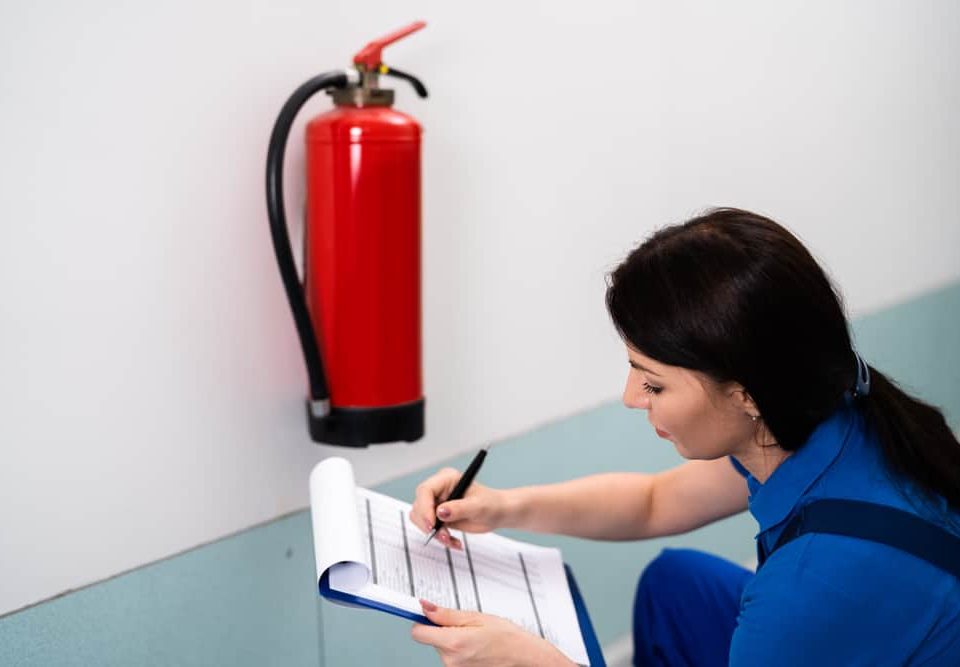
You’re standing in your facility looking at fire extinguishers mounted on the wall, and a question hits you: if a fire breaks out right now, will you grab the right one? Or will you accidentally make everything worse?
That’s not paranoia. It’s a legitimate concern that keeps facility managers up at night, especially in metalworking shops, manufacturing plants, and industrial settings across Nassau County. The difference between a Class D fire extinguisher and a portable water fire extinguisher isn’t just technical jargon. It’s the difference between suppressing a metal fire and triggering an explosion.
Here’s what you need to know about protecting your facility when standard extinguishers become dangerous.
What Is a Class D Fire Extinguisher and When Do You Need One
A Class D fire extinguisher contains specialized dry powder agents designed exclusively for combustible metal fires. These aren’t your typical ABC extinguishers. They’re built for one specific job: suppressing fires involving metals like magnesium, titanium, sodium, lithium, aluminum, and zirconium.
If your facility machines metal parts, handles metal dust, or works with reactive metals in any capacity, you’re dealing with potential Class D fire hazards. Metal fires burn differently than wood or paper. They reach temperatures exceeding 2,000°C and react violently with water, foam, or CO2 extinguishers.
The agents inside Class D extinguishers work by smothering the burning metal and absorbing the extreme heat. Common agents include powdered graphite, granular sodium chloride, and copper-based compounds. Each one creates a crust over the burning metal that cuts off oxygen while dissipating heat.
How Class D Fire Extinguishers Work on Metal Fires
When metal catches fire, you’re not dealing with ordinary combustion. Combustible metals oxidize rapidly, releasing massive amounts of heat and sometimes toxic fumes. The fire feeds on the metal itself as fuel, which is why traditional extinguishing methods fail or backfire.
Class D extinguishers use a specialized application method. Instead of the sweeping motion you’d use with other extinguishers, you apply the dry powder in a steady, controlled manner until the entire metal surface is completely covered. The goal is total encapsulation.
The powder agent doesn’t just smother the fire. It forms a protective crust that prevents reignition by sealing off air and conducting heat away from the burning metal. This process requires patience and a substantial amount of agent, which is why Class D extinguishers are only available in 30-pound capacity for handheld units.
Here’s what makes metal fires particularly tricky: different metals require different agents. Sodium chloride-based agents work well for magnesium, sodium, and potassium fires. Copper powder was specifically developed by the U.S. Navy for lithium and lithium alloy fires. Graphite-based agents serve as excellent heat conductors for various metal fires.
You can’t use a Class D extinguisher on anything except metal fires. They’re completely ineffective on Class A, B, or C fires. This specialization is exactly why proper fire extinguisher selection matters so much in industrial settings.
The application process also requires training. You need to understand the safe distance, proper coverage technique, and how to recognize when the fire is actually suppressed versus just temporarily contained. Metal fires can reignite if you don’t apply enough agent or remove coverage too soon.
In facilities where metal dust accumulates during machining or processing operations, the fire risk multiplies. Metal dust becomes airborne easily and can ignite from a single spark, potentially causing explosions. Even materials that seem stable in solid form become highly reactive when dispersed as fine particles or shavings.
Industries and Facilities That Need Class D Protection
Class D fire extinguishers aren’t common in typical office buildings or retail spaces. They belong in specific industrial environments where combustible metals are present.
Metalworking and fabrication shops top the list. Any facility that cuts, grinds, or machines metals like magnesium or titanium generates metal dust and shavings. These byproducts accumulate on surfaces and in equipment, creating fire hazards that standard extinguishers can’t address.
Aerospace and automotive manufacturing facilities handle lightweight metals extensively. Magnesium and titanium alloys are prized for their strength-to-weight ratio, but they’re also highly flammable under the right conditions. A single spark during fabrication can ignite metal dust, and using water on that fire would be catastrophic.
Laboratories working with reactive metals need Class D protection. Research facilities, chemical plants, and educational institutions that handle alkali metals like sodium, potassium, or lithium face unique fire risks. These metals react violently with water, releasing hydrogen gas that can explode.
Battery manufacturing and recycling facilities deal with lithium in various forms. While lithium-ion batteries themselves don’t typically require Class D extinguishers, facilities processing raw lithium metal absolutely do. The distinction matters because using the wrong suppression method can cause violent reactions.
Metal recycling and processing operations encounter mixed metal streams. You might not always know exactly what’s burning when a fire starts in a recycling facility. Having Class D capability ensures you can handle combustible metal fires when they occur.
Powder coating and metal finishing operations create environments where metal dust becomes suspended in air. Combined with heat sources from curing ovens or surface preparation equipment, these facilities face both fire and explosion risks that require specialized suppression.
The common thread across all these industries is the presence of metal in forms that can ignite: dust, shavings, chips, or reactive bulk materials. If your facility generates any of these during normal operations, you need Class D fire extinguishers positioned appropriately and employees trained to recognize when to use them.
Nassau County’s industrial landscape includes many of these operations, from small machine shops to larger manufacturing facilities. Fire code requirements mandate proper extinguisher selection based on actual hazards present, not just generic ABC coverage.
Portable Water Fire Extinguisher Use and Limitations
Water fire extinguishers seem straightforward. Point, squeeze, spray. They’re effective, affordable, and environmentally friendly for the right applications. But “right applications” is the critical phrase that gets overlooked until someone uses water on the wrong fire.
A portable water fire extinguisher works exclusively on Class A fires involving ordinary combustibles: wood, paper, cloth, rubber, and many plastics. The water cools the burning material below its ignition temperature, removing the heat element from the fire triangle.
The problem isn’t what water extinguishers do well. It’s what happens when someone uses them on fires they can’t handle. Water conducts electricity, so using a water extinguisher on electrical fires creates electrocution risk. Water spreads flammable liquids, so spraying it on gasoline or oil fires makes the situation worse. And water reacts violently with burning metals, potentially causing explosions.
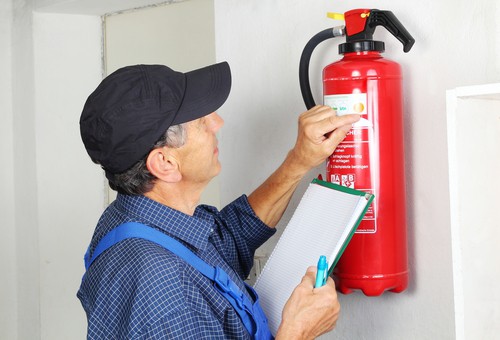
2.5 Gallon Pressurized Water Extinguisher Specifications
The 2.5 gallon pressurized water extinguisher is one of the most common sizes you’ll find in commercial and light industrial settings. It strikes a balance between portability and firefighting capacity.
These units typically feature stainless steel construction with chrome-plated brass valves, which helps prevent corrosion over time. The operating pressure runs around 100 psi, delivering a water stream that reaches 45 to 55 feet. Discharge time runs approximately 50 to 55 seconds, giving you nearly a minute of firefighting capability.
The 2-A UL rating indicates these extinguishers can handle fires involving ordinary combustibles in spaces up to a certain size. The “2-A” rating means it has twice the firefighting capacity of a basic 1-A unit.
Weight matters when you’re trying to fight a fire. Empty, these extinguishers weigh around 7 to 8 pounds. Filled with water, they jump to approximately 26 pounds. That’s manageable for most adults, but it’s something to consider when selecting locations and training employees.
Pressurized water extinguishers ship empty and require filling with water and pressurization to 100 psi before use. This can be done with an air compressor or even a bicycle pump. The recharging simplicity makes them cost-effective for long-term maintenance.
The temperature range for operation typically runs from 40°F to 120°F. If your facility experiences temperatures outside this range, you’ll need to consider alternative placements or extinguisher types.
Typical applications include offices, classrooms, churches, parking garages, hotel guest areas, retail stores, and light manufacturing facilities. Basically, anywhere ordinary combustibles are the primary fire risk.
Installation requires wall mounting at appropriate heights, typically with the top of the extinguisher no more than five feet from the floor. Travel distance to the nearest extinguisher shouldn’t exceed 75 feet for Class A protection.
5 Gallon Water Fire Extinguisher Applications
When 2.5 gallons isn’t enough coverage for your facility size or fire risk, the 5 gallon water fire extinguisher steps in. These larger units provide extended discharge time and greater firefighting capacity for environments with substantial Class A fire hazards.
The additional capacity translates to roughly double the discharge time compared to 2.5 gallon units. You’re looking at around 100 seconds of continuous water stream, which matters when you’re dealing with deep-seated fires in materials like upholstered furniture, stacked paper products, or dense wood.
The tradeoff is weight and portability. A 5 gallon water extinguisher filled and pressurized weighs significantly more than its smaller counterpart. Some facilities opt for wheeled units at this capacity to maintain maneuverability while gaining the benefit of increased agent volume.
Larger warehouses, industrial facilities, and buildings with substantial amounts of stored combustibles benefit from 5 gallon units. The extended range and discharge time provide more margin for error when fighting larger Class A fires.
The same limitations apply regardless of size. Water extinguishers of any capacity are dangerous on electrical fires, flammable liquid fires, metal fires, and cooking oil fires. The larger capacity doesn’t change what these extinguishers can safely address.
Placement considerations shift with 5 gallon units. You need to ensure the extinguisher is accessible but also positioned where someone can actually lift and operate it effectively. Wall mounting becomes more challenging, and you might need reinforced brackets or floor stands.
In mixed-use facilities, you might see both 2.5 and 5 gallon water extinguishers deployed strategically. Smaller units near exits and in corridors for quick access, larger units in warehouse sections or storage areas where fire load is higher.
The key is matching extinguisher capacity to actual fire risk and ensuring whoever might need to use the equipment can physically handle it. A 5 gallon extinguisher that’s too heavy for your staff to operate effectively isn’t providing the protection you think it is.
Water fire extinguisher use requires understanding not just what they do, but what they absolutely cannot do. In Nassau County facilities with mixed hazards – ordinary combustibles alongside electrical equipment or metalworking operations – you need multiple extinguisher types positioned appropriately. That’s where proper assessment and consultation become critical rather than just buying whatever seems adequate.
Choosing the Right Fire Extinguisher for Your Nassau County Facility
Fire extinguisher selection isn’t about checking boxes on a compliance form. It’s about understanding the actual materials and processes in your facility, then matching the right suppression equipment to real hazards.
Class D fire extinguishers protect against combustible metal fires that would react violently to water, foam, or CO2. Portable water fire extinguishers handle ordinary combustibles effectively but become dangerous on electrical, flammable liquid, or metal fires. The wrong choice in an emergency doesn’t just fail to suppress the fire – it can make the situation catastrophically worse.
We’ve spent 35+ years helping Long Island and Nassau County businesses get this right. Proper assessment, correct equipment selection, compliant placement, and legitimate FDNY-certified inspections all matter when your business and your people are on the line.
Related posts