Fire Safety Equipment Resources Every Long Island Business Should Bookmark
August 20, 2026
Annual Fire Extinguisher Inspection in Nassau County: Who Does What
August 21, 2026
Summary:
You searched this because you got a quote — or a bill — and something felt off. Maybe it’s a monthly charge you don’t fully understand. Maybe a new vendor gave you a number that seems high. Maybe you’ve never actually compared prices and you’re wondering if you’ve been overpaying for years.
That’s exactly what this page is for. We’re going to walk through what fire extinguisher inspections actually cost in Nassau County, what drives those costs up or down, and what separates a legitimate inspection from one that won’t hold up when the fire marshal shows up. By the end, you’ll know what a fair price looks like — and what questions to ask before you book.
What Fire Extinguisher Inspection Cost Actually Looks Like in Nassau County
The honest answer is: it depends on how many extinguishers you have, what types they are, and who you hire. For a small office or retail space in Nassau County with five to ten standard ABC dry chemical extinguishers, most businesses pay somewhere between $300 and $600 for an annual fire extinguisher inspection. A larger facility — say, a warehouse along Hempstead Turnpike or a restaurant on Sunrise Highway with 25 units — is typically looking at $1,000 to $1,500 for inspections alone, not counting any recharges or replacements.
Most providers also charge a minimum service call fee just to show up — typically $80 to $150 in the Nassau County area. That covers the technician’s time, travel, and the cost of the service tags required under Nassau County regulations. It’s worth knowing upfront so a low per-unit quote doesn’t turn into a surprise on the final invoice.
Why Some Nassau County Quotes Vary So Dramatically
A few things legitimately drive cost up. The type of extinguisher matters a lot — a standard ABC dry chemical unit is straightforward to inspect, but a wet chemical extinguisher used in a commercial kitchen requires more time, more expertise, and a technician who actually knows what they’re doing with a Class K system. Inspecting those specialized units can cost significantly more than a basic unit, and for good reason.
Volume also plays a role, though not always in the direction you’d expect. Some providers offer volume pricing for larger facilities, which can bring the per-unit cost down. Others charge a flat rate regardless of quantity. Neither approach is inherently wrong, but it’s worth asking how the quote is structured before you agree to anything.
What’s not a legitimate cost driver — and what you should push back on — is a monthly billing model for what is fundamentally an annual service. Some larger fire safety vendors charge $85 or more per month, framing it as ongoing coverage or a service plan. In reality, the law requires one annual professional inspection, not twelve. Monthly visual checks are required by OSHA and NFPA 10, but those are something your own staff can perform after basic training — they don’t require a certified technician to show up every month. If you’re paying monthly for professional inspections, you’re likely paying for something you don’t legally need at that frequency.
There’s also the question of who’s actually doing the inspection. In Nassau County, fire extinguisher service providers must hold jurisdiction-specific certification — separate from what’s required to work in New York City. A company licensed only for NYC cannot legally service your Nassau County property. An inspection from an unlicensed provider gives you a tag that won’t hold up during a Nassau County Fire Marshal walkthrough, which means you’ve paid for something that leaves you just as exposed as if you’d done nothing. That’s a real compliance gap that catches businesses off guard every year.
What's Actually Included in a Proper Annual Fire Extinguisher Inspection
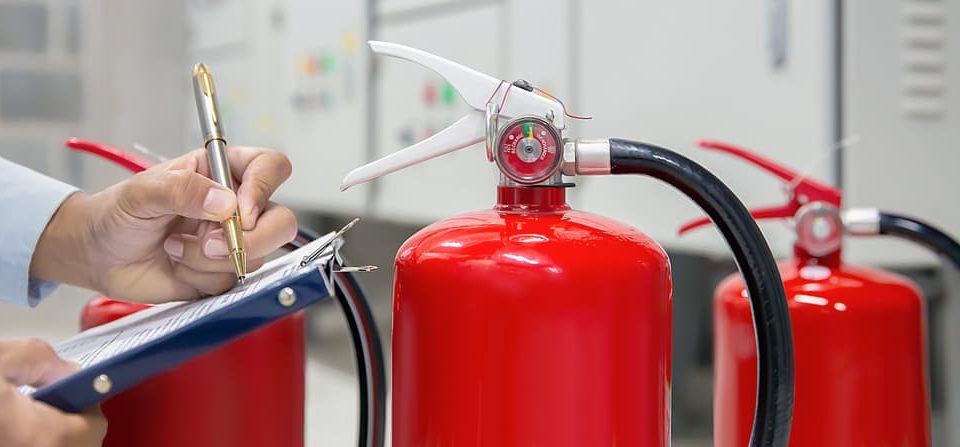
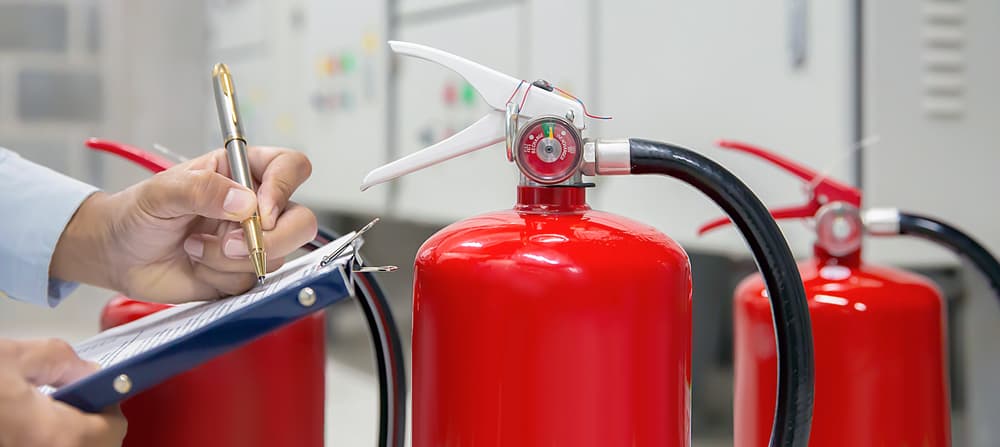
A legitimate annual inspection isn’t just someone glancing at the pressure gauge and slapping a sticker on the cylinder. Under NFPA 10 — which New York State adopts and Nassau County enforces — a proper annual maintenance inspection covers the physical condition of the unit (checking for corrosion, dents, rust, and damage), verification that the safety pin and tamper seal are intact, a pressure gauge check confirming the unit reads in the operational range, and a weight check to confirm the extinguisher is fully charged.
The technician also verifies that the unit is properly mounted, accessible, and visible. They update the serialized inspection tag with the date and their credentials, and they should maintain documentation you can produce if a fire marshal or insurance auditor asks for it. That paperwork is often what gets checked first — not the extinguisher itself.
For Nassau County restaurants and food service businesses, the inspection requirements go further. If you have a commercial kitchen, you’re also subject to Class K extinguisher requirements and, in many cases, a kitchen suppression system inspection on top of your standard units. The suppression system inspection is a separate service with its own cost and its own certification requirements — something a lot of general fire safety companies aren’t equipped to handle. It’s one of the reasons restaurants along corridors like Jericho Turnpike or Northern Boulevard need to be especially careful about who they hire.
NFPA 10 also mandates a 6-year internal examination and a 12-year hydrostatic pressure test, both of which cost more than a standard annual inspection. If your extinguishers are approaching either of those intervals, your technician should flag it — and factor it into the total cost conversation.
Fire Extinguisher Certification: What Makes an Inspection Legally Valid in Nassau County
Not all inspections are created equal, and in Nassau County, the difference between a valid and invalid inspection isn’t always obvious until you’re standing in front of a fire marshal. The certification that appears on your inspection tag after an annual service needs to come from a provider who holds the right credentials for your specific jurisdiction — and Nassau County has its own requirements, separate from what’s required to operate in New York City.
Nassau County fire code compliance is overseen by the Nassau County Fire Commission, not the FDNY. That’s an important distinction. A company that’s fully certified to service extinguishers in Brooklyn or Queens may have zero standing to legally service your Hicksville warehouse or your Valley Stream retail space.
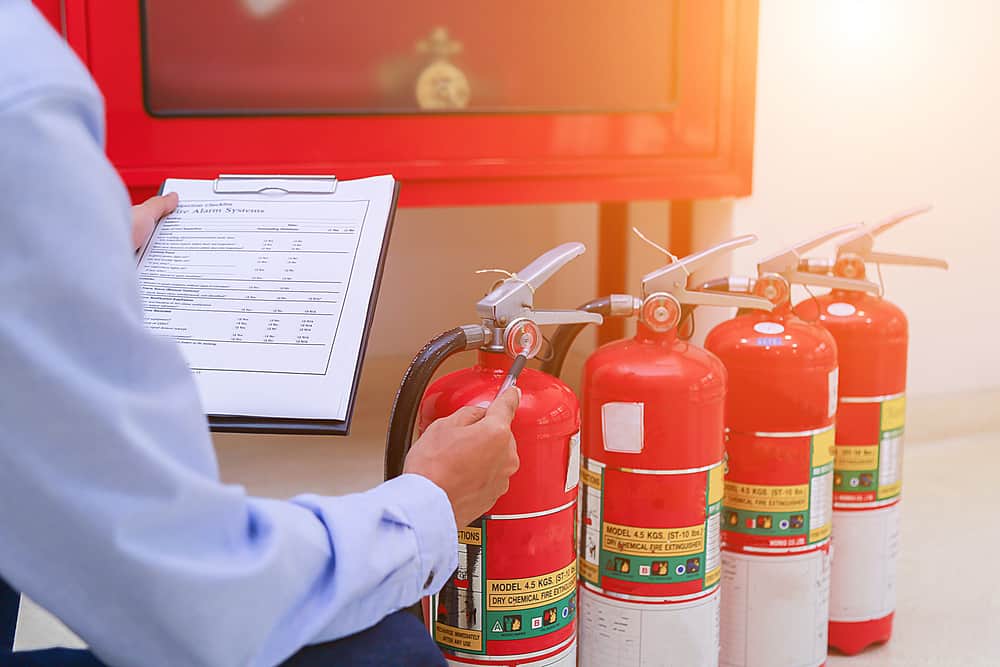
Fire Extinguisher Inspection Certification: What the Tag on Your Extinguisher Actually Means
After a legitimate annual inspection, your extinguisher should have an updated tag showing the inspection date, the technician’s name or credential identifier, and the servicing company’s information. In New York City, the FDNY mandated serialized Smart Tags starting in 2019 — these are numbered, auditable tags that FDNY inspectors can cross-reference during a walkthrough. Nassau County has its own documentation requirements that differ from the FDNY Smart Tag system, which is another reason why hiring a provider who knows both markets matters if your business operates in both.
A tag from an unlicensed provider, or one using the wrong certification format for your jurisdiction, is essentially worthless during an enforcement visit. The fine for non-compliance in Nassau County runs from $300 to $1,000 per extinguisher — and that’s before you factor in the cost of a legitimate re-inspection to get back into compliance. Fire marshals in Nassau County do inspect, and violations are issued regularly.
The practical takeaway: before you hire anyone, ask specifically whether they hold Nassau County certification — not just NYC credentials. Any reputable provider will be able to answer that question immediately. If they hesitate or get vague, that’s your answer.
One of the most common complaints we hear from Nassau County business owners is that a previous provider told them they needed to replace multiple extinguishers — and after getting a second opinion, they found out a recharge would have done the job at a fraction of the cost. It happens more than it should.
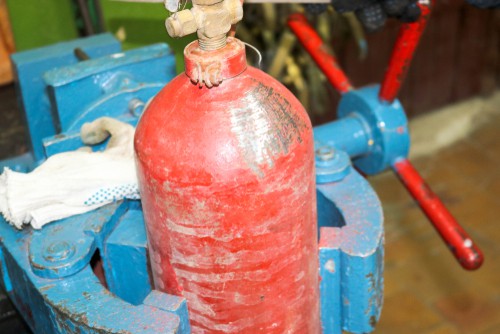
Here’s the practical distinction. A fire extinguisher recharging service restores the unit to its full operating pressure and agent capacity after it’s been discharged or has lost pressure. For a standard ABC dry chemical extinguisher, recharging typically costs $25 to $50 — significantly less than the cost of a violation fine, and far less than a full replacement. Recharging is also required after the 6-year internal maintenance interval, even if the unit hasn’t been used.
If your technician finds a unit that’s lost pressure or been partially discharged, recharging is usually the right first step — not replacement. Replacement becomes the right call when a unit has physical damage that can’t be repaired, when it’s failed a hydrostatic pressure test at the 12-year mark, or when the extinguisher type no longer meets current code requirements for your occupancy.
Older units that are approaching the 12-year hydrostatic test deadline sometimes make more financial sense to replace outright than to test and recharge, depending on the unit’s age and condition. A good technician will walk you through the math honestly — which is why free on-site estimates matter. You should know what you’re paying for and why before anyone touches your equipment.
If you run a restaurant in Nassau County, your Class K kitchen extinguisher has its own recharging requirements that differ from a standard ABC unit — and the cost reflects that. The same applies to CO2 and Halotron units, which are common in server rooms and electrical equipment areas. Make sure whoever you hire knows the difference and can service all your unit types, not just the straightforward ones.
Finding Fair Fire Extinguisher Inspection Pricing in Nassau County
The short version: know what you have, ask the right questions, and don’t let a monthly billing model go unchallenged. A legitimate annual inspection in Nassau County should come with a clear, one-time price, proper jurisdiction-specific certification, and documentation that will hold up if the fire marshal or your insurance company asks for it.
If you’re currently paying monthly for fire extinguisher service, it’s worth a conversation to find out exactly what you’re getting for that fee — and whether it’s actually required at that frequency. The answer might surprise you.
We at M&M Fire Extinguishers Sales & Services, Inc. have been serving Nassau County businesses for over 35 years, with full certification for Nassau County, Suffolk County, and all five NYC boroughs. We offer free on-site estimates, same-day service, and straightforward pricing — no monthly contracts, no surprise fees. If you want to know exactly what your inspection should cost and whether your current setup is actually compliant, give us a call.
Related posts