Fire Extinguisher Checklist Template for NY Businesses and Property Managers
August 6, 2026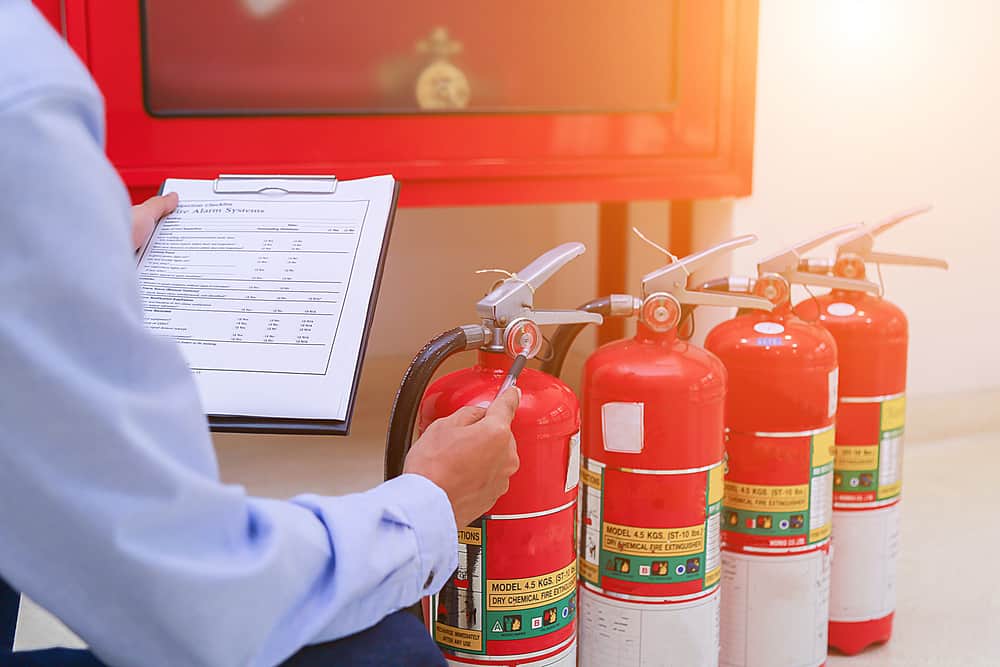
Fire Extinguisher Inspection in Nassau County: What Businesses Must Know
August 11, 2026
Summary:
You had your kitchen fire suppression system professionally serviced. The tag is current. The system hasn’t been triggered. So why did the FDNY inspector leave you with a violation notice?
This happens more often than most restaurant and commercial kitchen operators expect — and the reason almost always comes back to the same thing: missing monthly inspection logs. Not a broken system. Not an expired service contract. Just an undocumented monthly check that nobody told you was your responsibility.
Here’s what the requirement actually looks like, what your checklist needs to cover, and how to make sure your documentation holds up the next time an inspector walks through your door.
What NFPA and OSHA Actually Require for Monthly Fire Extinguisher Inspection Checklists
There’s a widespread assumption in the restaurant industry that once you’ve scheduled your semi-annual professional inspection, you’ve done your job. That assumption is wrong — and it’s costing operators real money in FDNY fines.
NFPA 17A, Section 8.2.2, specifically requires building owners or their designated employees to perform a visual inspection of wet chemical kitchen fire suppression systems every single month. OSHA 29 CFR 1910.157 independently requires monthly visual inspections of all portable fire extinguishers in the workplace. These aren’t suggestions or best practices — they’re mandatory compliance obligations that run parallel to, not instead of, your professional service schedule.
The critical distinction is this: a licensed technician handles the semi-annual professional inspection under NFPA 96. The monthly visual check is on you. If you’re not documenting it, the FDNY’s digital compliance tracking system will flag the gap — even if your physical system is in perfect working order.
What a Monthly Fire Extinguisher Inspection Checklist Must Include
The monthly inspection isn’t a full system test — it’s a visual check that any trained employee can perform. But “visual” doesn’t mean casual, and what you’re looking for is specific enough that a written checklist is the only reliable way to do it consistently.
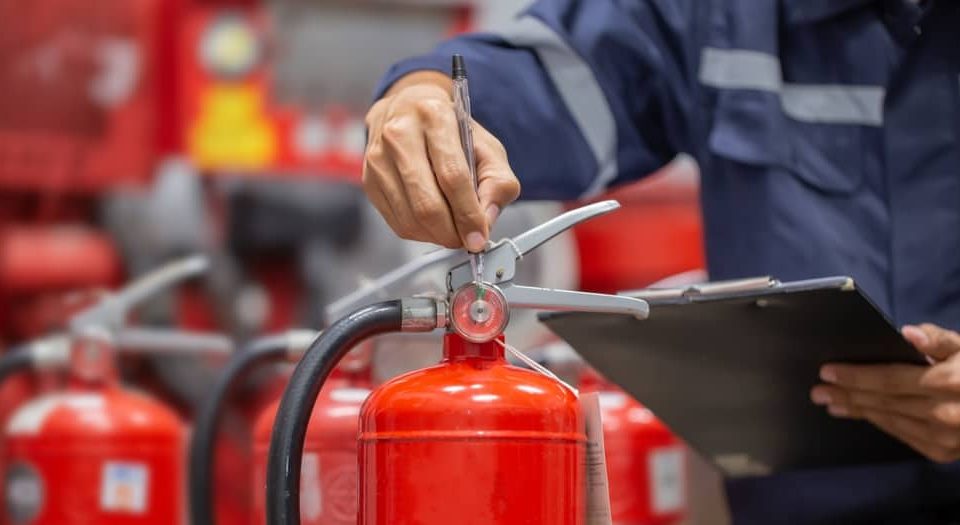
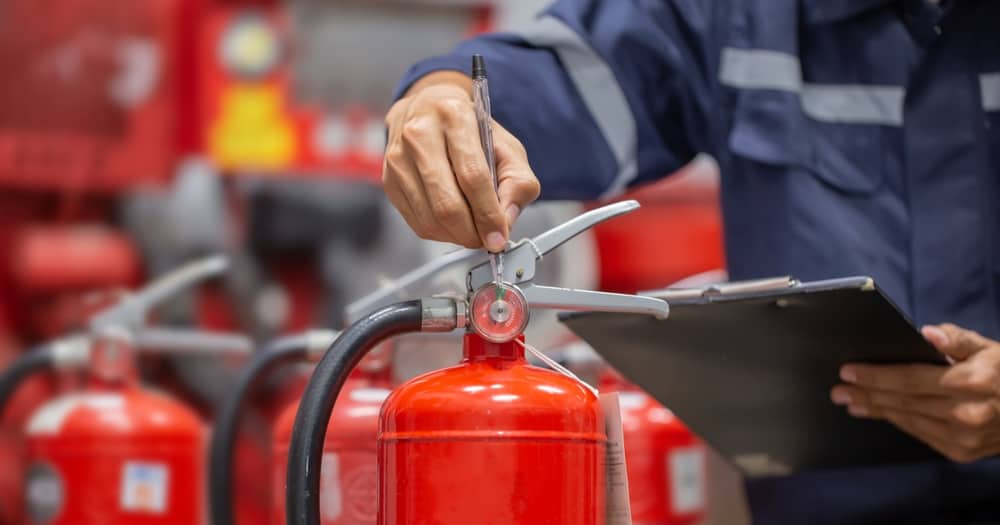
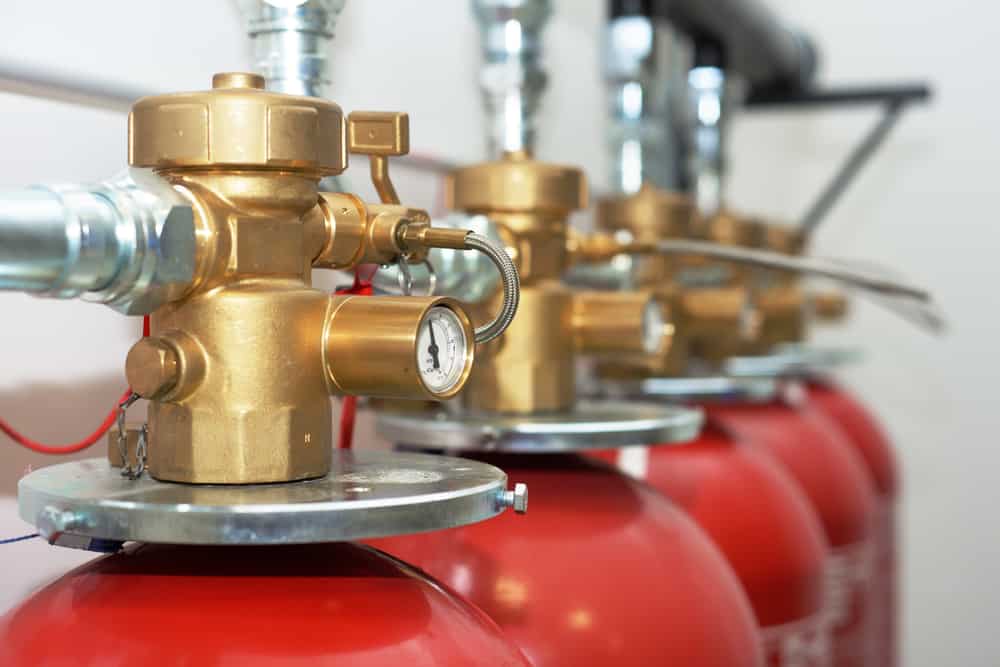
Start with the pressure gauge. The needle should sit in the green zone. If it’s reading low or has drifted into the red, that’s an immediate flag — not something to note and revisit next month.
Next, verify the tamper seal is intact and the pull pin is present and unobstructed. These are the physical indicators that the system hasn’t been accidentally discharged or tampered with since the last check.
Check the physical condition of the cylinder and any visible components — look for dents, corrosion, leakage around valves, or any signs of physical damage. Inspect the nozzles. In a commercial kitchen environment, grease accumulation on suppression nozzles is a real and common problem. A nozzle coated in grease can’t discharge properly, which means the system fails at the moment it matters most.
Confirm that all nozzles are unobstructed and that the protective caps are in place. Verify that fusible links — the heat-activated components that trigger system discharge — appear undamaged and haven’t been painted over or physically disturbed. Check that the system is properly mounted and that access to the pull station is clear.
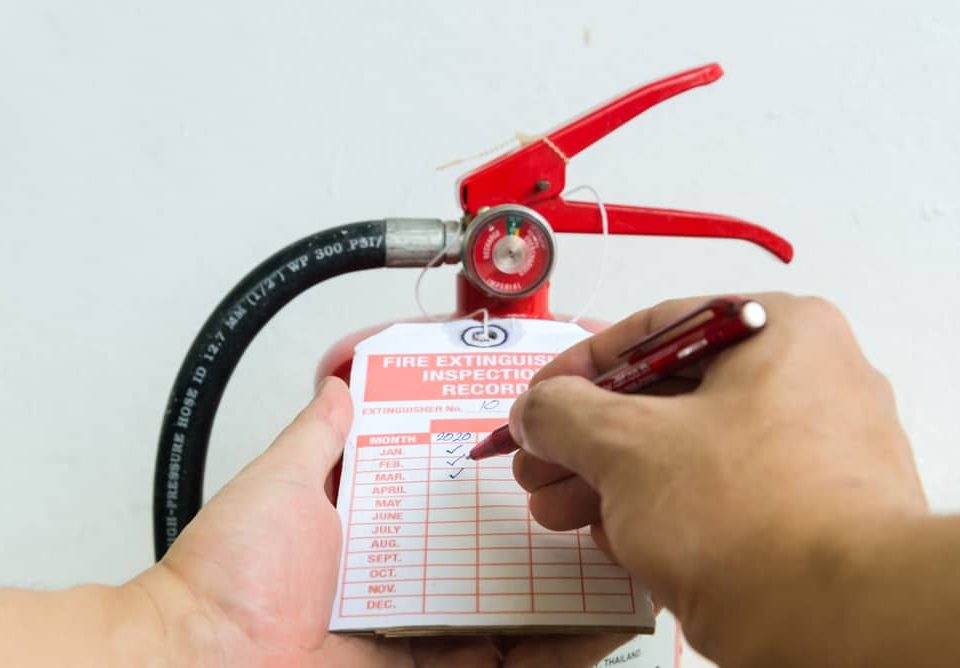
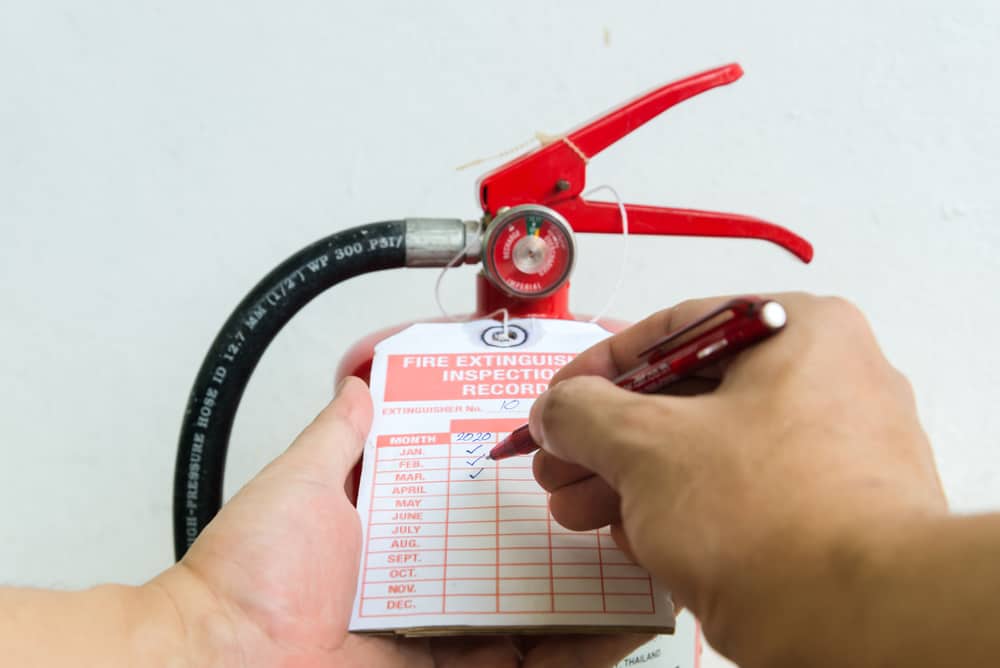
Finally, confirm that the inspection tag is visible and that the date and inspector’s initials are recorded on the log for that month. That last step is not a formality. FDNY inspectors review service tags, inspection reports, and dated logs as primary compliance evidence. A system that passes every physical check but has three months of blank log entries is still a violation waiting to happen. The log is the proof — and without it, the inspection might as well not have occurred.
Managing Compliance Across Multiple Locations with Excel Checklists
For operators running a single kitchen, a printed PDF checklist works well. You complete it monthly, sign it, date it, and keep it on file. But if you’re managing fire suppression compliance across multiple locations — a franchise group, a catering hall with several event spaces, or a commercial property with multiple food service tenants — a printed form per location quickly becomes unmanageable.
This is where an Excel-based checklist format becomes genuinely useful. A spreadsheet with a tab for each location lets you track inspection status across your entire portfolio in a single file. You can see at a glance which locations are current and which have gaps. You can sort by date, filter by property, and share the file with a property manager or compliance officer without printing anything.
For anyone responsible for keeping multiple Long Island or New York City properties audit-ready, that kind of visibility matters. The structure of an Excel checklist mirrors the PDF version — the same items, the same monthly cadence, the same signature and date fields. The difference is in how the data accumulates over time.
A 12-month tab for each location gives you a rolling compliance record that’s easy to present during an FDNY inspection or an insurance review. It also makes it immediately obvious if a location missed a month, which gives you the chance to address the gap before an inspector does.
The FDNY’s digital tracking systems log compliance history, and inspectors arrive knowing what your documentation should look like. Walking into an inspection with a well-maintained, multi-month log — whether on paper or in a spreadsheet — signals that your operation takes compliance seriously.
FDNY Kitchen Fire Suppression Compliance: What New York Operators Need to Know
New York City operates under some of the most actively enforced commercial kitchen fire safety requirements in the country. NFPA 96 governs the standard nationally, but in New York City, enforcement runs through both the FDNY and the Department of Buildings — and the FDNY doesn’t wait for complaints to conduct inspections.
Violations for expired or improperly maintained kitchen fire suppression systems can run from $1,000 to $5,000, and in serious cases, an inspector can issue an immediate shutdown order until the system is brought back into compliance. That’s not a fine you pay and move on from — that’s a closed kitchen, lost revenue, and a re-inspection clock ticking.
The FDNY S-17 Rule Changed Who Can Service Your System
If you’ve been using the same fire protection company for years without thinking much about it, July 2023 is worth paying attention to. As of July 17, 2023, the FDNY implemented the S-17 requirement, which mandates that all inspections, tests, and maintenance of commercial kitchen fire suppression systems be performed by technicians certified in the specific brand of equipment being serviced.
That means a technician certified to service an Ansul R-102 system cannot legally service a Kidde or Amerex system under S-17 compliance — at least not in New York City. The rule applies to restaurants, hotels, catering halls, hospitals, private schools, churches, and nightclubs.
If your current provider isn’t brand-certified for your specific system, your service records may not satisfy FDNY scrutiny, even if the work was done in good faith. This isn’t a technicality that only matters during a formal inspection. The FDNY tracks service history digitally, and when an inspector reviews your documentation, they’re looking at who performed the service and whether that technician’s certification matches your equipment.
A service record from a non-certified technician doesn’t just fail to help you — it can actively create a violation. The practical step here is straightforward: confirm that whoever services your system holds the specific brand certification for your equipment. Ask for documentation. If your current provider can’t produce it, that’s your answer.
Why Your Annual Service Tag Isn't Enough to Avoid a Violation
This is the misconception that generates more surprise violations than almost anything else in the commercial kitchen space. An operator invests in professional service, the technician does the work, a tag goes on the system — and the operator assumes compliance is handled for the year. Then the FDNY shows up and finds no monthly inspection logs, and a violation gets issued for a system that is physically functioning exactly as it should.
The reason this happens is that annual professional service and monthly owner inspections are separate, parallel requirements. One doesn’t substitute for the other. NFPA 17A Section 8.2.2 doesn’t say “inspect monthly unless a professional has been out recently.” It says inspect monthly, period. Both NFPA 17A and OSHA 29 CFR 1910.157 apply simultaneously, and both require documentation.
There’s also a financial dimension beyond the FDNY fine itself. Insurance companies may deny fire damage claims if the suppression system wasn’t properly maintained and documented. A kitchen fire that causes significant damage is already a crisis — discovering that your insurer won’t pay because your monthly logs were missing makes it worse.
The cooking equipment and grease environment in a commercial kitchen makes this more than a paperwork exercise. Cooking equipment accounts for 61% of restaurant fires in the United States, and grease buildup in hoods and ducts contributes to 20 to 25% of kitchen fire incidents. Even a layer of grease 1/8 inch deep in a duct — roughly the thickness of a dime — is considered a critical fire hazard under NFPA 96.
Monthly visual checks exist because conditions in a commercial kitchen change month to month, and a system that was in perfect condition in January can have compromised nozzles by March if nobody’s looking. The monthly checklist isn’t administrative overhead. It’s the mechanism that catches those changes before they become a fire, a violation, or a denied insurance claim.
How to Keep Your Kitchen Fire Suppression System Compliant Year-Round
Staying compliant with FDNY kitchen fire suppression requirements comes down to two things: making sure your professional service is performed by certified technicians on the right schedule, and making sure your monthly visual inspections are documented every single month without exception.
The monthly checklist is the piece most operators are missing — not because they’re careless, but because nobody explained that it was their responsibility. A pressure gauge check, tamper seal verification, nozzle inspection, and a signed, dated log entry once a month is what stands between you and a violation that has nothing to do with whether your system actually works.
If you’re in the New York area and need professional service, violation removal, or just want a certified technician to assess where your system currently stands, we at M&M Fire Extinguishers Sales & Services, Inc. have been serving Long Island and all five boroughs for over 35 years. We’re available 24 hours a day, offer free on-site estimates, and handle everything from routine inspections to active FDNY violation removal. Give us a call — we’ll tell you exactly what you need.
Related posts