Cost to Recharge Fire Extinguisher: 2026 Pricing
May 19, 2026Foam Extinguisher Applications & Uses
May 26, 2026
Summary:
You’ve got a business to run. The last thing you need is a failed fire marshal inspection, an insurance audit gone sideways, or worse—fire protection equipment that doesn’t work when you need it. Commercial buildings in Nassau County face specific fire safety requirements, and the stakes are real. Missing inspections, outdated equipment, or improper placement can lead to fines, coverage issues, and serious safety gaps. The good news? Once you understand what fire protection equipment your building actually needs and how to keep it compliant, the whole process gets a lot simpler. Let’s start with the basics.
What Fire Protection Equipment Do Commercial Buildings Need
Commercial fire protection isn’t one-size-fits-all. What works for an office building doesn’t cut it for a restaurant kitchen or a warehouse full of inventory. The type of business you run, the layout of your space, and the materials you store all determine which systems you need.
Most commercial buildings in Nassau County rely on a combination of equipment: portable fire extinguishers, fire alarm and detection systems, sprinkler or suppression systems, emergency lighting, and exit signage. Each piece plays a specific role. Extinguishers give you immediate response capability for small fires. Alarms alert occupants and emergency services. Suppression systems control or extinguish larger fires automatically. Emergency lighting ensures safe evacuation when visibility drops.
The Nassau County Fire Commission oversees local fire safety regulations and works to maintain uniform standards across the county. That means your fire protection setup needs to meet both state codes and local requirements. Getting it right from the start saves you headaches down the road.
Portable Fire Extinguishers for Different Fire Classes
Walk into any commercial building and you’ll see fire extinguishers mounted on walls. But not all extinguishers handle the same types of fires. Using the wrong one can make things worse.
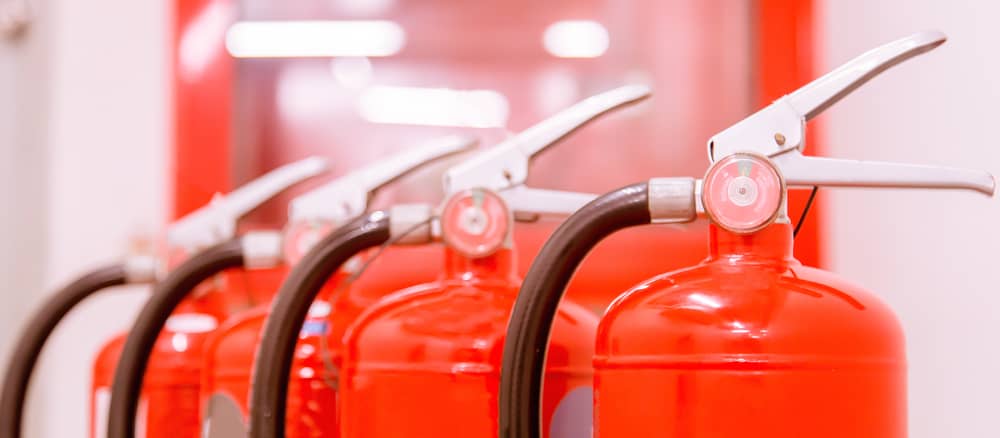
Fire extinguishers are classified by the type of fire they’re designed to fight. Class A extinguishers work on ordinary combustibles—think paper, wood, cloth, and most office materials. Class B handles flammable liquids like oils, gasoline, and solvents. Class C is for electrical fires involving energized equipment, wiring, or circuit panels. Class K extinguishers are specifically designed for commercial kitchens where cooking oils and fats create unique fire risks.
Many businesses opt for ABC-rated extinguishers because they cover the most common fire types in one unit. But specialized spaces need specialized equipment. A restaurant needs Class K extinguishers near cooking equipment. A server room benefits from clean agent extinguishers that won’t damage electronics. A manufacturing facility might need Class D extinguishers for combustible metals.
Placement matters just as much as type. NFPA standards require extinguishers to be within 75 feet of any point in the building for Class A fires, and within 50 feet for Class B hazards. They need to be mounted at accessible heights, clearly marked, and never blocked by furniture or equipment. Proper placement means someone can grab an extinguisher and respond within seconds, not waste time searching or moving obstacles.
Fire Suppression Systems Beyond Basic Extinguishers
Portable extinguishers handle small fires, but larger commercial spaces need systems that can respond automatically and cover wider areas. That’s where fire suppression systems come in.
Sprinkler systems are the most common. When heat from a fire reaches a certain threshold, sprinkler heads activate and release water to control the flames. They’re reliable, relatively affordable, and required by code in many commercial buildings. New construction with fire areas over 5,000 square feet typically needs sprinklers. Buildings over 55 feet tall require them. So do most multi-family residential properties.
But water isn’t always the answer. Data centers, telecom facilities, museums, and archives can’t risk water damage to sensitive equipment or irreplaceable materials. These spaces use clean agent suppression systems instead—gases like FM-200 or inert agents like argon and nitrogen that extinguish fires without leaving residue or damaging electronics.
Commercial kitchens face their own challenges. Grease fires don’t respond well to water. That’s why restaurants and food service operations need wet chemical suppression systems, specifically designed to handle cooking oil fires. These systems are often integrated with kitchen hoods and activate automatically when temperatures spike.
Choosing the right suppression system depends on what you’re protecting. A warehouse storing paper products has different needs than a facility housing computer servers. The key is matching the system to your actual fire risks, not just checking a compliance box. We assess your space, identify hazards, and recommend systems that make sense for your operations.
Fire Extinguisher Testing and Inspection Requirements
Having fire extinguishers installed is step one. Keeping them functional and compliant is where most businesses struggle. Fire extinguisher testing isn’t optional—it’s required by NFPA 10, enforced by local fire marshals, and checked by insurance companies during audits.
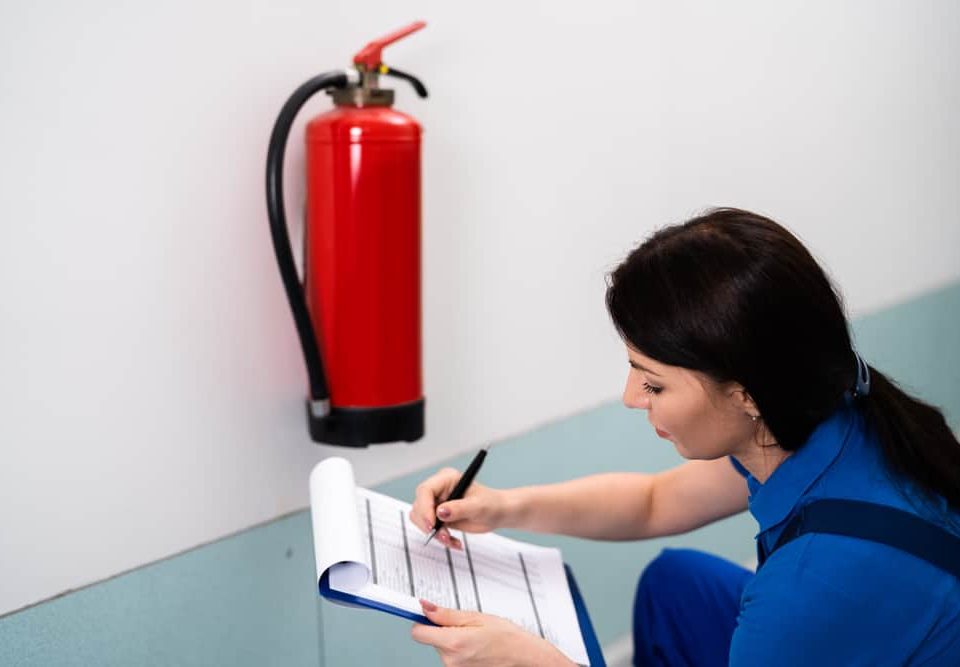
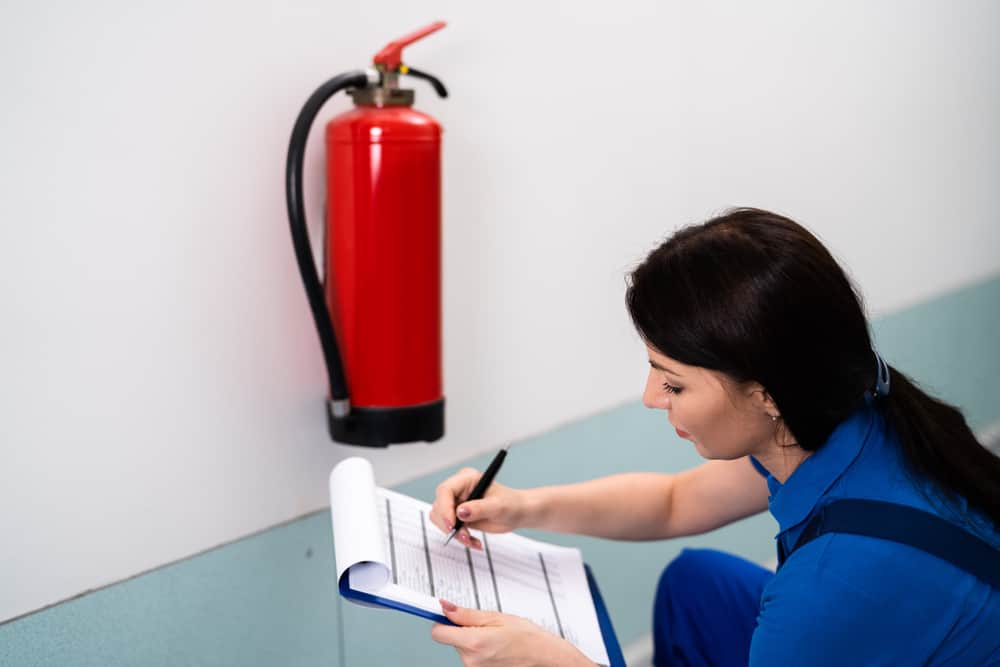
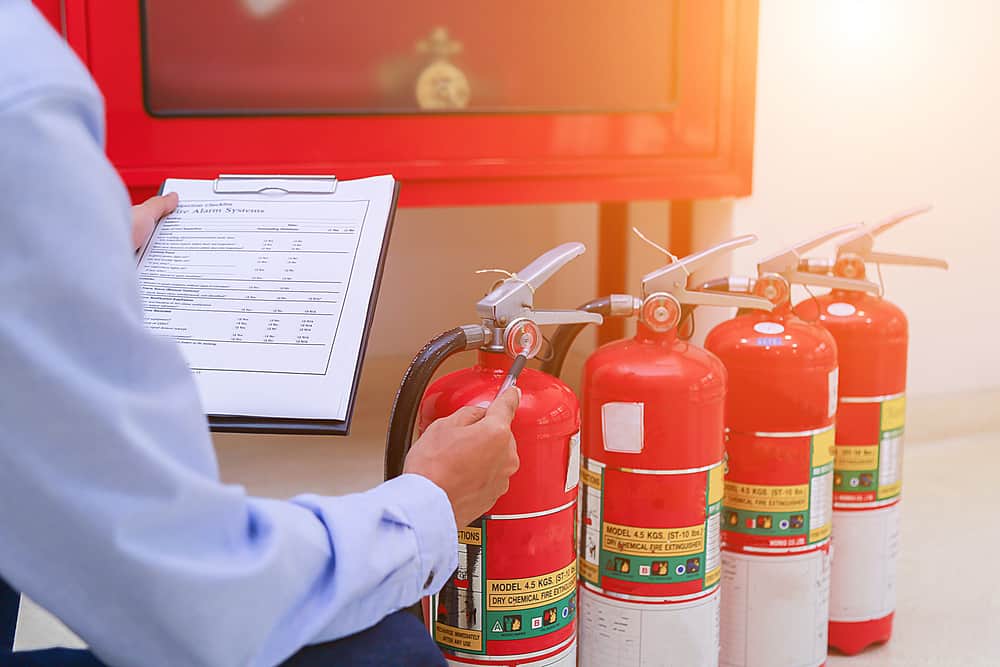
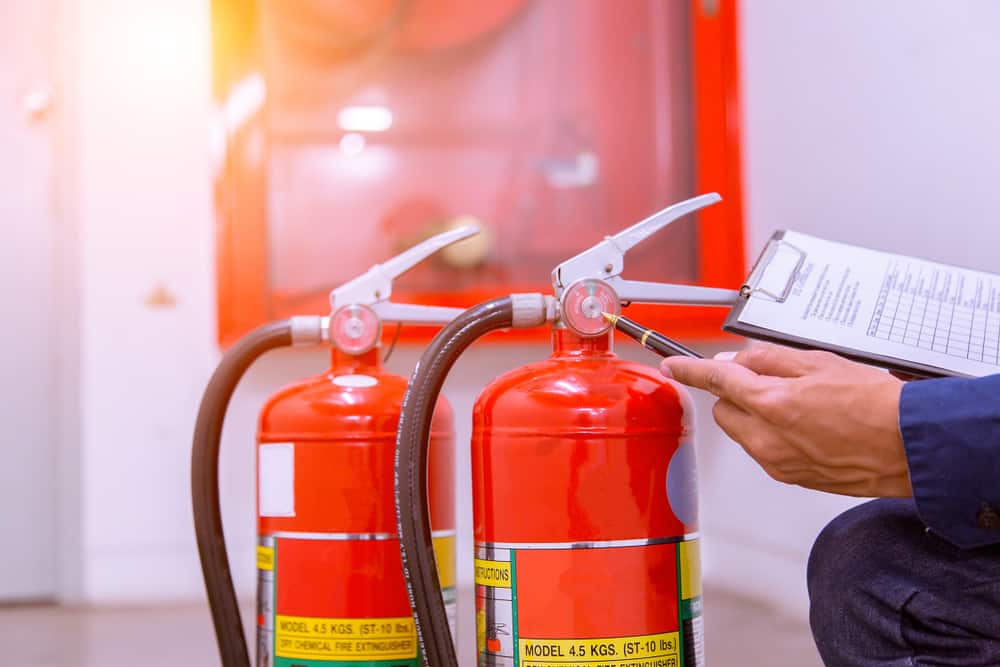
Monthly visual inspections are the baseline. Someone on your team needs to check that extinguishers are in their designated locations, accessible, and show no obvious signs of damage. The pressure gauge should be in the green zone. The safety seal and tamper indicator should be intact. These quick checks catch problems before they become violations.
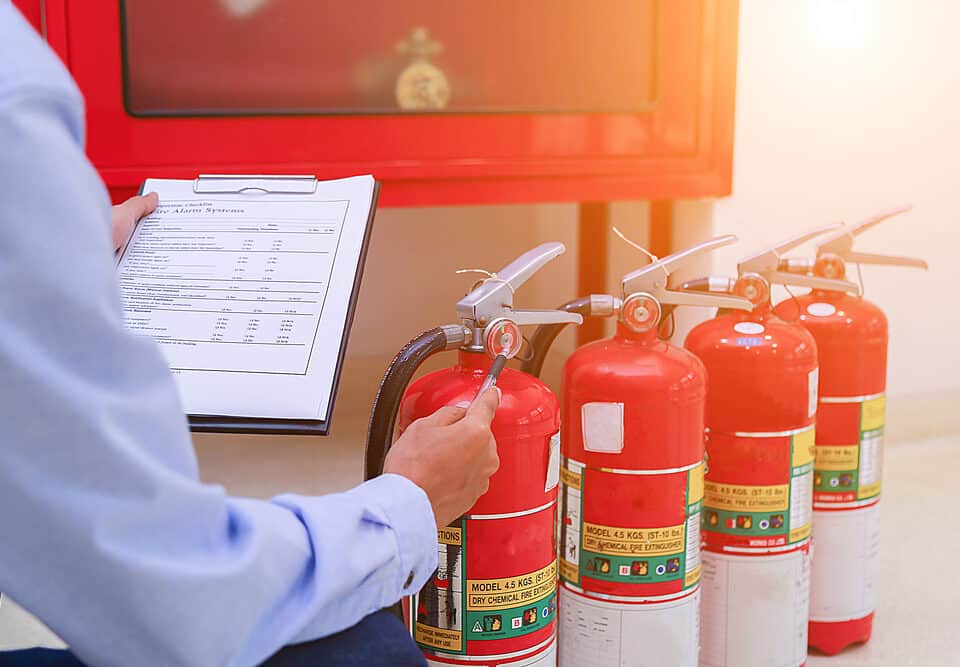
Annual maintenance goes deeper. A certified technician performs a thorough inspection, checking the operating mechanism, testing pressure levels, examining seals, and documenting everything with updated service tags. This isn’t something you can handle in-house unless you have trained, certified staff and the right equipment. Most businesses hire professional fire protection companies to handle annual maintenance and keep records straight.
Hydrostatic Testing for Fire Extinguisher Safety
Beyond monthly checks and annual maintenance, fire extinguishers need periodic pressure testing to ensure the cylinder can handle the stress of deployment. This is called hydrostatic testing, and it’s a critical safety measure that prevents extinguisher failures.
Hydrostatic testing involves pressurizing the extinguisher cylinder with water or another non-compressible fluid to check for leaks, weaknesses, or structural issues. The test verifies that the pressure vessel won’t rupture or fail when you need it most. It requires specialized equipment and training, so it’s always performed by certified technicians.
The frequency depends on the type of extinguisher. Pressurized water, carbon dioxide, and wet chemical extinguishers need hydrostatic testing every five years. ABC dry chemical extinguishers get tested every 12 years. Clean agent extinguishers also follow specific intervals based on the agent type and manufacturer specifications.
Every six years, stored pressure extinguishers that require a 12-year hydrostatic test must also undergo internal examination. The extinguisher is emptied, inspected inside for corrosion or damage, and then refilled and recharged. Non-rechargeable extinguishers don’t get tested—they’re removed from service 12 years from the manufacture date and replaced entirely.
Skipping hydrostatic testing isn’t just a compliance issue. It’s a safety risk. A compromised cylinder can fail under pressure, potentially causing injury or leaving you without fire protection when you need it. We track testing schedules, handle the logistics, and make sure your extinguishers stay certified and safe.
Fire Extinguisher Checks and Compliance Documentation
Fire marshals and insurance auditors don’t just want to see extinguishers on your walls. They want proof that those extinguishers have been properly maintained, tested, and documented according to code. Missing or outdated service tags are one of the fastest ways to fail an inspection.
Every time a fire extinguisher receives professional service—whether it’s annual maintenance, recharging, or hydrostatic testing—a service tag gets attached showing the date and the technician’s certification. These tags create a paper trail that demonstrates compliance. Without them, there’s no way to prove the extinguisher is up to code, even if it was serviced last month.
Businesses also need to maintain internal inspection records. Monthly visual checks should be logged, noting the date, who performed the inspection, and any issues found. Annual maintenance records should include detailed notes on what was checked, what was serviced, and any parts that were replaced. These records aren’t just bureaucratic busywork—they protect you during audits and provide documentation if something goes wrong.
Many Nassau County businesses discover compliance gaps only when the fire marshal shows up for an inspection. By then, it’s too late to fix things quickly. Missing tags mean violations. Expired extinguishers mean violations. Improper placement or blocked access means violations. Each one can result in fines, operational delays, or even temporary closure until issues are resolved.
The smarter approach is staying ahead of inspections with regular professional service. We know exactly what local codes require. We track service schedules, update documentation automatically, and make sure your extinguishers are always inspection-ready. That means no surprises, no scrambling, and no violations when the fire marshal walks through your door.
Keeping Your Commercial Building Fire-Safe and Compliant
Fire protection equipment isn’t something you install once and forget about. It’s an ongoing responsibility that requires the right systems, regular testing, proper documentation, and professional expertise. Commercial buildings in Nassau County face specific requirements that go beyond basic fire safety—they need equipment that matches their operations, maintenance that keeps everything functional, and records that prove compliance.
The businesses that handle fire protection well don’t try to manage everything themselves. They work with experienced providers who understand local codes, stay current with NFPA standards, and can respond quickly when issues come up. Whether you need fire extinguisher testing, suppression system installation, or help preparing for a fire marshal inspection, the right partner makes the whole process simpler.
We’ve been serving Nassau County and Long Island for over 35 years, providing comprehensive fire protection solutions with same-day service and 24/7 emergency availability. When your business needs reliable fire protection equipment and expert maintenance you can count on, reach out to our team that knows the local requirements and delivers results.
Related posts