
Understanding Fire Extinguisher Service Costs
June 23, 2026
When to Repair vs Replace Fire Extinguishers
June 30, 2026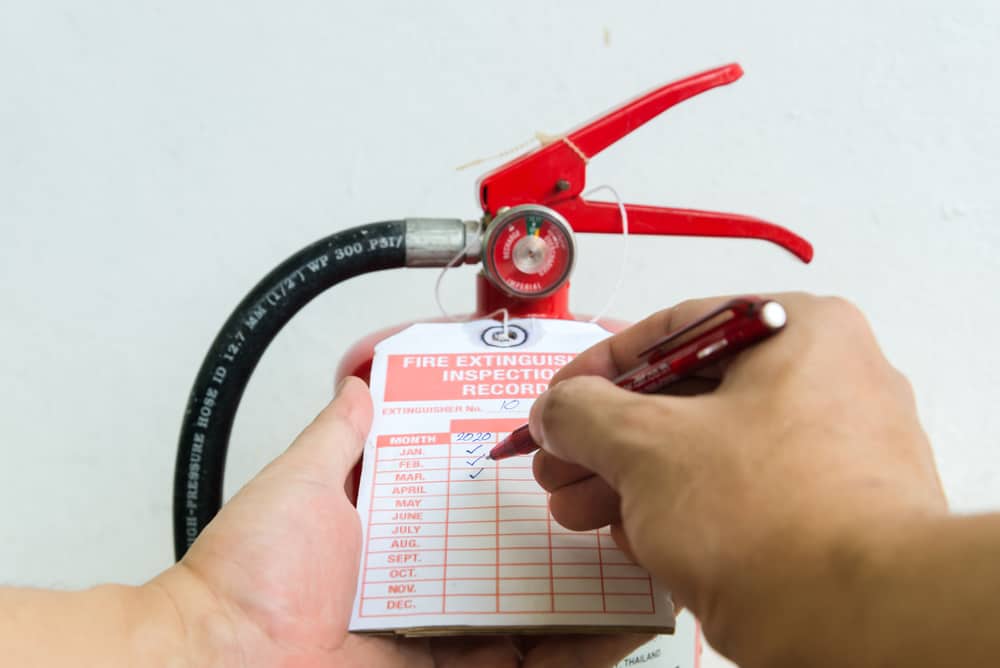
Summary:
You’re running a business in Nassau County, not Manhattan. That means you’re not subject to NYC fire code—but you’d be surprised how many Long Island business owners don’t realize the distinction until they’re facing a violation.
Nassau County operates under its own Fire Prevention Ordinance, enforced by the Nassau County Fire Marshal and Fire Commission. The requirements, inspection schedules, and compliance standards differ from both NYC and Suffolk County. Getting this wrong doesn’t just risk fines. It can shut down your operation, void your insurance, and put people at risk.
Here’s what actually applies to your Nassau County business—and how it compares to the rules governing properties across the border in Queens or Brooklyn.
Nassau County Fire Safety Compliance Requirements
Nassau County follows the New York State Uniform Fire Prevention and Building Code as its baseline. But the county adds its own layer through the Nassau County Fire Prevention Ordinance, which establishes uniform regulations for fire hazard control across all county municipalities.
This centralized approach creates predictability. Whether your business operates in Hempstead, Garden City, or Massapequa, you’re dealing with the same county-level fire safety standards. The Nassau County Fire Commission coordinates regulations, inspections, and educational programs, and the Fire Marshal’s Office conducts regular commercial property inspections to ensure compliance.
The ordinance covers fire detection and suppression systems, storage and handling of flammable materials, extinguisher placement and inspection schedules, and all required life safety systems and equipment. These fire code requirements apply uniformly across the county, which means you can plan your compliance strategy without worrying about conflicting municipal-level rules. For commercial properties, this means annual professional inspections are mandatory, proper documentation must be maintained, and licensed service providers must hold Nassau County-specific credentials.
How Nassau County's Centralized Model Differs from NYC
NYC doesn’t fall under the NYS Uniform Fire Prevention and Building Code. The city operates under its own fire code—the NYC Fire Code—administered and enforced by the Fire Department of New York. This is a completely separate regulatory framework with different requirements, inspection protocols, and enforcement mechanisms.
When you cross from Nassau County into Queens, you’re crossing into a different fire code jurisdiction. The FDNY requires specific smart tags on fire extinguishers as of 2019. Certificate of Fitness requirements differ. Inspection documentation follows FDNY-specific formats. Even the licensing for fire protection service companies changes—a company licensed to work in Nassau County cannot legally service NYC properties without separate FDNY credentials, and vice versa.
This creates real challenges for businesses operating multiple locations across Long Island and the five boroughs. You can’t assume your Nassau County fire protection provider is properly licensed to service your Brooklyn or Manhattan locations. You can’t use the same compliance checklist across both jurisdictions. The inspection schedules, documentation requirements, and even the types of violations you might face operate under different rules.
Nassau County’s centralized Fire Commission model offers more consistency than you’ll find in Suffolk County, where 109 independent volunteer fire departments can impose additional local requirements beyond state minimums. But it’s distinctly different from NYC’s approach. Understanding which jurisdiction you’re in—and which rules apply—is the first step toward actual compliance.
For Nassau County businesses, the Fire Marshal’s Office is your enforcement authority. They conduct inspections, issue violations, and have the power to order dangerous conditions remedied or removed. Penalties for non-compliance can reach $5,000 per offense. The Fire Commission holds hearings on violations within three business days of a written request, and decisions come within three business days after the hearing concludes. This is a faster timeline than many business owners expect, which means you can’t afford to let violations sit unresolved.
What the Nassau County Fire Prevention Ordinance Actually Requires
The Nassau County Fire Prevention Ordinance isn’t a suggestion—it’s law. It establishes specific requirements for commercial properties that go beyond just having fire extinguishers mounted on walls.
Fire detection and suppression systems must meet county standards. If your building requires a sprinkler system, fire alarm, or standpipe system, it needs proper installation, regular testing, and documented maintenance. The ordinance specifies requirements for applications, plans, fees, and inspections for all life safety systems and equipment.
Storage and handling of hazardous materials fall under strict guidelines. If your business stores flammable or combustible liquids, propane, or oxidizers, you’re subject to specific storage requirements and reporting obligations. Any spill, leak, or discharge must be reported to the Fire Marshal within two hours of discovery. Failure to report can result in separate violations on top of whatever caused the spill.
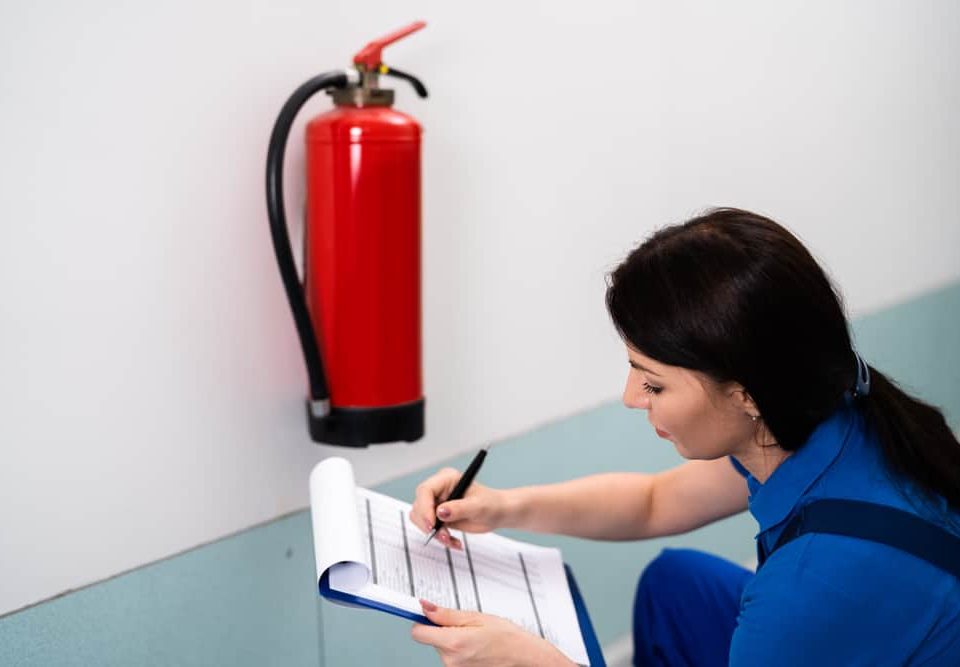
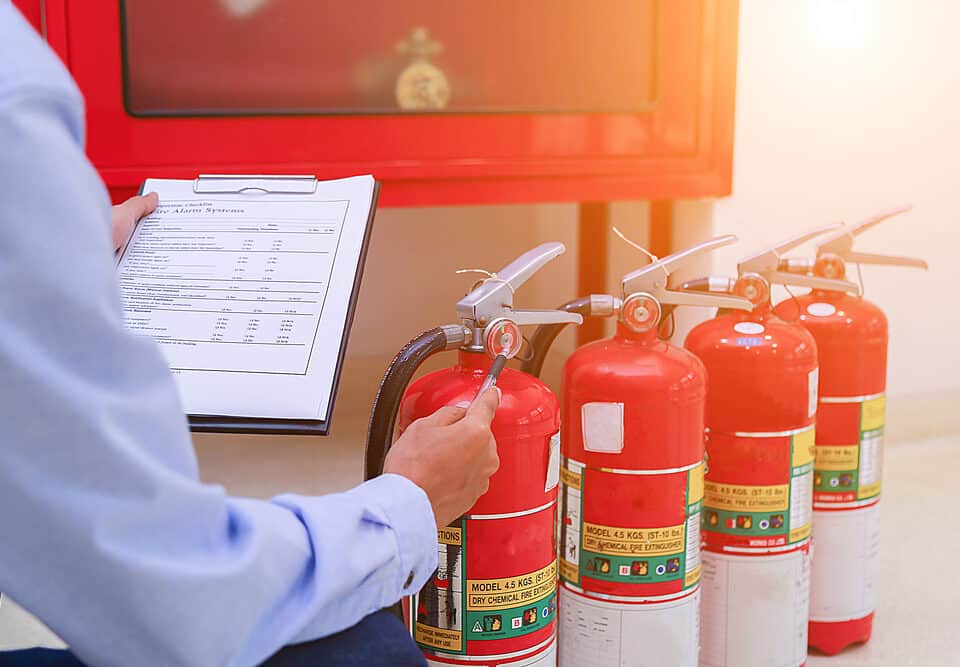
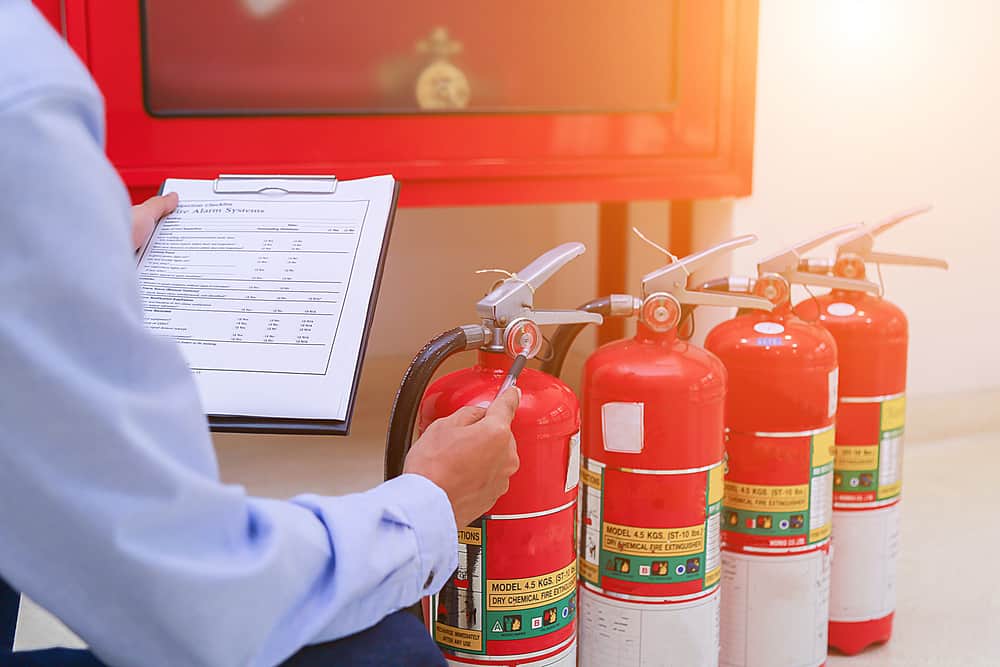
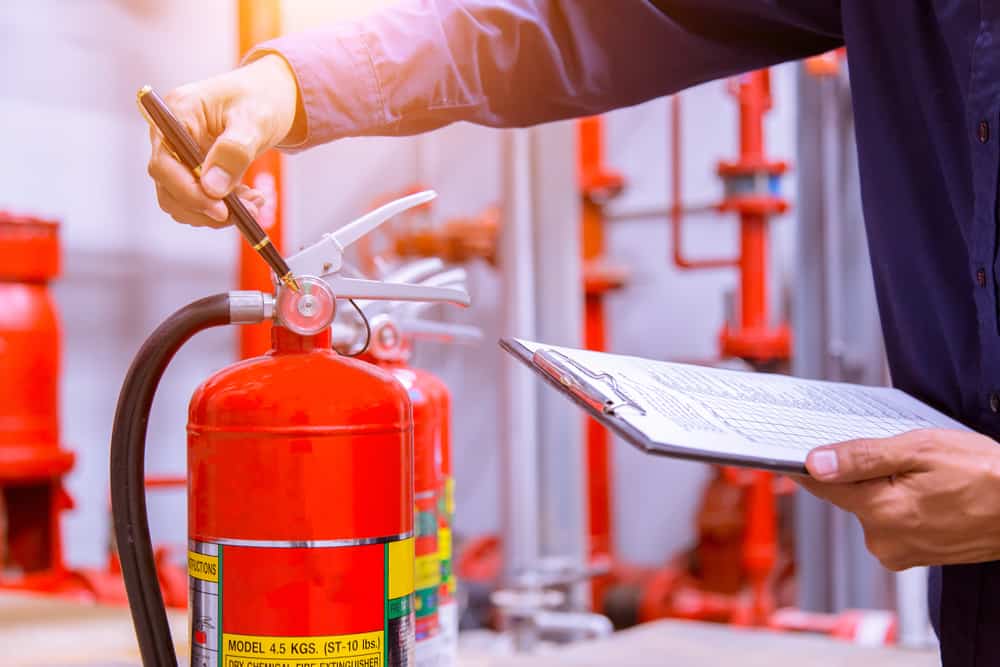
Portable fire extinguishers require annual inspections by licensed professionals. Monthly visual checks are your responsibility as the property owner, but the annual certification must come from a company holding proper Nassau County credentials. The inspection must verify pressure levels, physical condition, proper mounting and accessibility, and compliance with NFPA 10 standards. Each extinguisher gets a dated tag showing when it was last inspected and when the next inspection is due.
The ordinance also addresses fire extinguisher sales and service companies themselves. Article XXIII specifically regulates the sale, leasing, and servicing of portable fire extinguishers. This means the company you hire must be properly licensed—not just competent, but legally authorized to perform the work in Nassau County. Using an unlicensed provider doesn’t just put you at risk of equipment failure. It can invalidate your inspection certifications and leave you non-compliant even if the work was done correctly.
Building owners and property managers are ultimately responsible for compliance. You can’t delegate that responsibility to a tenant or contractor and wash your hands of it. The Fire Marshal can order you to remedy dangerous conditions, and if you fail to comply within the specified timeframe, you’re looking at fines, potential criminal charges in extreme cases, and the very real possibility of a forced closure until the violations are corrected.
The ordinance gives the Fire Marshal broad authority to inspect buildings that lack sufficient fire escapes or exits, show signs of age or dilapidation, or contain combustible materials or conditions dangerous to occupants. They can enter and inspect, and they can order remediation. This isn’t something that only happens to obviously neglected properties. Regular commercial buildings get inspected, and violations get issued when requirements aren’t met.
Fire Safety Regulations vs NYC Differences
The practical differences between Nassau County and NYC fire safety regulations show up in three main areas: enforcement structure, licensing requirements, and specific compliance standards.
Nassau County’s Fire Commission creates countywide uniformity. Suffolk County’s 109 independent fire districts create local variation. NYC’s FDNY creates an entirely separate regulatory system. If you’re a business owner trying to maintain compliance across multiple locations, these aren’t minor administrative details—they’re fundamentally different approaches that require different strategies.
The enforcement authority changes depending on your address. In Nassau County, the Fire Marshal’s Office handles inspections and violations. In NYC, it’s the FDNY. The inspection protocols, violation categories, and even the appeal processes operate differently. What constitutes a violation in one jurisdiction might be handled differently in another, and the penalties don’t necessarily align.
Licensing and Service Provider Requirements
This is where businesses get into trouble without realizing it. A fire extinguisher service company licensed to work in NYC is not automatically licensed to work in Nassau County. The credentials are jurisdiction-specific.
The FDNY issues Certificates of Fitness for individuals working on fire protection systems in New York City. These certificates are required for specific activities and don’t transfer to Nassau County work. Nassau County has its own licensing requirements administered through the Fire Marshal’s Office. A company can hold both sets of credentials, but they must obtain them separately and maintain them independently.
This matters because using an improperly licensed service provider can invalidate your compliance. Even if the work is performed correctly—extinguishers inspected, tags affixed, documentation provided—if the company wasn’t properly licensed for your jurisdiction, you’re not actually in compliance. When the Fire Marshal comes for an inspection, they can issue violations for using an unlicensed provider, and those inspection tags you thought were protecting you become worthless.
Before you hire any fire protection service company, verify their licensing for your specific location. Ask to see their Nassau County credentials if you’re in Nassau County. Check the FDNY approved company lists if you’re in NYC. Don’t assume that a company serving “the tri-state area” or “Long Island and NYC” automatically holds the proper licenses for your jurisdiction. Make them prove it.
The same principle applies to the work itself. NYC requires specific smart tags on fire extinguishers as of 2019—a requirement that doesn’t exist in Nassau County. The documentation formats differ. The inspection intervals might vary based on occupancy type and local requirements. A company that only works in one jurisdiction might not even know about requirements in the other, which means they can’t keep you compliant if you operate in both.
For businesses with multiple locations across Nassau County and NYC, this often means working with multiple service providers or finding a company that genuinely holds credentials in both jurisdictions and understands the distinct requirements. It’s more complex than it should be, but the alternative—getting hit with violations because you assumed your provider was properly licensed everywhere they claimed to serve—is worse.
Commercial Fire Code Compliance and Inspection Schedules
Commercial fire code compliance in Nassau County requires understanding both the inspection timelines and the consequences of missing them. Annual professional inspections are mandatory for commercial fire extinguishers in both Nassau County and NYC, but the specific requirements, documentation standards, and enforcement approaches differ.
In Nassau County, inspections must be performed by a licensed fire protection company. The inspector checks pressure levels, physical condition, proper mounting height and accessibility, hose condition and blockages, and compliance with NFPA 10 standards. A dated certification tag gets affixed to each extinguisher showing the inspection date and the next due date. You’re also responsible for monthly visual checks to ensure extinguishers remain accessible, undamaged, and properly pressurized—but these don’t replace the annual professional inspection.
Hydrostatic testing adds another layer. Depending on the extinguisher type, cylinders must undergo pressure testing every 5 to 12 years to confirm they can safely hold pressure. This is one of the most commonly missed compliance items because it’s easy to forget about in the annual inspection routine. But it’s required by NFPA 10, and Fire Marshals check for it.
NYC’s requirements follow similar annual inspection timelines but with FDNY-specific documentation and tagging requirements. The smart tags implemented in 2019 include additional tracking information. The inspection must be performed by a company holding proper FDNY credentials and Certificate of Fitness holders. The documentation goes into FDNY systems.
Penalties for non-compliance hit hard in both jurisdictions. Nassau County violations can result in fines up to $5,000 per offense. Each violation is treated separately, which means if you have multiple extinguishers out of compliance, you’re looking at multiple fines. The Fire Commission can order immediate remediation, and failure to comply can result in forced business closure until violations are corrected.
Insurance companies add their own layer of enforcement. Most commercial policies require current fire extinguisher inspections as a condition of coverage. If your extinguishers are expired and you have a fire, your insurance company can deny the claim. Even if the extinguishers weren’t used or weren’t relevant to the specific fire, the policy violation gives them grounds to refuse payment. That’s not a theoretical risk—it happens, and it turns a manageable fire loss into a business-ending catastrophe.
The timeline for violation remediation is shorter than most business owners expect. In Nassau County, hearings before the Fire Commission happen within three business days of your written request, and decisions come within three business days after the hearing. This doesn’t give you weeks to figure things out. It means you need to act immediately when a violation is issued, and you need to have a licensed service provider who can respond quickly to get you back into compliance.
Staying Compliant with Nassau County Fire Code Requirements
Understanding Nassau County fire code requirements means recognizing that you’re operating under a different regulatory framework than NYC, with centralized enforcement through the Fire Commission and Fire Marshal’s Office. These distinctions aren’t about legal technicalities—they’re about protecting your business from violations, fines, insurance lapses, and closures.
Annual professional inspections by properly licensed providers, monthly visual checks and documentation, hydrostatic testing on required schedules, and verification that your service company holds Nassau County credentials all matter. The fire code requirements are clear, the penalties for getting it wrong are substantial, and the timeline for remediation is tight.
We’ve been helping Nassau County businesses maintain compliance for over 35 years. With proper licensing across Nassau County and all five boroughs, 24/7 emergency service availability, and comprehensive knowledge of the distinct requirements in each jurisdiction, we provide the local expertise Long Island businesses need to stay compliant and protected.
Related posts