
What Fire Marshal Inspections Actually Check in New York
July 16, 2026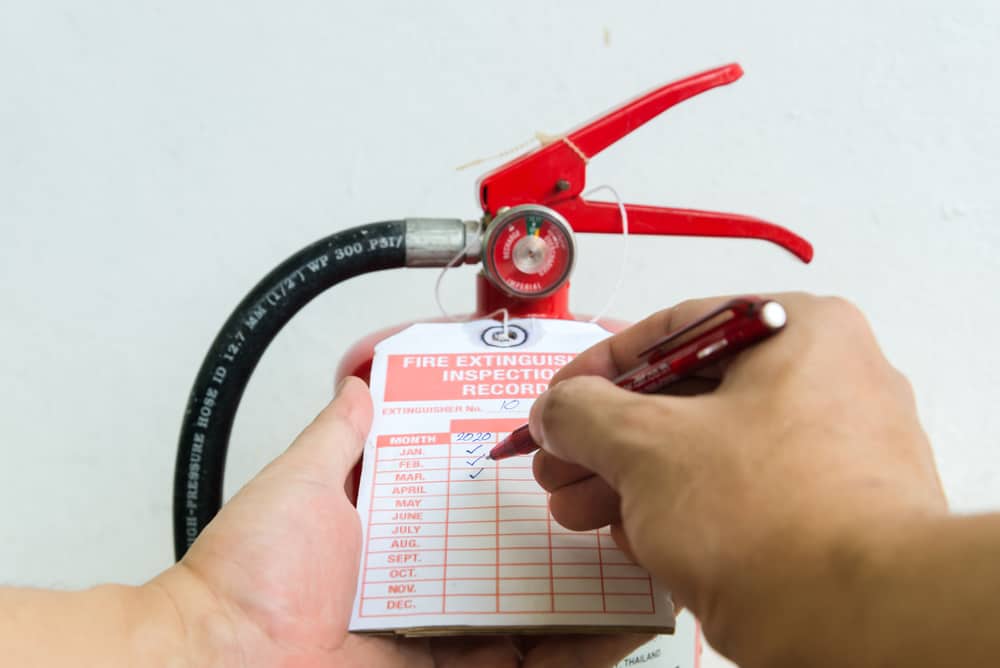
Summary:
If you just had an FDNY inspector walk through your building, your first instinct is probably to find out what this is going to cost you. That’s a fair question — and the answer isn’t what most people expect. The inspection visit itself? Free. The costs come after, in the form of violation fines, professional service fees to correct whatever was flagged, and potential reinspection charges if the corrections aren’t handled properly. For New York City and Long Island business owners, those numbers can add up fast. Here’s a clear breakdown of what you’re actually looking at — and what steps get you back on solid ground.
What Does a Fire Marshal Inspection Actually Cost in New York?
The FDNY Bureau of Fire Prevention conducts inspections of commercial buildings across all five boroughs — and they don’t charge you for showing up. That part is free. What costs money is everything that comes next.
If the inspector finds extinguishers that are expired, improperly tagged, missing, or positioned incorrectly, you’ll receive a violation notice. From that point, you have roughly 30 to 60 days to correct the issue before the Environmental Control Board (ECB) issues a summons and mandatory fines kick in. The clock starts immediately, and it doesn’t pause while you figure out who to call.
FDNY Violation Fines: What the Numbers Actually Look Like
First-time violations for fire extinguisher non-compliance typically run between $250 and $1,000 per extinguisher. That’s per unit — not per inspection, not per building. If you have ten extinguishers that weren’t properly serviced or tagged, you’re potentially looking at $2,500 to $10,000 in first-offense fines alone.
Repeat violations escalate to $1,000–$5,000 per extinguisher, and willful negligence can cross into criminal territory. OSHA adds another layer. If a workplace inspection flags fire extinguisher non-compliance, federal OSHA penalties start at $15,625 per violation.
Most New York business owners think of FDNY and OSHA as separate concerns — and they are — but a single missed annual inspection can trigger both. Then there’s the spacing issue. NYC Fire Code requires that no point in a building be more than 75 feet of travel distance from the nearest Class A extinguisher. A 10,000-square-foot commercial space may need 15 to 20 units depending on the floor plan. If you’re short on units, every missing extinguisher is a separate violation.
The professional service fees to correct violations are actually the smallest piece of the puzzle. Annual fire extinguisher inspections in New York City typically start around $80 to $150 per visit, with volume pricing available for buildings with multiple units. For a facility with ten extinguishers, inspection-only service generally runs $200 to $300 — assuming no replacements are needed. Standard ABC dry chemical replacements add roughly $60 to $80 per unit.
A facility spending around $1,000 a year on professional inspections is protecting itself against $10,000 to $20,000 in first-offense violation exposure. That math is hard to argue with.
One thing worth flagging for NYC businesses specifically: since 2019, all fire extinguishers in New York City must carry FDNY-mandated Smart Tags, inspected annually. If your extinguishers still have older tags from before that requirement took effect, they’re out of compliance regardless of when they were last serviced. This is a common reason businesses get violations they weren’t expecting — the work was done, but not by an FDNY-approved company using the correct documentation.
Why Some NY Businesses Are Overpaying for Compliance Without Knowing It
Here’s something that doesn’t get talked about enough: the pricing model your fire extinguisher service company uses matters as much as the service itself.
Some providers in the New York market charge on a monthly subscription basis — around $85 per month, which works out to over $1,000 a year. For most small to mid-size businesses, that billing structure doesn’t reflect any difference in what’s actually delivered. Professional fire extinguisher inspections are still performed once a year. The monthly charge is a billing model, not a service frequency model. You’re paying twelve times for something that happens once.
We charge a one-time annual service fee of $99. Same FDNY-certified inspection, same proof-of-compliance Smart Tags, same documentation — without the recurring monthly charge. For a business owner managing tight margins, that difference is real money.
The other thing to watch for is whether the company you’re hiring is actually authorized to work in New York City. Under NYC Fire Code 3 RCNY Section 115-02, only companies holding an FDNY company certificate — and technicians holding an FDNY Certificate of Fitness — are legally permitted to service and tag portable fire extinguishers in the five boroughs. This rule wasn’t created arbitrarily. It was enacted specifically because unscrupulous operators were issuing fraudulent compliance tags, which led to fires and injuries.
Hiring an uncertified company, or buying extinguishers at a home improvement store and assuming they’re compliant, does not satisfy NYC Fire Code requirements. If an FDNY inspector checks your tags and they weren’t issued by an approved company, you’ll receive a violation — even if the extinguisher itself is in perfect working condition.
For Long Island businesses operating under Nassau County or Suffolk County fire code, the certification requirements differ slightly from NYC’s, but the underlying standard — NFPA 10 — governs both markets. Annual professional inspections are required regardless of which jurisdiction you’re in.
Monthly Fire Extinguisher Inspection Checklist for NY Business Owners
Annual professional inspections are required by law — but they’re not the only inspection that matters. Under NFPA 10 Section 7.2.1.2, fire extinguishers must be visually checked at least once every 30 days. This monthly inspection doesn’t require a certified technician. It can be performed by you or a designated staff member. What it does require is consistency and documentation.
Staying on top of monthly checks is one of the most effective ways to avoid violations. If something goes wrong between annual service visits — a pressure drop, a missing safety pin, a damaged hose — catching it early means you can correct it before an FDNY inspector does.
What to Check Every Month: A Practical Walkthrough
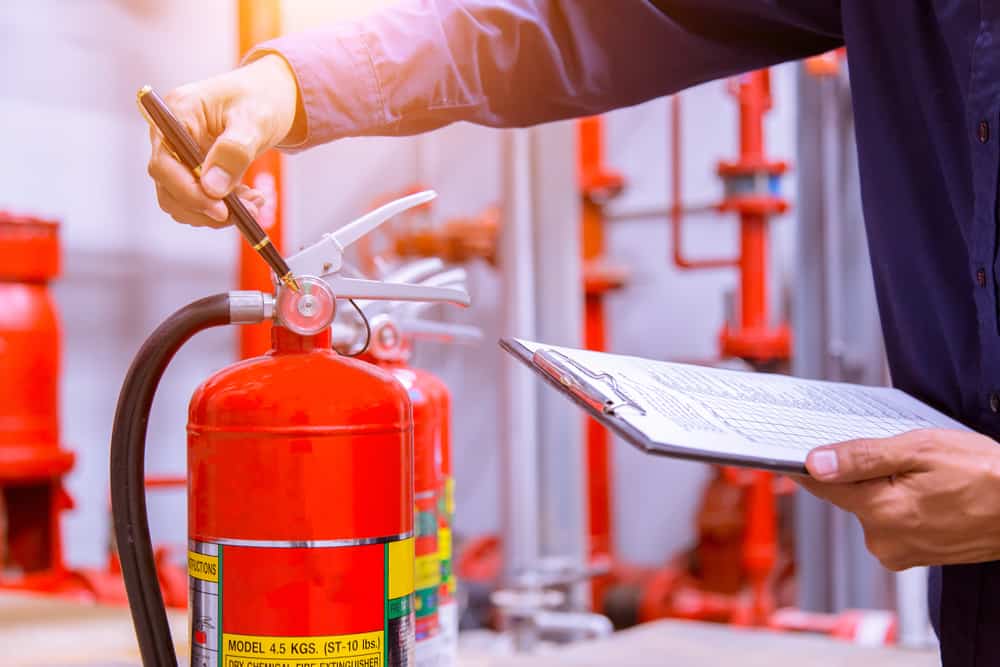
The monthly inspection is a visual and physical check — it takes a few minutes per extinguisher and should be documented on the inspection tag each time.
Start with the pressure gauge. The needle should sit in the green zone. If it’s reading low or has dropped since the last check, that unit needs professional attention before your next annual service date.
Next, check the safety pin and tamper seal. The pin should be fully seated, and the seal should be intact. A broken seal doesn’t necessarily mean the extinguisher was used — it can happen from vibration or accidental contact — but it needs to be noted and addressed.
Pick up the extinguisher and check its weight. A stored-pressure dry chemical unit that feels lighter than expected may have lost pressure or been partially discharged. Check the exterior for visible damage: dents, corrosion, a cracked hose, or a clogged nozzle. Any of these can affect performance and will be flagged during an annual inspection.
Finally, confirm the extinguisher is mounted in its designated location, clearly visible, and accessible. NYC Fire Code is specific about placement — units can’t be blocked by merchandise, furniture, or equipment. If you’ve rearranged the space since the last inspection, verify that the 75-foot travel distance rule is still being met throughout the building.
After completing the check, sign and date the inspection tag. This documentation is what protects you if an FDNY inspector arrives between annual service visits. A well-maintained log of monthly checks demonstrates active compliance and can be the difference between a warning and a formal violation.
Fire Extinguisher Checks: What's the Difference Between Monthly and Annual?
This question comes up often, and it’s worth being direct about the distinction because confusing the two is one of the more common reasons businesses end up with violations they thought they’d avoided.
The monthly check is a visual inspection performed by building staff. It confirms that extinguishers are present, properly positioned, and showing no obvious signs of damage or pressure loss. No tools, no disassembly, no certification required. Its purpose is to catch problems early — not to certify compliance.
The annual inspection is a professional service performed by a technician holding an FDNY Certificate of Fitness. It involves a thorough examination of the extinguisher’s mechanical components: the shell, hose, nozzle, handle, operating instructions, and internal pressure. The technician verifies the unit meets NFPA 10 standards, performs any necessary maintenance, recharges if needed, and affixes a new FDNY-approved Smart Tag documenting the service date and technician credentials. This is the inspection that satisfies NYC Fire Code and what an FDNY inspector will look for when they visit your building.
Beyond the annual inspection, there are longer-interval requirements that many business owners don’t know about until they receive a violation. Stored-pressure dry chemical extinguishers require an internal examination every six years. Hydrostatic testing — which checks the integrity of the extinguisher’s pressure vessel — is required every five to twelve years depending on the type of unit. These aren’t optional. Missing either interval is a code violation, and the fines apply the same way they do for a missed annual inspection.
For restaurants and food service operations — which make up a significant portion of the commercial base across New York City and Long Island — there’s an additional layer: kitchen hood suppression systems require semi-annual inspections, separate from portable extinguisher compliance. If you operate a commercial kitchen, your compliance calendar has more dates on it than most.
Getting Back Into Compliance After an FDNY Inspection
The fire marshal’s visit doesn’t cost you anything. What costs money is the gap between what the inspector found and what the code requires — and how quickly you close it. Violation fines start at $250 per extinguisher and climb fast. The correction window is 30 to 60 days. After that, the ECB gets involved and the costs compound.
The good news is that this is a solvable problem, and it doesn’t have to be expensive when you work with the right company from the start. Annual professional inspections, proper Smart Tags, monthly documented checks, and a certified technician who knows NYC Fire Code — that’s the whole system. It’s not complicated, and it’s far cheaper than the alternative.
M&M Fire Extinguishers Sales & Services, Inc. has been handling exactly this for businesses across Long Island and all five boroughs since 1990. If you’ve just received a violation — or you want to make sure you never do — reach out for a free on-site estimate.
Related posts